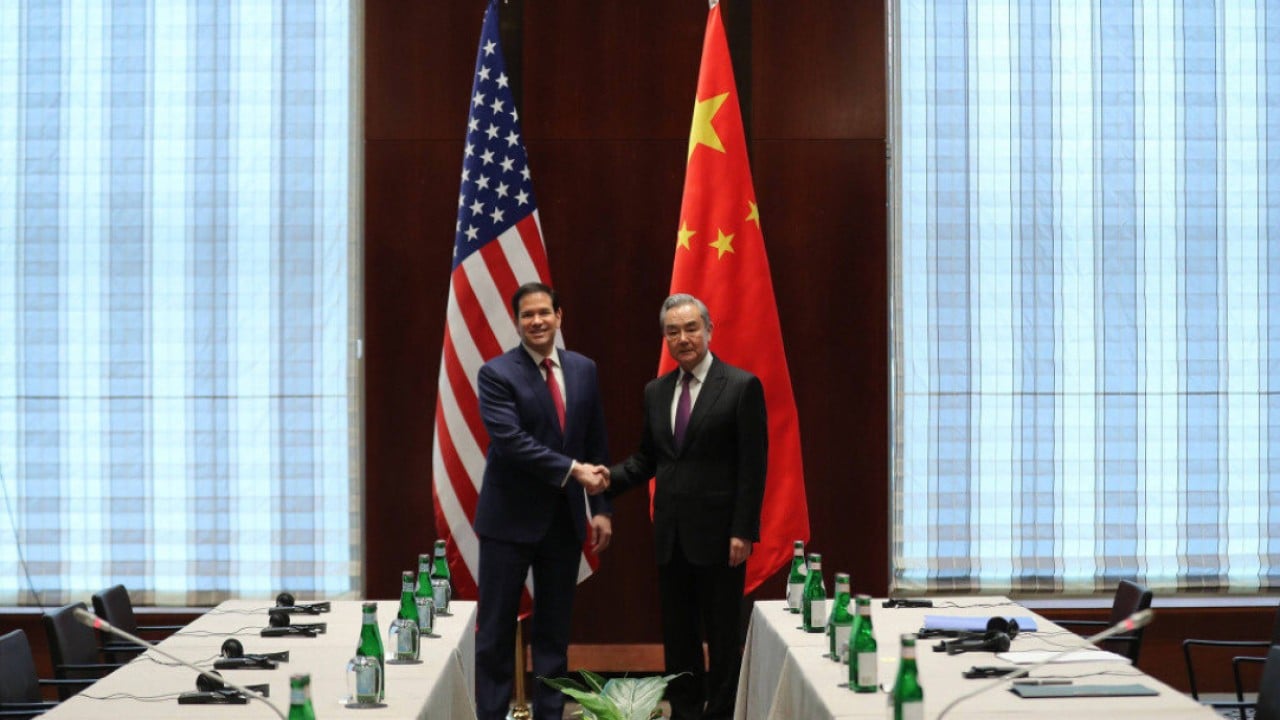
The pre-summit telephone communication between Chinese Foreign Minister Wang Yi and United States Secretary of State Marco Rubio establishes a procedural baseline for managing great power friction ahead of high-level multilateral summits. Diplomatic engagement intervals immediately preceding presidential encounters function not as forums for resolving structural contradictions, but as risk-mitigation exercises designed to bound escalation. By examining the mechanics of this diplomatic exchange, analysts can map the parameters of current bilateral stability, the institutional constraints governing both capitals, and the cost function of geopolitical divergence.
The Architecture of Pre-Summit Signaling
State-to-state communication cycles follow a rigid operational rhythm. When principal leaders—in this case, President Xi Jinping and President Donald Trump—approach a multilateral summit such as the Asia-Pacific Economic Cooperation meeting, foreign ministries engage in operational synchronization.
The primary objectives of these ministerial touchpoints are threefold:
- Bounding Retaliatory Vectors: Ensuring that ongoing trade or technology disputes do not generate operational surprises during the leader-level meeting.
- Signaling Red Lines: Reaffirming core positions on sovereignty, maritime security, and economic policy without triggering immediate escalation loops.
- Procedural Verification: Confirming the logistical and protocol arrangements for bilateral pull-asides or formal meetings on the sidelines of the multilateral event.
Wang Yi's characterization of the dialogue as positive and constructive reflects standard diplomatic signaling. In international relations lexicon, such framing indicates that both parties have agreed to compartmentalize intractable disagreements to secure short-term administrative predictability. Secretary of State Marco Rubio’s participation underscores the institutionalized nature of this engagement, balancing security-oriented skepticism with the pragmatic necessity of communication channels.
The Strategic Balance Sheet
Bilateral stability between Washington and Beijing operates on a transactional ledger where systemic competition is offset by shared systemic dependencies.
The economic and structural variables driving this dynamic include:
- Supply Chain Entanglement: Despite targeted decoupling and export control measures in strategic sectors such as semiconductors and artificial intelligence, macroeconomic integration persists, creating mutual vulnerability to sudden regulatory shocks.
- Multilateral Coordination: Both superpowers retain incentives to manage global financial stability, climate frameworks, and institutional agendas at forums like the G20 and APEC.
- Domestic Political Constraints: Leadership in both nations faces domestic constituencies that reward hardline posturing, narrowing the bandwidth for negotiated compromises on long-term structural issues.
This creates a structural paradox. The structural incentives for stability are high, yet the political penalties for appearing conciliatory remain severe. Consequently, diplomacy is channeled into narrow corridors of risk reduction rather than broad strategic reconciliation.
Operational Friction Points
While bilateral readouts emphasize cooperation, the operational reality is defined by acute competition across multiple vectors. The primary friction points center on technological dominance, regional security architecture, and economic policy.
The division of labor within the respective administrations dictates how these issues are managed:
- Technology Controls: Washington continues to refine export restrictions to protect foundational capabilities in artificial intelligence and advanced computing, viewing technological preeminence as a national security imperative.
- Sovereign Core Interests: Beijing maintains unyielding positions regarding territorial integrity and regional positioning, interpreting foreign maritime or diplomatic initiatives as containment strategies.
- Institutional Dialogue Channels: Working-level groups on financial stability, macroeconomic coordination, and AI risk management serve as shock absorbers, absorbing pressure before it reaches the presidential tier.
Forecasting the Summit Dynamic
Leader-level summits between the United States and China rarely produce sweeping geopolitical breakthroughs. Instead, their utility is measured by their ability to establish guardrails. When Presidents Trump and Xi meet, the success of the encounter will not be evaluated by the resolution of structural disputes, but by whether both sides establish mechanisms to prevent tactical friction from mutating into strategic crisis.
The mechanics of the Wang-Rubio telephone exchange demonstrate that both capitals recognize the utility of predictable communication channels. By establishing lower bounds for diplomatic engagement, both nations preserve the optionality required to navigate systemic competition without crossing the threshold of unmanaged conflict.