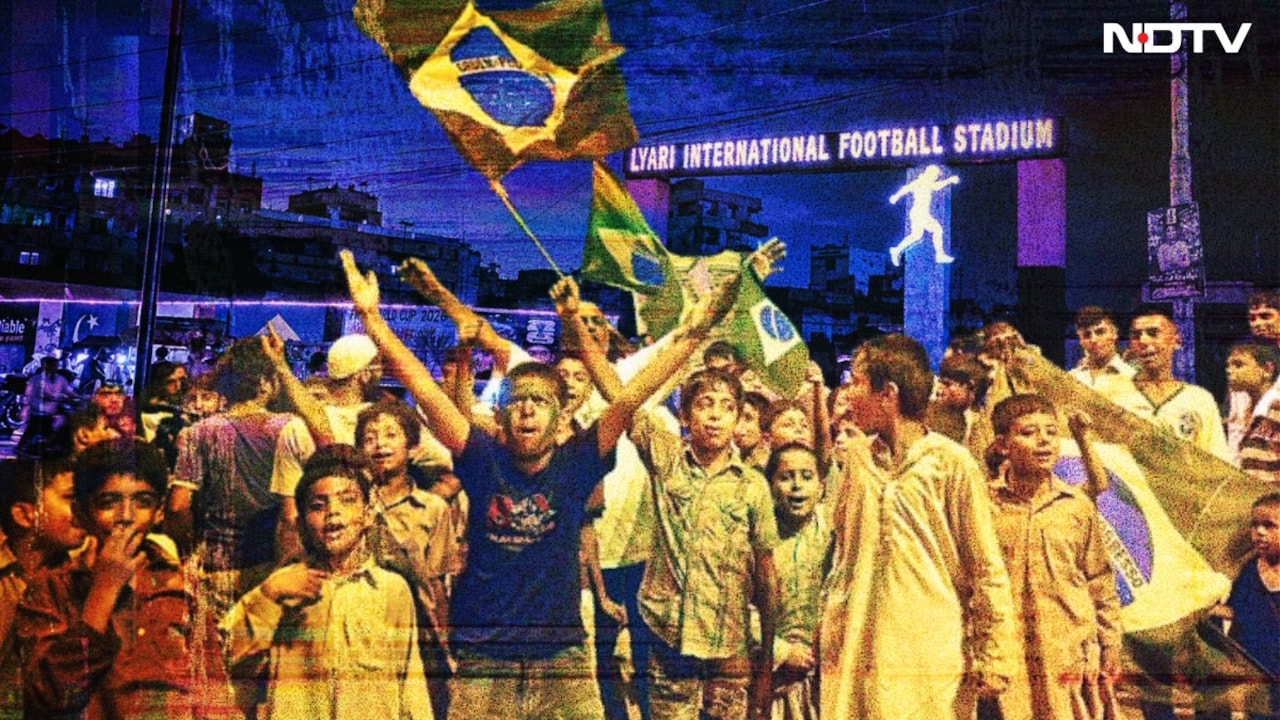
The air in Lyari smells of crushed red chilis, exhaust fumes, and the heavy salt of the Arabian Sea. If you stand on a concrete rooftop at dusk, you can hear a sound that defines this corner of Karachi. It is not the roar of traffic. It is the rhythmic, collective gasp of thousands of people watching a leather ball fly across a patch of hard, baked earth.
For decades, external observers only associated this neighborhood with body counts.
Lyari was the epicenter of Karachi’s gang wars. It was a labyrinth of narrow alleys where rival syndicates carved up territory with Kalashnikovs and rocket-propelled grenades. To the outside world, it was a no-go zone, a black hole of urban violence. But inside the neighborhood, an entirely different reality was playing out.
While the gangsters fought for the streets, the community fought for the pitch. Pakistan as a nation is obsessed with cricket, but Lyari is a sovereign republic of football. They call it Mini Brazil.
The Stadium in the Crossfire
Consider the mechanics of playing a sport when your neighborhood is a combat zone.
Imagine a young midfielder, nineteen years old, stepping up to take a penalty kick. His boots are worn thin at the soles. The pitch is not lush green grass; it is a hard-packed mixture of sand, gravel, and broken glass that cuts knees to the bone. As he takes his run-up, a burst of automatic gunfire echoes three blocks away.
Nobody leaves the stadium. The goalkeeper does not drop to the ground. The shooter does not flinch. He strikes the ball. It hits the back of the net, and three thousand people erupt into a frenzy of cheers, firecrackers, and horn-blowing.
This was not a hypothetical scenario. It was daily life during the height of the Lyari gang wars. Football was the only force capable of halting the violence, if only for ninety minutes. Even the most ruthless gang commanders, men wanted by federal authorities for dozens of murders, would call a temporary truce when a major local tournament was underway. They would slip into the crowds, leave their weapons with bodyguards, and watch the local boys play.
The gangsters tried to co-opt the sport. They sponsored teams, distributed kits, and attempted to use the immense popularity of local tournaments to recruit young boys into their ranks. They wanted to project an image of being neighborhood patrons—the local heavyweights, the true dhurandhars of the streets.
But the community saw through the theater. The players refused to become foot soldiers. Every time a young man chose a football over an assault rifle, the gangs lost a piece of their grip on the future.
The Legacy of the Dispossessed
To understand why football runs so deep here, you have to look at the faces of the people. Lyari is home to a massive population of Sheedis, Pakistanis of African descent whose ancestors arrived on the subcontinent centuries ago. For generations, they have faced systemic discrimination, poverty, and political marginalization.
Football became their language of resistance.
On the dirt pitches, structural disadvantages disappeared. It did not matter if your family could not afford clean water or if the state had forgotten your postal code. If you had the speed to leave a defender stranded in the dust, you were royalty.
The local style of play mimics the street football of Rio de Janeiro or Buenos Aires. It is fast, aggressively physical, and deeply expressive. The players do not have access to modern training facilities, tactical video analysis, or nutritional supplements. They learn the game by playing bare-foot on concrete, dodging open sewage drains and moving motorcycles.
This environment created a breed of athletes who possess an unnatural, hard-bitten resilience. They play through injuries that would sideline a European professional for six months. They wrap their ankles in cheap packing tape and keep running.
The World Turns Its Back
The gang wars eventually ended. A massive paramilitary crackdown broke the back of the syndicates, clearing the streets of the warlords who had terrorized the neighborhood for a generation. The bunkers were torn down. The schools reopened.
Yet, the peace did not bring prosperity. The gangsters were gone, but the institutional neglect remained.
Today, Lyari possesses some of the rawest, most concentrated football talent on the Asian continent, but it exists in a vacuum. Pakistan's national football federation has spent years mired in internal political infighting, corruption scandals, and international suspensions. While neighboring countries invested millions into youth development, academies, and leagues, Pakistani football was left to rot.
Scouts from international clubs do not visit Karachi. Local players who should be competing in professional leagues across Asia are instead working twelve-hour shifts at the fish harbor, hauling crates of mackerel just to buy a new pair of shin guards.
It is a quiet tragedy. The neighborhood defeated the cartels, but it cannot defeat the bureaucracy.
The Floodlights of the People
But if you think Lyari is waiting for a savior, you do not know its people.
They do not wait for state funding to build stadiums. They build them themselves. Communities pool their meager wages to buy floodlights, stringing electrical wires across rooftops so matches can be played late into the night when the blistering Karachi heat finally subsides.
During the World Cup, the neighborhood undergoes a total transformation. Giant screens are erected in the middle of public squares. Buildings are painted in the yellow and green of Brazil or the sky blue of Argentina. When Neymar or Messi scores a goal thousands of miles away, the streets of Lyari shake with an intensity that rivals the celebrations in South America.
They love the global game because they see themselves in it. They see players who rose from the favelas and the slums, using nothing but a ball to lift their families out of the dark.
The rest of the world might see a forgotten slum when they look at Lyari. But when Lyari looks at the world, it sees an audience that hasn't arrived yet.
The match continues. A midfielder catches the ball on his chest, drops it to his right foot, and sends a soaring pass into the penalty box. The crowd rises as one. The dust kicked up by thirty pairs of running feet catches the glare of the makeshift floodlights, turning the entire pitch into a golden haze. For a moment, the poverty vanishes. The history of blood is forgotten. There is only the flight of the ball, the open goal, and the collective hope of a neighborhood that refused to die.