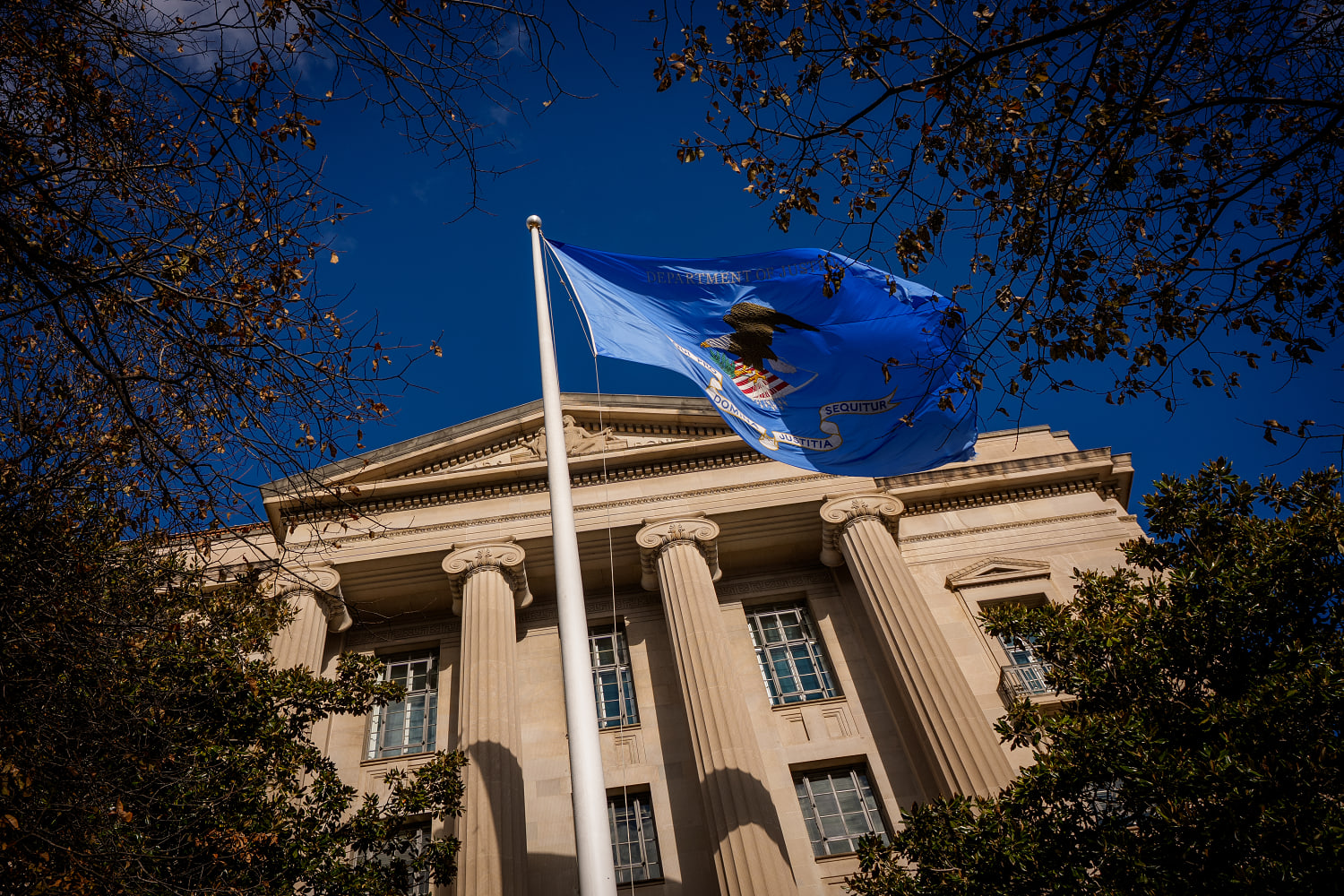
The Department of Justice is currently playing a high-stakes game of moral musical chairs. One week, the narrative is about purging "extremists" from the ranks for their outside affiliations with reproductive rights groups. The next, the DOJ is opening its front doors to anti-abortion advocates for high-level summits.
Mainstream commentators are tripping over themselves to scream "hypocrisy." They are missing the point. This isn't a flip-flop. It’s a systemic collapse of the very idea of an apolitical civil service. If you think this is just about the specific issue of abortion, you’re missing the forest for the trees. This is about the weaponization of "ethics" as a tool for administrative cleansing. Meanwhile, you can explore other stories here: The Invisible Wall in the Gulf.
The Myth of the Neutral Bureaucrat
The "lazy consensus" suggests that a government agency should be a blank slate—a collection of soulless executors of the law. This is a fairy tale. I have spent years watching how high-level agencies operate from the inside, and the reality is that the "neutrality" we prize is actually just "alignment with the current administration."
When the DOJ fired staff for their work with abortion-rights organizations, they didn't do it because they suddenly found a deep-seated love for procedural purity. They did it because those individuals represented a political liability for a specific leadership structure. Conversely, when they host the opposition, it isn't an olive branch. It’s a tactical pivot to neutralize political pressure from the right. To see the complete picture, check out the detailed analysis by Al Jazeera.
The mistake everyone makes is asking: "How can they do both?"
The real question is: "Why do we still expect them to be consistent?"
The Ethics Clause as a Blunt Instrument
In theory, ethics rules exist to prevent conflicts of interest. In practice, they are the most effective way to fire someone you don't like without having to prove they are bad at their job.
- Scenario A: An employee spends their weekends volunteering for a group that provides legal aid to clinics. The DOJ labels this a "conflict of interest" with the department's duty to remain impartial in ongoing litigation.
- Scenario B: An anti-abortion advocate meets with DOJ leadership to discuss "civil rights protections" for the unborn. The DOJ labels this "stakeholder engagement."
The language changes. The mechanics remain the same. "Ethics" is now a code word for "Compliance with the Prevailing Wind."
The Cost of Institutional Inconsistency
When an institution as powerful as the Department of Justice loses its predictable center, the ripple effects destroy the legal industry's foundation. Law is built on precedent and expectation. When those are replaced by the whims of the current news cycle, the entire structure starts to lean.
I’ve seen departments waste millions of taxpayer dollars on internal "integrity reviews" that are nothing more than ideological audits. These audits don't make the DOJ more effective; they make it more timid. They ensure that the only people who survive the vetting process are those with no opinions, no history, and no backbone—or those who are very good at hiding all three.
Why "Transparency" is the Wrong Fix
Most critics are demanding "more transparency" about why these specific individuals were fired or why these specific groups were invited. This is a trap. Transparency in a polarized environment just provides more ammunition for the next round of outrage.
If the DOJ releases a 50-page report justifying the firings, the left will find 100 ways to call it a lie. If they release the minutes of the anti-abortion summit, the right will claim they didn't go far enough.
Transparency doesn't build trust; it feeds the beast.
Stop Looking for Fairness in a Power Struggle
The Department of Justice is a tool of the Executive Branch. We have spent fifty years pretending it is an independent priesthood. It isn't. The Attorney General is an appointee. The priorities are set by the White House.
The "scandal" of firing abortion-rights supporters while hosting their opponents is only a scandal if you believe the DOJ is a neutral arbiter of truth. Once you accept that it is a political organ, the behavior becomes entirely logical. It is a series of moves designed to minimize friction with whoever holds the loudest megaphone at any given moment.
The Real Damage: The Talent Drain
The people who get caught in this meat grinder are rarely the ideologues. They are the high-performers who thought they could maintain a private life while serving the public.
When you fire a lawyer because of their outside affiliations, you aren't "cleaning up" the department. You are sending a message to every talented young legal mind in the country: Stay away from government service.
The private sector doesn't care about your weekend volunteer work as long as you bill 2,500 hours and don't commit a felony. The DOJ, by contrast, is increasingly demanding a level of "purity" that is both undefined and constantly shifting.
The Institutional Double-Bind
The DOJ is currently stuck in what I call the "Institutional Double-Bind."
- If they don't fire people with strong outside ties, they are accused of being "captured" by special interests.
- If they do fire them, they are accused of political persecution.
- If they don't meet with advocacy groups, they are called "out of touch."
- If they do meet with them, they are "validating extremists."
There is no "correct" move here because the framework of the department is outdated. We are trying to run a 21st-century ideological war through an 18th-century bureaucratic structure.
The Truth Nobody Admits
The DOJ is never going to be "fair" again. The division in this country is too deep, and the stakes of legal interpretation are too high. Every time the presidency flips, the DOJ will undergo a "cleansing." We are moving toward a "spoils system" for the legal department, where every lawyer from the top to the bottom is expected to be a partisan loyalist.
If you want to fix the DOJ, stop complaining about who they fired or who they hosted. Start asking why we give a single government agency so much power over the social and moral fabric of the country that these personnel moves feel like existential threats.
The problem isn't the hypocritical meetings. The problem is the pedestal we put the building on.
Tear down the expectation of neutrality. Embrace the reality of the power struggle. Only then can we stop being shocked when the most powerful legal office in the world acts like a political entity.
Pick a side or get out of the way. The era of the "unbiased" DOJ is dead.