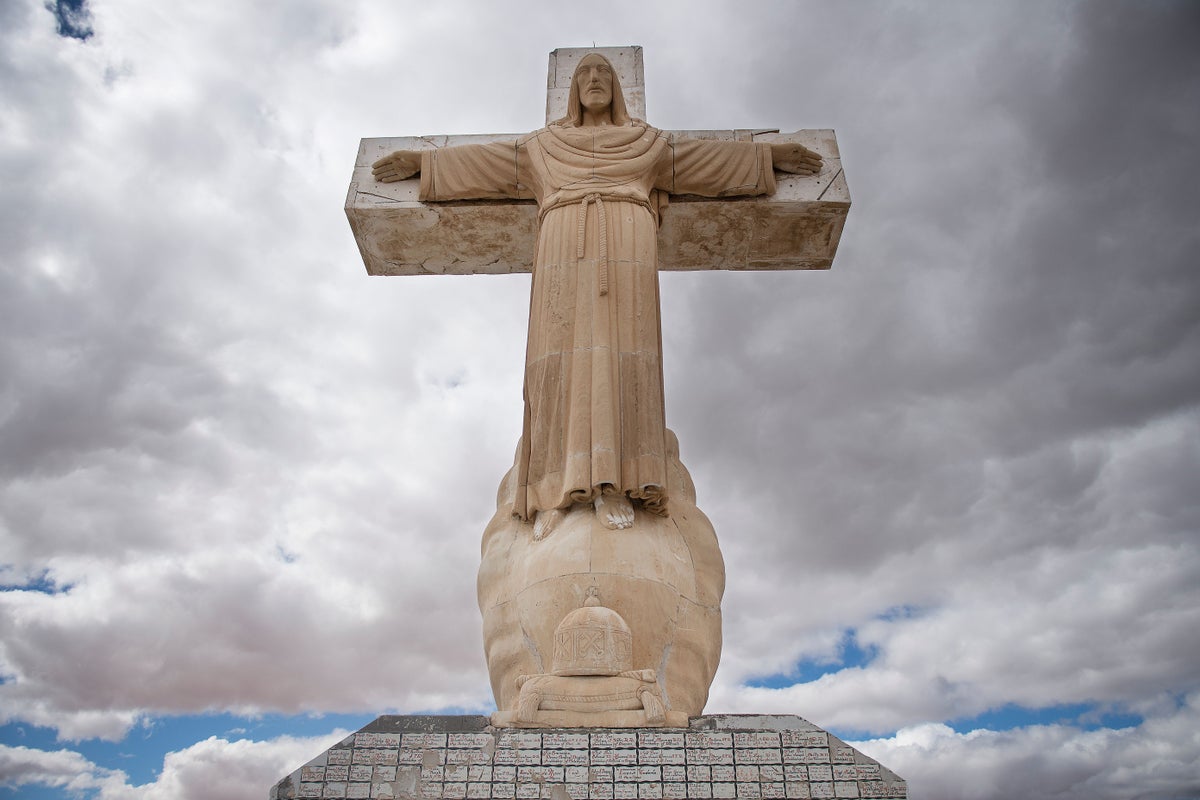
A towering limestone figure watches over the jagged borderlands where Texas, New Mexico, and Mexico meet. For nearly ninety years, the 29-foot-tall statue of Christ the King on Mount Cristo Rey has drawn steady streams of pilgrims. Now, that sacred summit is ground zero for a high-stakes federal land grab.
The Trump administration wants fourteen acres of church property to push through its signature border barrier. Lawyers for the Roman Catholic Diocese of Las Cruces are fighting back hard. They argue that blasting the mountain and erecting a massive steel wall right beneath a holy site desecrates sacred ground.
This clash pits presidential border security against religious liberty. It is messy, deeply symbolic, and reveals the fierce friction that happens when federal infrastructure meets deeply cherished faith grounds.
The Mount Cristo Rey Battle Lines
Mount Cristo Rey sits in southern New Mexico, just northwest of El Paso. In the early 1930s, a local priest named Father Lourdes Costa envisioned a massive crucifix on the peak. Catalan sculptor Urbici Soler spent years chiseling the limestone monument on-site, completing it in 1939. Since then, tens of thousands of faithful have made the rugged trek up the slope annually.
Enter federal authorities with a very different priority.
The Department of Justice filed a condemnation lawsuit against the Diocese of Las Cruces to seize control of the necessary land. Federal officials argue that the area remains a glaring vulnerability. While neighboring stretches feature fortified fencing, this mountainous gap has historically lacked a continuous physical barrier, making it an attractive route for smugglers.
Customs and Border Protection maintains that the project will not restrict public access to the shrine itself. Contractors have already moved heavy machinery into the region, blasting the southern slopes to prepare for steel reinforcements.
Church leadership refuses to back down quietly.
When Symbols Collide in the Desert
Legal arguments from the diocese rely heavily on the First Amendment and the Religious Freedom Restoration Act. Church representatives frame the government's land seizure as an aggressive overreach that fundamentally alters a peaceful sanctuary.
Deacon Jim Winder put it bluntly during court proceedings, describing the conflict as a battle of opposing monuments. One represents unity, hope, and decades of pilgrimage. The other represents exclusion, division, and heavy-handed federal power.
Critics of the wall point out the deep irony. An administration claiming to champion Christian values is simultaneously using eminent domain to cut through property owned by a Catholic diocese.
Meanwhile, local opinions on the ground are split. Some community volunteers and safety advocates support the steel barriers. They argue that rising criminal activity and trafficking around the unfortified mountain put traditional visitors at risk. They prioritize physical safety over abstract symbolism.
What Happens Next in the Courts
The federal government wants expedited execution. Justice Department attorneys argue that delays violate existing construction contracts and stall crucial national security initiatives.
The diocese has enlisted elite legal defense, echoing similar battles fought during the first Trump term over border walls near South Texas chapels. Back then, legal pressure eventually forced compromises that routed barriers away from sacred footprints. Whether this limestone summit will secure a similar carve-out remains entirely uncertain.
This standoff is far from just a local zoning dispute. It represents an ongoing collision between uncompromising federal mandates and the stubborn resilience of local religious institutions.
Review the court filings and local diocese updates if you want to track how this legal war unfolds. Expect the outcome to set a powerful precedent for how federal projects navigate sacred land across the American Southwest.