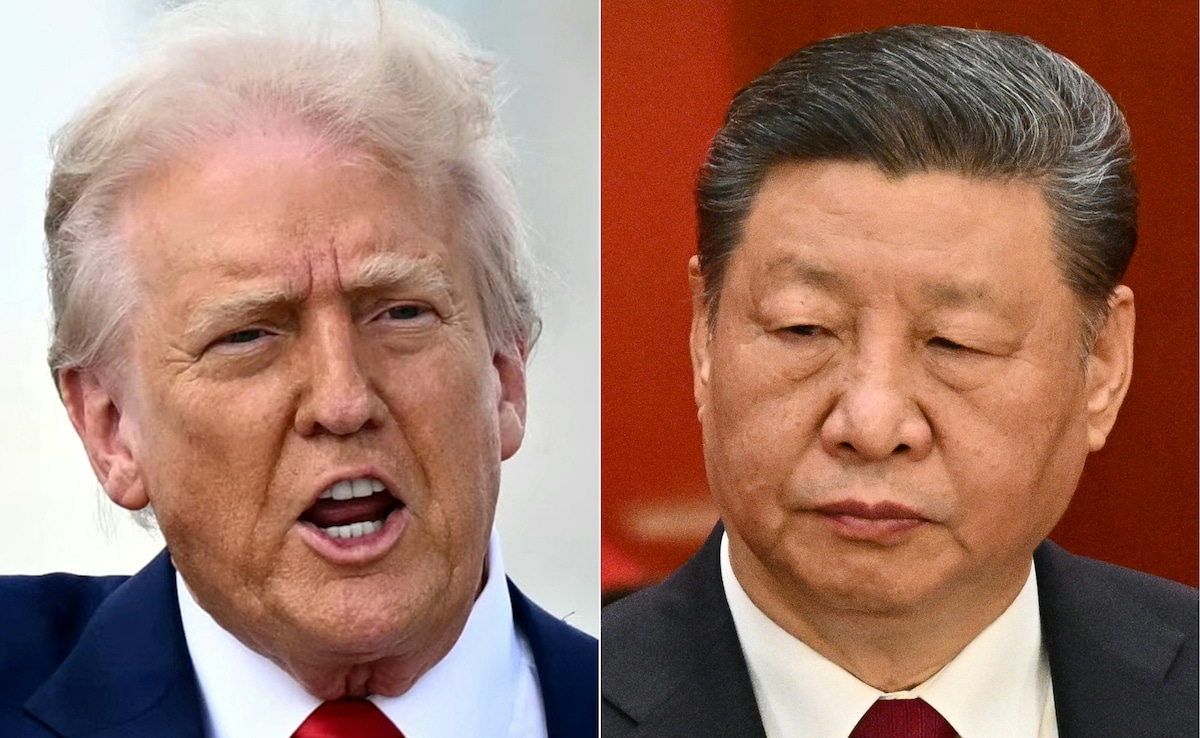
Donald Trump is swinging a heavy hammer at Beijing again and this time the splash is hitting the global oil market. He's talking about 50% tariffs on Chinese goods. It sounds like a trade war sequel. But there's a twist. He’s also floating a deal involving Venezuelan crude oil to keep American gas prices from hitting the roof. It’s a classic high-stakes poker move. He wants to crush China’s economic leverage while using every energy resource available to keep the US voter happy at the pump. You might think these are two separate issues. They aren't. They’re two sides of the same coin in a strategy to reorder global trade.
The 50 Percent Tariff Threat is More Than Just Talk
If you think a 50% tariff is just a campaign slogan, you haven't been paying attention to how Trump operates. He sees trade as a zero-sum game. China has been the primary target for years and a tax that high would basically decouple the two largest economies in the world. It’s a massive escalation from the 10% or 25% rates we saw during his first term.
Economists at places like Goldman Sachs have already started crunching these numbers. A 50% levy would likely shave a significant chunk off China's GDP growth. It forces manufacturers to flee. They go to Vietnam. They go to Mexico. Some might even come back to Ohio or Pennsylvania. But there's a catch. This kind of protectionism usually leads to higher prices for you and me. When a toaster from Shanghai suddenly costs double, the American consumer pays the difference. Trump knows this. He’s betting that the long-term gain of breaking China's grip on the supply chain is worth the short-term sting of inflation.
Why Venezuela is Suddenly Back on the Table
Now, here is where it gets interesting and a bit messy. You can't start a trade war and have high energy prices at the same time. That’s political suicide. To offset the inflationary pressure of massive tariffs, Trump needs cheap oil. Lots of it.
Venezuela sits on the world’s largest proven oil reserves. We’re talking about more than 300 billion barrels. For years, the US has kept Caracas under heavy sanctions. We didn't want to fund a regime we didn't like. But Trump is suggesting a pivot. If he can get Venezuelan crude flowing into US refineries again, he creates a massive supply cushion.
It’s a "drill, baby, drill" mentality expanded to our neighbors. By bringing Venezuela back into the fold—under very specific, US-friendly terms—he lowers the global price of Brent and WTI. This gives him the "inflation insurance" he needs to go hard against China. It’s pragmatic. It's cynical. It’s exactly how he plays the game.
The Logistics of Heavy Crude
You can't just swap one type of oil for another. Most people don't realize that American refineries, especially those along the Gulf Coast, are specifically designed to process "heavy" crude. That’s the thick, sulfur-rich stuff that comes out of Venezuela.
When we stopped buying from Caracas, those refineries had to scramble. They started buying more from Russia—until that got cut off—and Canada. Reopening the pipeline to Venezuela makes technical sense for US energy infrastructure. It’s a perfect fit for our machines.
- Refinery Alignment: US Gulf Coast facilities thrive on heavy sour crude.
- Supply Stability: Shortening the shipping route from South America vs the Middle East.
- Price Control: More supply equals lower prices at the gas station in Des Moines.
China is Not Just Going to Sit There
Beijing isn't a passive observer here. They’ve spent the last decade building their own "Fortress China." They’ve diversified their food sources. They’ve built up their domestic tech sector. If Trump drops a 50% tariff bomb, they will retaliate.
We’ve seen their playbook. They’ll target American farmers. Soybeans and pork are their favorite targets because they hit the "Red States" hard. They might also restrict rare earth minerals. Those are the things you need for your iPhone and your Tesla. It’s a game of chicken. Who blinks first? Trump thinks China’s economy is too fragile right now to win a prolonged fight. With their real estate market in shambles and youth unemployment high, he might be right.
The Geopolitical Risks of the Venezuela Pivot
This isn't without danger. Negotiating with Venezuela means dealing with a government that has spent years cozying up to Russia and Iran. If Trump cuts a deal for oil, he’s essentially admitting that energy security is more important than regime change.
Some of his own supporters might hate this. The "hardliners" want to see the Venezuelan government collapsed, not enriched. But Trump has always been a dealmaker first. He’d rather have $2.00 gas and a crippled China than a "pure" foreign policy that leaves Americans broke at the gas station. He’s willing to talk to anyone if it helps his bottom line.
What This Means for Your Wallet
If this plan goes through, expect a roller coaster. Initially, markets will freak out. Uncertainty is the enemy of the stock market. But if the oil starts flowing and the tariffs start forcing companies to move, the long-term picture changes.
You’ll see "Made in USA" or "Made in Mexico" on more labels. You might see gas prices drop significantly if the Venezuelan deal holds. But don't expect it to be smooth. Trade wars are loud. They are chaotic.
Actionable Steps for Business Owners
- Audit your supply chain now. If you rely on parts from China, find a "Plan B" in Southeast Asia or Latin America.
- Watch the energy futures. If a Venezuela deal looks likely, energy costs for shipping and manufacturing will drop.
- Price in volatility. Don't sign long-term contracts based on today's prices. Everything is about to change.
The bottom line is simple. Trump is using energy as a shield so he can use tariffs as a sword. He wants to rewrite the rules of global trade by making the US energy-independent and China economically isolated. It’s a massive gamble that could either revive American manufacturing or spark a global recession. Either way, the old era of "easy trade" with China is officially dead. Prepare your business for a world where borders matter again and energy is the ultimate currency. If you aren't diversifying your suppliers today, you're already behind. Start looking at Mexican and South American partners before the rush starts and the costs skyrocket.