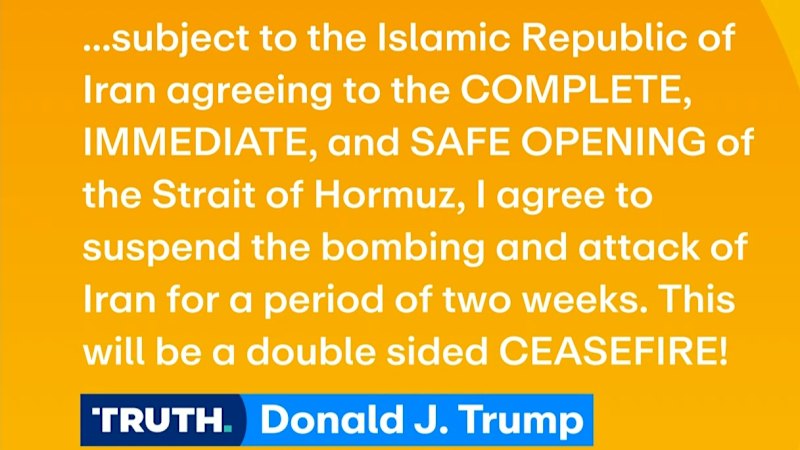
The mainstream media is reading the tea leaves upside down. When Donald Trump "puts back" a threat of strikes on Iran, the pundits rush to their keyboards to talk about de-escalation, isolationism, or a sudden bout of diplomatic cold feet. They see a pause and call it weakness. They see a delay and call it indecision.
They are wrong.
In the high-stakes theater of geopolitical brinkmanship, a delay isn't a retreat; it’s the tightening of a noose. What we are witnessing isn't the cooling of a conflict, but the transition from kinetic warfare—which is messy, expensive, and politically volatile—to a more lethal form of economic and psychological strangulation.
The Myth of the Softened Stance
The lazy consensus suggests that because missiles aren't currently flying toward Tehran, the "maximum pressure" campaign has hit a ceiling. This narrative assumes that the only way to measure power is through the number of payloads dropped.
History proves otherwise.
Look at the history of the Petrodollar System and how the U.S. Treasury has become a more effective weapon than the Department of Defense. By withholding a strike, Trump isn't giving Iran breathing room; he is forcing them to live in a permanent state of high-alert exhaustion.
When an adversary expects a blow that doesn't come, they don't relax. They burn through resources. They keep their air defenses on hair-trigger alert. They move their assets underground. They hemorrhage capital. Most importantly, their internal political factions begin to devour one another as they argue over whether the "threat" was ever real or if their own provocations were a strategic blunder.
Why Kinetic Strikes are a Gift to the Regime
If the U.S. were to strike tomorrow, it would provide the Iranian leadership with the one thing they desperately need: a unifying external enemy.
I’ve watched political structures under pressure for decades. Nothing heals internal fractures like a foreign bomb. Currently, the Iranian economy is a tinderbox. Inflation is a predatory beast eating the middle class. The "lazy consensus" ignores the fact that a military strike would actually stabilize the regime's domestic popularity.
By holding back, Trump keeps the focus on the regime’s inability to provide bread and electricity. Every day that passes without a strike is another day the Iranian public looks at their leaders and asks, "Why is our economy in ruins for a war that hasn't even started?"
The Logic of Strategic Ambiguity
The press demands a timeline. They want a "red line." They want a clear set of "if-then" parameters.
Giving them those parameters is a beginner's mistake.
Strategic ambiguity—the art of keeping your opponent guessing—is the most potent tool in the executive arsenal. When Trump says "we'll see what happens," he isn't being vague because he lacks a plan. He is being vague because it forces the Iranian Revolutionary Guard Corps (IRGC) to plan for a thousand different scenarios simultaneously.
The Cost of Readiness
Imagine the financial burden of keeping a nation on a war footing indefinitely:
- Fuel Consumption: Constant patrols and transport of heavy equipment.
- Opportunity Cost: Thousands of personnel pulled from the productive economy to sit in bunkers.
- Cyber Vulnerability: Staying on high alert often forces systems to stay "hot," making them easier targets for signals intelligence.
This is the attrition of the mind.
The Energy Market Counter-Play
The armchair analysts will tell you that tension in the Middle East is bad for the markets. They point to the price of Brent crude and scream about volatility.
They are missing the bigger picture of American energy independence.
For the first time in history, the U.S. is not the hostage of the Persian Gulf. We are the largest producer of oil and gas in the world. When Trump delays a strike, he is also playing a long game with global energy prices. He can afford to wait. Iran, whose budget is tied to the survival of every single barrel they can smuggle past sanctions, cannot.
The "threat" of a strike keeps a risk premium on oil, which benefits U.S. shale producers and hurts major importers like China. Trump is essentially using the Iranian threat to subsidize the American energy sector without firing a single shot.
The Sanctions Trap
We need to talk about the SWIFT system and the weaponization of the dollar. The competitor’s article misses the fact that financial strikes are already happening.
The U.S. Treasury's Office of Foreign Assets Control (OFAC) is the real frontline. While the media waits for a "strike," they are ignoring the surgical removal of Iranian banks from the global grid. This isn't "putting back" a threat; it’s changing the ammunition from 500-lb bombs to ledger entries.
One kills a building. The other kills a country’s ability to function in the 21st century.
The Risks of the Contrarian Approach
Is there a downside to this strategy? Absolutely.
The biggest risk isn't that Iran gets stronger—it's that they get desperate. A cornered animal is more dangerous than one that thinks it has an escape route. By delaying a kinetic strike while tightening the economic screws, the U.S. is betting that the regime will collapse from within before it decides to go out in a blaze of glory.
If that bet fails, the ensuing conflict won't be a "strike." It will be a regional conflagration.
But suggesting that Trump is "backing down" ignores the reality of how modern power is projected. We are no longer in the era of "Shock and Awe." We are in the era of Permanent Pressure.
The Real Question
People often ask: "Will there be a war with Iran?"
That is the wrong question.
The war is already happening. It’s being fought in the currency markets, in the server rooms of Natanz, and in the dark pools of the global oil trade. A missile strike is just the punctuation mark at the end of a very long, very painful sentence.
Trump didn't "put back" the threat. He just realized that the threat is more useful than the execution. He is letting the tension do the work that the Tomahawks would only interrupt.
Stop waiting for the explosions. Watch the exchange rates. Watch the domestic unrest in Tehran. Watch the Chinese tankers turning their transponders off in the dark.
The silence isn't peace. It’s the sound of a vacuum being created. And we all know what happens when the pressure finally reaches zero.
The regime in Tehran is currently being dismantled one bank account and one barrel of oil at a time, and they are begging for a strike to justify their own existence.
Don't give it to them.



