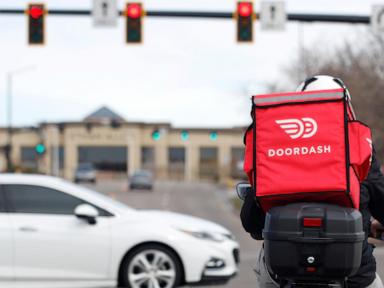
DoorDash’s commitment of $50 million toward gas price relief functions less as a philanthropic gesture and more as a high-stakes customer acquisition and retention strategy disguised as operational support. In a gig economy ecosystem, the driver is not merely a contractor but a variable cost component whose participation threshold is dictated by a razor-thin margin between gross earnings and surging overhead. When fuel prices spike, the effective wage of a Dasher drops below their personal "reservation wage," leading to churn, decreased fulfillment rates, and a subsequent collapse in marketplace reliability. This $50 million intervention is a calculated attempt to stabilize the supply side of the labor marketplace by artificially depressing the driver's operational expense ratio.
The Mechanics of Gig Labor Elasticity
The labor supply in last-mile delivery is highly elastic regarding fuel costs. Unlike fixed-route logistics, gig workers bear the full brunt of energy market volatility. DoorDash's intervention targets three specific friction points within the driver's cost function:
- Immediate Liquidity Constraints: Most gig workers operate with limited cash reserves. A 20% increase in fuel costs represents an immediate reduction in daily take-home pay, forcing drivers to exit the platform mid-shift to preserve capital.
- The Psychological Threshold of Profitability: Drivers often calculate earnings in gross terms. When the cost of a gallon of gas crosses a certain psychological barrier (e.g., $4.50 or $5.00), the perception of "working for free" triggers a mass exodus, even if the net profit remains technically positive.
- Vehicle Depreciation and Maintenance: While fuel is the most visible cost, it acts as a proxy for the total cost of ownership. High gas prices make drivers more sensitive to the wear and tear on their assets, leading to a more critical evaluation of long-distance orders.
DoorDash’s strategy employs a dual-track mechanism: a direct fuel cashback program via the "DasherDirect" prepaid card and a weekly bonus structure for those hitting specific mileage or delivery milestones. By tying relief to a proprietary financial product (DasherDirect), the company also increases "stickiness" within its own financial ecosystem, reducing the likelihood of drivers multi-apping with competitors like Uber Eats or Grubhub.
The Three Pillars of Marketplace Stabilization
To understand the scale of this $50 million spend, one must categorize the investment into its functional objectives. This is not a flat subsidy; it is a surgical application of capital to prevent marketplace decay.
I. Supply-Side Retention and Churn Mitigation
Acquiring a new driver is significantly more expensive than retaining an existing one. If DoorDash loses 10% of its active fleet due to fuel prices, the marketing spend required to replace those drivers—through sign-on bonuses and referral fees—would likely dwarf the $50 million relief fund. The relief acts as a defensive moat against competitor poaching. If Uber offers a fuel surcharge and DoorDash does not, the labor force will migrate instantly to the higher net-margin platform.
II. Geographic Fulfillment Parity
Fuel price surges do not hit all regions equally. Suburban and rural markets, where delivery distances are longer, face a disproportionate threat. In these zones, the "miles per delivery" metric is high. Without targeted relief, DoorDash risks a total service blackout in low-density areas. The $50 million serves as a subsidy to keep these longer-tail routes viable, ensuring that the brand promise of "anywhere delivery" remains intact.
III. Consumer Price Shielding
In a traditional business model, increased input costs (fuel) are passed directly to the consumer via higher delivery fees. However, the food delivery market is extremely price-sensitive. A $2.00 "fuel surcharge" on a $15.00 burrito can be the difference between a completed order and a cart abandonment. By spending $50 million on the backend to support drivers, DoorDash avoids raising consumer-facing fees to a level that would suppress demand. They are essentially eating the margin to maintain order volume.
The Cost Function of Last-Mile Logistics
The effectiveness of any fuel relief program is governed by the relationship between the Average Order Value (AOV) and the Operating Cost Per Mile (OCPM).
$$OCPM = \frac{Fuel Price}{MPG} + \frac{Maintenance + Depreciation}{Total Miles}$$
When fuel prices rise, the OCPM increases while the base pay per delivery often remains static. This creates a "profitability squeeze." DoorDash’s decision to offer a 10% cashback on gas via their DasherDirect card effectively lowers the $Fuel Price$ variable in the equation above for the driver.
However, this mechanism has limitations. The 10% discount is a percentage-based fix for a commodity price that can fluctuate by 30-50% in a quarter. If gas prices move from $3.00 to $5.00, a 10% discount only brings the effective cost down to $4.50—still a 50% increase from the baseline. This suggests that the $50 million is a "stop-gap" measure designed to weather a temporary spike rather than a sustainable long-term solution for high-energy environments.
Strategic Distinctions: Cash Back vs. Surcharges
DoorDash’s approach differs fundamentally from the "per-trip surcharge" model adopted by some competitors. A per-trip surcharge (e.g., $0.45 per delivery) is easier for a driver to calculate but more visible to the consumer.
DoorDash's preference for the DasherDirect cashback model offers several strategic advantages:
- Platform Loyalty: It forces the driver to use the company's banking infrastructure.
- Data Acquisition: It provides DoorDash with granular data on driver spending habits outside the app.
- Lower Consumer Friction: The cost of the relief is hidden from the customer's receipt, preventing "sticker shock."
- Variable Cost Control: Unlike a mandated surcharge, the company can dial the cashback percentage up or down or cap the total spend more easily as market conditions evolve.
The Information Gap: Transparency vs. Marketing
While the $50 million figure is substantial, its impact per driver is likely diluted when spread across a fleet of over 2 million "Dashers." If every driver were to receive a portion of this fund, the individual benefit would be roughly $25—hardly enough to offset a season of high gas prices.
This reveals the true nature of the initiative: it is a probabilistic incentive. Not every driver will utilize the DasherDirect card; not every driver will hit the mileage milestones required for the larger bonuses. By marketing the "total pool" of $50 million, DoorDash gains the PR benefit of a massive investment while the actual "burn rate" of the capital is managed through participation hurdles and eligibility requirements.
Structural Bottlenecks in Gig Economy Relief
The primary limitation of this strategy is its reliance on the driver’s ability to navigate the platform’s financial tools. Drivers who prefer traditional banking or who lack the credit profile for certain platform features are effectively excluded from the relief. This creates a tiered labor force where "power users" who integrate deeply with DoorDash’s fintech stack receive the subsidy, while casual or unbanked drivers bear the full cost of inflation.
This stratification leads to a bottleneck in labor supply during peak hours. If the casual "weekend warrior" driver—who provides the surge capacity needed on Friday nights—is not utilizing the fuel relief, they are the first to stop driving when gas prices rise. This results in longer wait times and higher "Small Order Fees" for consumers, as the platform struggles to find enough active drivers to meet peak demand.
The Displacement of Risk
Ultimately, the $50 million relief fund is an acknowledgment that the gig economy's greatest strength—the shifting of fixed costs (vehicles, insurance, fuel) to the worker—is also its greatest vulnerability. In a low-inflation environment, this model maximizes corporate margins. In a high-inflation or high-volatility environment, the model risks a "supply chain collapse" at the individual level.
The subsidy is an attempt to temporarily re-absorb some of that risk onto the corporate balance sheet. However, the fundamental "unit of work" in delivery remains tethered to internal combustion. Until the fleet transitions significantly toward electric vehicles (EVs), DoorDash remains a derivative play on global oil prices.
Strategic Recommendation for Marketplace Stability
To move beyond reactive, headline-grabbing spend, DoorDash must pivot toward structural cost reduction for its labor force.
- Aggressive EV Integration: Subsidizing EV leases rather than gas purchases would permanently decouple driver margins from oil volatility.
- Route Optimization via Batching: Increasing the number of orders per mile traveled is the only way to structurally lower the OCPM. The company should prioritize algorithmic "stacking" over individual relief payments.
- Dynamic Pay Floors: Implementing a "fuel-indexed" base pay would provide drivers with the certainty they need to stay on the platform, shifting the relief from a discretionary "gift" to a predictable business rule.
The $50 million spend buys time, but it does not solve the underlying physics of the business. The long-term winner in the delivery space will be the platform that most efficiently reduces the energy cost per calorie delivered, regardless of the price at the pump. The current move is a tactical defensive play; the transition to a fuel-agnostic logistics network is the necessary offensive strategy.