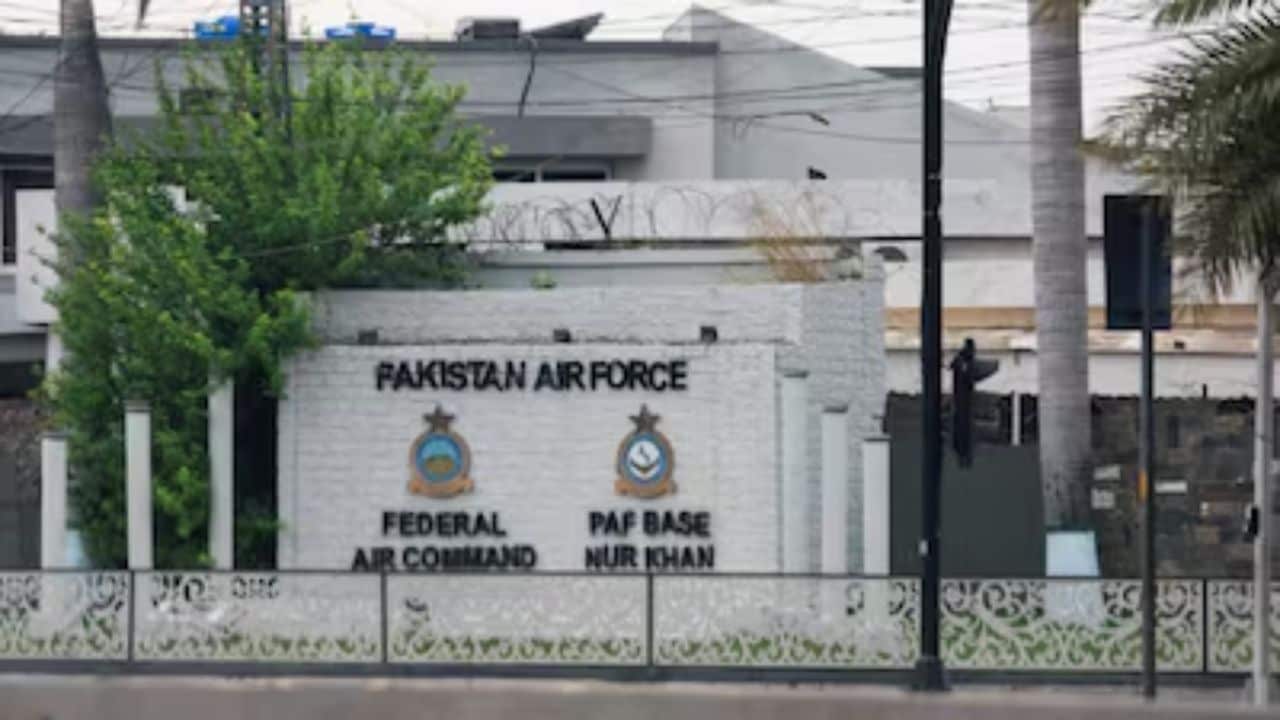
While the world watched Islamabad position itself as the primary peacemaker between a volatile Washington and a cornered Tehran, a more dangerous logistical maneuver was unfolding on the tarmac of Nur Khan Air Base. This was no mere diplomatic stopover. According to emerging intelligence and confirmed sightings, Pakistan quietly permitted Iranian military assets—including a specialized RC-130 reconnaissance platform—to seek sanctuary within its borders to evade American and Israeli strikes.
This revelation shatters the carefully curated image of Pakistan as a neutral arbiter in the 2026 U.S.-Iran conflict. For decades, the "double game" has been the calling card of Rawalpindi’s military establishment, but the stakes have never been higher than sheltering the Islamic Revolutionary Guard Corps' (IRGC) hardware while simultaneously lunching with the Trump administration to broker a ceasefire.
The Shell Game at Nur Khan
The presence of the Iranian RC-130—a high-value intelligence-gathering variant of the Lockheed C-130—at a Pakistani Air Force (PAF) installation is a direct challenge to the concept of mediation. These aircraft are not used for ferrying diplomats; they are used for electronic eavesdropping and battlefield management. By allowing Tehran to park these assets at Nur Khan, Pakistan effectively provided a "safe harbor" that U.S. planners could not strike without risking a catastrophic diplomatic rupture with a nuclear-armed partner.
While Pakistan’s Ministry of Foreign Affairs (MoFA) attempted to brush off the reports as "logistical support" during a ceasefire, the timing tells a different story. These assets were moved during the height of hostilities, precisely when the U.S. and Israel were systematically dismantling Iran’s air defense and command-and-control infrastructure.
The logistical choice of Nur Khan Air Base was calculated. Unlike remote desert strips, Nur Khan is located in the heart of Rawalpindi, nestled against civilian infrastructure. It is a location that makes a kinetic strike nearly impossible due to the certainty of massive collateral damage. Pakistan didn't just give Iran a parking spot; they gave them a human shield.
The Mediator’s Impossible Balancing Act
To understand why Pakistan would take such a massive risk, one must look at the geography of survival. Islamabad is currently staring down three barrels. To the east, a cold peace with India remains fragile. To the west, the border with Afghanistan has devolved into a series of bloody skirmishes with the Taliban. A total collapse of the Iranian state would leave Pakistan with a 1,000-kilometer border of pure chaos.
Pakistan’s mediation is not born of a desire for global harmony. It is a desperate defensive measure. If the Strait of Hormuz remains a graveyard for tankers, Pakistan’s energy-starved economy dies within weeks. If the IRGC collapses into a fractured insurgency, the spillover into Pakistan’s Sistan-Baluchistan province would be uncontrollable.
The Strategic Contradiction
The contradiction in Pakistan's behavior—sending F-16s to protect Saudi oil fields while sheltering Iranian spy planes—reveals a military establishment playing both sides of the sectarian and geopolitical divide.
- The Saudi Pillar: Under the 2025 Mutual Strategic Defense Agreement, Pakistan is treaty-bound to defend the Kingdom. This has already seen PAF jets deployed to King Abdulaziz Air Base.
- The Iranian Buffer: At the same time, Islamabad cannot afford to be viewed by Tehran as a U.S. launchpad.
- The Trump Factor: General Munir’s outreach to the White House has been surprisingly successful, positioning Pakistan as the "Iran whisperer" in the eyes of a President who prefers deal-making to protracted regional wars.
The Kabul Connection and the Regional Fallout
The shelter wasn't limited to Pakistani soil. Intelligence reports indicate that Iranian civilian assets, including Mahan Air jets, were diverted to Kabul. However, as Pakistani airstrikes targeted Taliban safe havens in March, those assets were shuffled to Herat. This musical chairs of aviation assets shows a coordinated regional effort to insulate Iranian infrastructure from a total wipeout.
In Washington, the mood is shifting from gratitude to suspicion. Senator Lindsey Graham’s public call for a "complete reevaluation" of Pakistan’s role reflects a growing consensus that Islamabad’s mediation might be a smokescreen for preserving Iranian capabilities. If the ceasefire—which President Trump has already described as being "on life support"—fails, Pakistan’s attempt to be everything to everyone will likely end in a total isolation that its economy cannot survive.
The Cost of the Gilded Bridge
The "Indispensable Mediator" tag is a double-edged sword. By making themselves the only channel of communication, the Pakistani military has made themselves responsible for the outcome. If Tehran uses this breathing room to rearm or launch a fresh wave of drone strikes from the very assets sheltered at Nur Khan, the backlash from the U.S. and its Gulf allies will be swift and financial.
The UAE has already begun demanding repayment of major loans, a subtle signal that the patience of the Gulf monarchs is wearing thin. They see the sheltering of IRGC assets not as "mediation," but as a betrayal of the Strategic Mutual Defence Agreement.
Pakistan is currently operating on the edge of a razor. It has successfully delayed a total regional war, but in doing so, it has compromised its own standing with its most critical financial backers. The RC-130 sitting in the shadows of a Rawalpindi hangar is no longer just a plane; it is a ticking diplomatic time bomb.
Islamabad’s next move won't be made in a press briefing or a diplomatic cable. It will be seen in the flight paths leaving Nur Khan. If those planes return to Iran with their sensors intact and their mission resumes, the "Double Game" may have finally reached its terminal point.