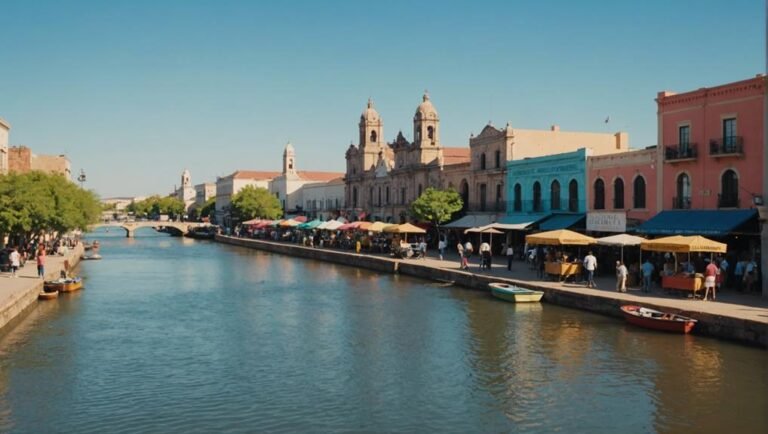
The Euphrates River is vanishing, and people are terrified. If you've spent any time on social media lately, you’ve seen the clips. Cracked earth where water used to roar. Ancient tunnels emerging from the mud. It looks like a movie set for the end of the world. For billions of people, this isn't just an environmental disaster; it’s a literal countdown to the apocalypse.
The Euphrates isn't just any river. It’s the lifeblood of the Fertile Crescent, stretching roughly 1,700 miles through Turkey, Syria, and Iraq. Right now, it's at record low levels. While scientists point to climate change and aggressive damming, a massive global audience is looking at the Book of Revelation. They see a specific prophecy coming true in real-time. Revelation 16:12 says the sixth angel poured out his bowl on the great river Euphrates, and its water was dried up to prepare the way for the kings from the East.
When a major global feature like this starts "dying," it sparks Armageddon Biblical prophecy fears that aren't easily silenced by a weather report. We’re seeing a collision of ancient scripture and modern environmental collapse. It’s messy, it’s frightening, and it’s happening faster than anyone predicted.
The physical death of a giant
Let's look at the numbers because they're grim. In parts of Iraq, flow rates have dropped by over 70% in recent years. This isn't a seasonal dip. It's a systemic failure. The river that sustained the Akkadians, the Babylonians, and the Ottomans is losing its fight.
Governments in the region are pointing fingers. Iraq blames Turkey’s massive GAP project—a series of 22 dams and 19 hydroelectric plants. Turkey says they’re just managing a scarce resource. Meanwhile, Syria is caught in the middle, suffering from both drought and the fallout of its decade-long war. The result? Millions of people are losing access to clean drinking water. Farmers are watching their crops turn to dust.
It’s easy to get lost in the geopolitics, but for the local fisherman in Anbar or the farmer in Raqqa, this is an existential crisis. When the water stops flowing, civilization stops moving. We’re witnessing a forced migration that could dwarf anything we’ve seen in the last century.
Why the prophecy angle won't go away
You might think connecting a drought to a 2,000-year-old text is a stretch. But in the Middle East, geography and theology are inseparable. The Euphrates is one of the four rivers mentioned in the Garden of Eden. It's the eastern border of the land promised to Abraham. When it starts to fail, it hits a psychological nerve that science can’t soothe.
Prophecy watchers aren't just looking at the water levels. They’re looking at what’s being found in the receding banks. As the water drops, ancient ruins are popping up like ghosts. There are reports of caves and structures emerging that haven't been seen for centuries. Online, rumors fly about "cries from beneath the earth" or the discovery of gold. While many of these claims are exaggerated for clicks, the underlying reality—that the river is exposing its secrets—adds fuel to the fire.
The Biblical narrative suggests the drying of the river isn't the end, but a precursor. It’s a "sign of the times" meant to signal a shift in the cosmic order. For the devout, the environmental crisis is merely the mechanism God is using to fulfill the word. It's hard to argue with someone who believes they're watching a divine script unfold.
The terrifying reality of water wars
Forget the spiritual for a second. The material danger is just as scary. Water scarcity is the most likely trigger for the next major conflict in the Middle East. When there isn't enough water to go around, diplomacy usually goes out the window.
I’ve seen how quickly tension rises when a village downstream loses its supply. It starts with protests. It ends with militias. Turkey holds the "faucet" for both Syria and Iraq. By controlling the flow of the Euphrates and the Tigris, they hold more power than any army.
Experts from organizations like the World Resources Institute have been sounding the alarm for years. They categorize Iraq as one of the most water-stressed nations on the planet. By 2040, the Euphrates could be little more than a series of disconnected salty pools. If that happens, the "Kings of the East" mentioned in the Bible might not be supernatural entities—they might just be the regional powers moving in to claim what's left of the land.
Archeological wonders and dark rumors
The drying riverbed has turned into a massive, unintentional archeological dig. In Iraq, researchers found a 3,400-year-old city from the Mittani Empire that emerged from a reservoir because of the drought. It’s fascinating and heartbreaking at the same time. You’re looking at a civilization that likely collapsed due to climate shifts, emerging because of our own climate shift.
But there's a darker side to the discoveries. People are obsessed with the idea of "fallen angels" bound beneath the river. This comes from Revelation 9, which mentions four angels bound at the great river Euphrates being released to kill a third of mankind.
Social media users post grainy videos of holes in the riverbed, claiming they can hear chains rattling or voices screaming. Honestly, it’s mostly wind and audio editing. But the fact that these videos get millions of views shows how deep the anxiety runs. People are looking for a reason for the chaos of the modern world, and "ancient prophecy" provides a narrative that "carbon emissions" just can't match.
Misconceptions about the drought
One thing people get wrong is thinking this is a simple "no rain" problem. It’s not. It’s a management problem. We like to blame nature because it lets us off the hook. The reality is that the Euphrates is being strangled by human hands.
Inefficient irrigation techniques in Iraq and Syria waste a massive amount of the water that actually makes it across the border. We're using Bronze Age methods in a 21st-century crisis. Also, the obsession with hydroelectric power means water is held in reservoirs to turn turbines instead of being let down to water crops.
If we want to stop the "Armageddon" scenario, we have to talk about regional cooperation. But in a neighborhood where neighbors barely speak, that’s a tall order. The prophecy feels inevitable because our inability to work together makes it feel inevitable.
What you can actually do
It’s easy to feel helpless when you’re reading about the end of the world or a massive geopolitical disaster. You probably don't live in the Mesopotamian basin. You can't personally fix a dam in Turkey. But the drying of the Euphrates is a loud, clear warning for the rest of the planet.
- Support regional NGOs. Organizations like Save the Tigris are working on the ground to advocate for water rights and better management. They need visibility and funding to keep pressure on governments.
- Educate yourself on water security. This isn't just a Middle East problem. From the Colorado River to the Nile, the world's great arteries are thinning. Understanding the link between water and conflict is essential for anyone following global news.
- Stop the doomscrolling. Prophecy content is designed to trigger fear. Fear doesn't solve droughts. Look for the hard data and the actual human stories of the people living on the riverbanks.
The Euphrates is dying, but the story isn't over yet. Whether you see it as a fulfillment of ancient text or a modern environmental tragedy, the result is the same. A fundamental part of our world is changing, and we aren't ready for what comes next. Pay attention to the water. It always tells the truth long before the politicians do. Keep an eye on the diplomatic talks between Baghdad and Ankara this summer; those meetings will determine the fate of millions more than any viral video ever could.