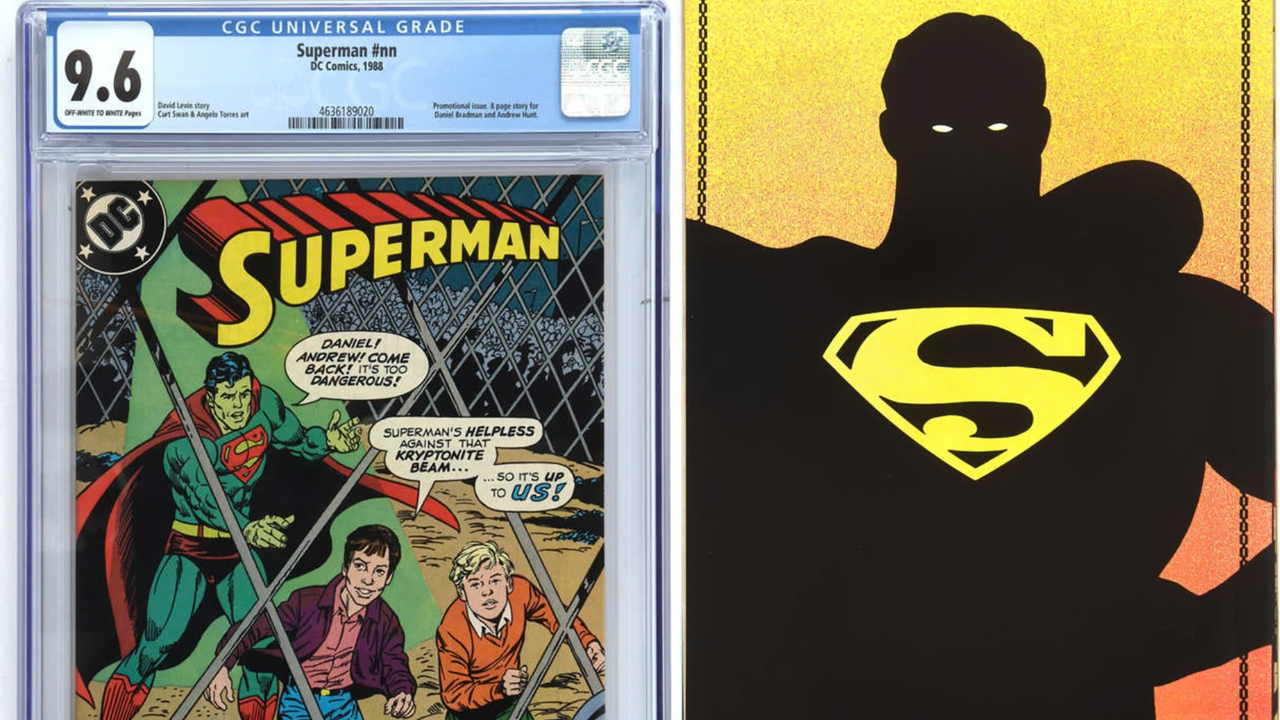
Darkness preserves things. For decades, cardboard boxes sit quietly beneath the rafters, absorbing the slow ticking of time while the world outside races forward. Dust settles like a grey snow, sealing edges. Inside, waiting in the gloom, forgotten cardboard holds the tangible fragments of childhood obsessions.
Most of the time, those boxes yield nothing more than rusted roller skates, broken board game pieces, and school notebooks filled with doodles of spaceships. But every so often, the attic yields something else. Something miraculous. For a deeper dive into this area, we recommend: this related article.
Consider a quiet afternoon in the United Kingdom. A car boot sale—that quintessentially British weekend ritual where people lay out the accumulated clutter of their lives on folding tables and the boots of hatchbacks—was unfolding under a pale sky. Among the mismatched mugs and old paperback novels sat a modest box of comic books.
They looked unremarkable. Edges worn. Colors slightly faded by decades of shifting light. They were priced to clear, meant to be carried home by a curious teenager for a few pocket-money coins. For broader background on this topic, extensive reporting is available on Apartment Therapy.
Instead, a collector spotted them. What followed was not a casual transaction, but the unraveling of a decades-long secret.
Inside that dusty assortment rested forty-seven rare Superman comics. Not modern reprints, but vintage issues dating back to the dawn of the superhero age. They had languished in a loft for years, completely ignored by everyone except the spiders and the seasonal chill.
When those forty-seven issues finally went to auction, they fetched sixty-three thousand, four hundred and forty pounds.
Pause for a moment and let that number echo. £63,440. For paper.
To understand why a stack of old newsprint commands the price of a modest family car, you have to look backward to 1938. America was dragging itself out of the Great Depression. People were weary, anxious, and desperate for a glimmer of hope. Two teenagers in Cleveland, Jerry Siegel and Joe Shuster, conjured an immigrant from a dying planet. A man who could bend steel, outrun a speeding bullet, and, crucially, always champion the downtrodden.
Superman was born of desperation. He was a refugee who used his extraordinary gifts not for tyranny, but for justice.
When those early comic books hit the newsstands, costumed heroes did not exist as an established industry. Children bought them for a dime, read them until the staples rusted, traded them on street corners, and eventually threw them away. They were disposable ephemera. They were meant to be read once and forgotten.
That disposability is precisely why they are so valuable today.
Survival is an accident of history. Most copies perished in backyard bonfires, got pulped during wartime paper drives, or disintegrated in damp cellars. Every pristine copy that remains is a defiant survivor against the odds.
Imagine the original owner. Perhaps a young boy in the late 1930s or 1940s, carefully stashing his comics away in a cardboard chest before heading off to school, or later, to work. Life happened. Decades passed. The boy grew old, moved away, or perhaps the house changed hands, leaving the boxes behind in the silent rafters.
Generations turned over below. The world shifted from radio to television, from analog to digital, from black-and-white screens to high-definition color. Yet overhead, enclosed in cardboard, the Man of Steel waited in the dark.
When auctioneers finally cataloged the find, their hands likely shook slightly. Grading vintage comic books is a meticulous science. Every tiny tear, every crease along the spine, every speck of foxing on the newsprint can swing the value by thousands of pounds. Professional grading companies examine them under magnification, sealing them in tamper-evident plastic slabs to freeze their condition in time.
The market for nostalgia is a peculiar psychological landscape. We are creatures tethered to our pasts. We constantly search for physical anchors to connect us to a simpler time when imagination felt limitless. Holding an original 1940s comic book is not merely about owning a rare collectible; it is about touching the actual physical artifact that sparked daydreams for children who have long since turned to dust.
It is time travel, purchased at auction.
When the final hammer fell and the lot cleared over sixty-three thousand pounds, it changed the life of the person who found them. But it also sent a ripple through the collecting community. It whispered a universal temptation into the ear of anyone standing in their own dusty loft or garage this weekend.
Could there be treasure hidden beneath my own roof?
Probably not. Most attics are just filled with old holiday decorations and forgotten textbooks. The odds of unearthing a fortune tucked behind the insulation are vanishingly small.
Yet, human beings are fundamentally driven by hope. We love the narrative of the hidden gem. We adore the idea that value can be overlooked by the masses, waiting patiently for the one person with the discernment to see its true worth.
That is why we scour car boot sales at dawn. That is why we rifle through boxes at estate sales. We are hunting for our own lost pieces of magic.
The loft in the UK is empty now. The boxes are gone, traded for a bank transfer with a row of impressive digits. The comics sit in climate-controlled vaults, handled with white gloves, far removed from the damp air and dusty rafters where they slumbered for decades.
And somewhere out there, beneath another roof, another box sits quietly in the dark, waiting for time to turn its heavy pages.