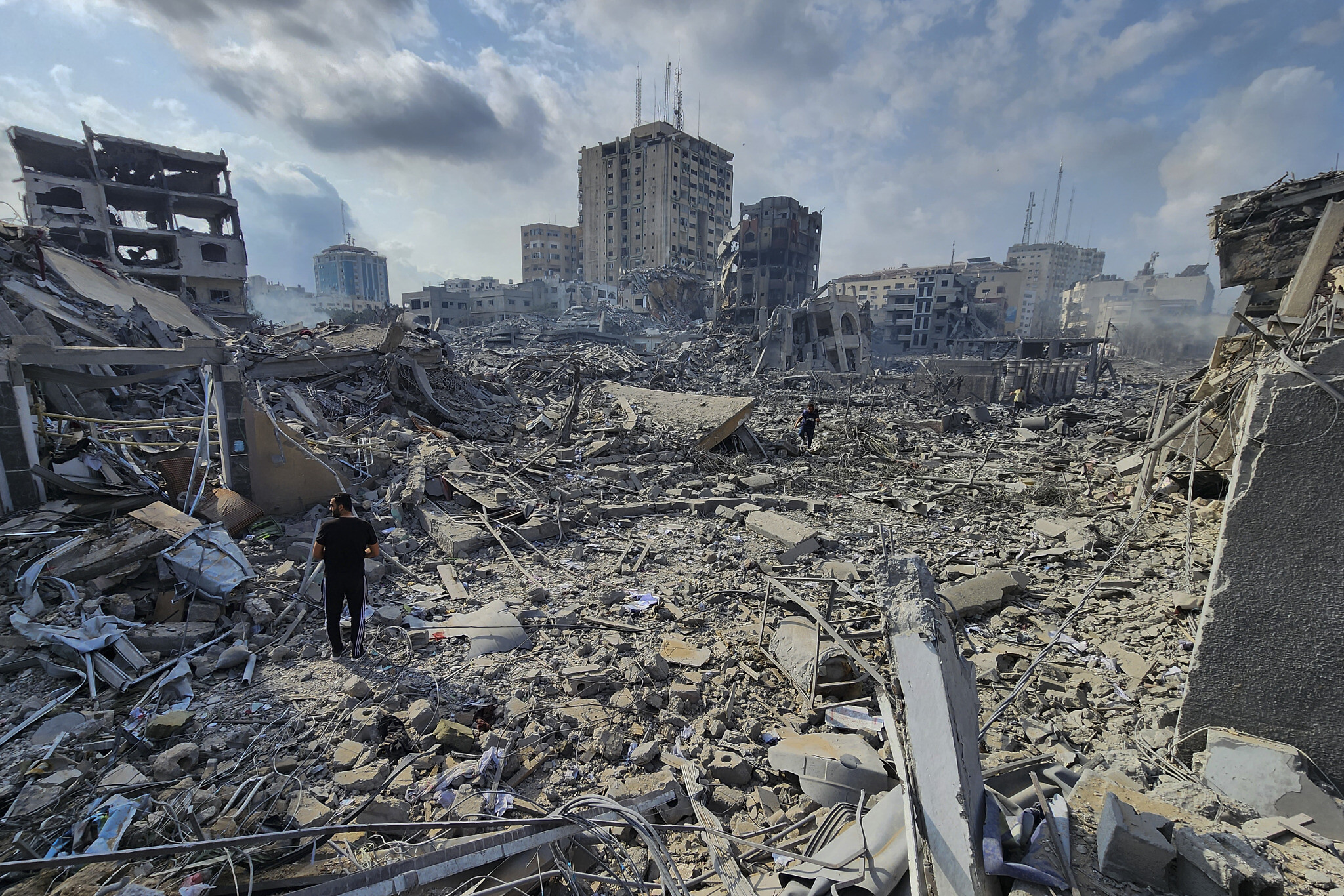
Diplomatic optimism in eastern Democratic Republic of the Congo routinely collapses because negotiators treat process alignment as a substitute for enforceable verification. When UN special envoy Huang Xia told the Security Council that overlapping mediation tracks created a perishable "window of opportunity" for peace, the statement captured a real shift in diplomatic energy while obscuring the structural mechanics that keep fighting alive on the ground. A standard news report repeats the envoy's call for urgency, lists upcoming regional meetings, and notes recent agreements. That framing mistakes diplomatic motion for strategic progress.
To evaluate whether current peace efforts can hold, analysts must separate known facts from educated hypotheses and replace vague assertions about "progress" with concrete institutional mechanics. Known facts include the sequence of agreements between Kinshasa and Kigali—starting with the April 2025 Declaration of Principles, followed by the June 2025 peace agreement and the December 2025 Washington Accords—alongside Doha ceasefire commitments with the M23, multilateral oversight through the Joint Security Coordination Mechanism (JSCM), and renewed US pressure, including late-October 2026 sanctions on Rwanda's Ministry of Defence and Zigama Credit and Savings Society. Known facts also include severe operational friction: disputes over compliance definitions, ongoing abuses and civilian casualties recorded by MONUSCO, humanitarian funding shortfalls, and political realignment such as former president Joseph Kabila joining the AFC–M23 coalition under a new banner. Educated hypotheses concern how these incentives will interact next: whether targeted financial sanctions alter Kigali's cost-benefit calculation without triggering retaliatory escalation, or whether factionalized disarmament protocols widen rather than narrow the trust deficit.
Deconstructing the Standard Peace Narrative
Conventional reporting on Great Lakes diplomacy relies on a familiar sequence: a mediator announces momentum, external powers convene talks, and a brief timeframe is declared urgent before momentum fades. That narrative suffers from three analytical blind spots that distort how readers assess risk.
The first blind spot is conflating mediation bandwidth with compliance capacity. Having the United States, Qatar, the African Union, and the United Nations engaged around the same dossier increases diplomatic visibility and brings financial or political leverage to the table. Yet multiple tracks only produce durable stability if their mandates reinforce one another rather than competing for credit or offering conflicting exit ramps. When talks in Switzerland, Doha, Washington, and Lusaka run in parallel, parties with conflicting incentives can forum-shop or stall in one venue while citing movement in another.
The second blind spot is treating dispute over definitions as a minor technical snag rather than the core failure mode. In eastern DRC, the central deadlock is not merely whether parties make pledges, but what counts as verifiable fulfillment. When Kinshasa announces a disarmament protocol with a faction of the armed wing of the Democratic Forces for the Liberation of Rwanda (FDLR) and presents that move as progress toward neutralization, Kigali can reject it as partial or manipulative and argue that broader operational capacity remains intact. Conversely, when Rwanda states it has begun lifting defensive measures, Congolese and regional officials can dispute whether disengagement is genuine or reversible while clashes persist in North and South Kivu.
The third blind spot is ignoring political spoilers and coalition shifts that alter the bargaining table mid-stream. Peace frameworks built around state-to-state commitments face acute stress when armed movements reorganize politically or attract influential domestic figures. Former president Joseph Kabila's October 2026 alignment with the AFC–M23 coalition under the Front for the Refoundation of the Nation (FRN) illustrates how quickly internal Congolese rivalries can merge with armed insurgency, complicating Kinshasa's negotiating leverage and raising the stakes of any settlement.
The Four Pillars of a Durable Peace Window
A perishable diplomatic opening only converts into durable stability when four structural conditions align simultaneously. Missing any single pillar weakens the rest.
- Verifiable Security Sequencing: Disengagement of external forces, lifting of defensive measures, and neutralization of armed groups cannot rest on self-reporting. Each step requires agreed benchmarks, independent monitoring access, and clear triggers that distinguish minor friction from material breach.
- Incentive-Compatible Enforcement: Diplomatic exhortation rarely moves entrenched actors on its own. Credible leverage requires pairing diplomatic mediation with calibrated costs—such as targeted sanctions, financial scrutiny, or conditional economic cooperation—applied consistently enough to change calculations without pushing parties into all-or-nothing escalation.
- Inclusive Political and Regional Buy-In: Bilateral accords between neighboring capitals fail if key armed actors, local proxy networks, or domestic political rivals retain veto power on the ground. Regional defense coordination across neighboring states matters only if it addresses cross-border security anxieties while respecting sovereignty and territorial integrity.
- Humanitarian and Administrative Continuity: Agreements negotiated in capitals or foreign mediation hubs lose legitimacy when civilian protection deteriorates, humanitarian aid pipelines remain underfunded, and local governance vacuums persist. People living through displacement and insecurity judge peace by physical safety and basic services, not communiqués.
The Cost Function of Stalled Implementation
In game-theoretic terms, delayed implementation in a high-mistrust conflict behaves like a high-interest security dilemma. Each side weighs the immediate cost of conceding leverage against the perceived existential cost of being deceived.
Consider the mechanics of partial compliance. Suppose State A takes a visible step—such as signing a protocol with a splinter faction of an armed group—while State B views that step as leaving the core threat unresolved. From State A's perspective, it has paid a political cost and demonstrated motion; from State B's perspective, conceding its own posture under those conditions exposes it to lingering risk. Without a pre-agreed verification standard, both sides rationally withhold their highest-value concessions. The result is procedural motion—meetings on monitoring, information-sharing, and verification templates—without substantive risk reduction.
External pressure alters this cost function, but only along specific channels. When Washington sanctioned Rwanda's Ministry of Defence and Zigama Credit and Savings Society in late October 2026 over alleged support to M23 and military logistics, it raised the financial and reputational cost of non-compliance. Yet sanctions also carry second-order effects. A government that believes its core security concerns—such as the presence of FDLR elements—remain unaddressed may argue that external penalties are asymmetric or mistimed. If pressure is not paired with clear off-ramps tied to verifiable milestones, targeted measures can harden resistance rather than unlock compromise.
Resource incentives add another layer of complexity. Frameworks linking regional peace commitments to critical minerals trade and external investment aim to make cooperation more profitable than confrontation over time. In practice, however, mineral rents and informal trade networks often finance armed groups and political patrons in the short run. Long-term economic integration cannot compete with short-term survival or rent capture unless security conditions stabilize enough to enforce rules and protect property.
Why Diplomatic Windows Close Quickly
Why do envoys repeatedly warn that windows of opportunity will not stay open indefinitely? Four mechanisms compress diplomatic timelines in eastern DRC.
- Escalation Spirals on the Ground: Ceasefires and peace accords erode rapidly when localized clashes—involving FARDC, Wazalendo, regional forces, or AFC/M23—escalate into broader offensives. Every spike in civilian casualties and displacement deepens domestic political pressure on leaders to look tough rather than conciliatory.
- Coalition Fragmentation and Realignment: Armed coalitions and domestic opposition networks shift constantly. When new political alignments form around armed movements, negotiating assumptions that held months earlier can become obsolete overnight.
- Institutional Fatigue and Mandate Limits: Multilateral mechanisms and peacekeeping missions operate under fixed mandates, budget constraints, and political divisions among major powers. For example, MONUSCO's mandate renewal cycles and debates over authorization or operational access shape what the UN can realistically monitor or support on the ground.
- Compounding Humanitarian and Health Shocks: Chronic displacement, severe funding gaps in humanitarian response plans, and public health emergencies—such as Ebola transmission intersecting with fragile healthcare access—drain state and international bandwidth. When emergency response is stretched thin, diplomatic talks struggle to command sustained attention or resources.
Operationalizing Verification and De-escalation
Moving past diplomatic declarations requires treating peace implementation like a high-stakes operational rollout rather than a single signing event. Mediators and participating states can apply a four-step diagnostic and execution sequence to test whether an agreement has real traction.
First, codify objective compliance thresholds before demanding concessions. Instead of debating whether an obligation has been met in the abstract, the JSCM and mediating partners should define concrete, observable indicators for each commitment: verifiable force movements, documented dismantling of command or logistical links, and transparent criteria for assessing armed group neutralization. If parties cannot agree on the metric, they do not yet have an enforceable deal.
Second, pair verification with rapid de-escalation channels. Ceasefires fail when minor incidents lack a fast, credible mechanism to clarify facts before retaliatory strikes occur. Operational hotlines, joint or externally corroborated incident reviews, and clear rules on defensive posture can prevent local clashes from derailing broader talks.
Third, align sanctions and incentives with specific behavioral triggers. Pressure works best when the path to relief is explicit and reciprocal. If external actors apply financial or diplomatic penalties over alleged support to armed groups, they should simultaneously specify the verifiable actions—such as confirmed disengagement and verified cessation of support—that would warrant calibration or relief, while holding other parties accountable for their reciprocal security commitments.
Fourth, ring-fence civilian protection and humanitarian access from bargaining leverage. Humanitarian corridors, medical response teams, and civilian protection zones should never be treated as bargaining chips during political standoffs. Protecting basic access preserves a minimum baseline of trust and limits human suffering even when political talks stall.
Limits and Failure Modes of This Approach
No diplomatic or operational framework can manufacture political will where leaders conclude that prolonged conflict serves their survival better than compromise. Even a well-designed verification regime faces steep practical limits in rugged terrain with porous borders, multiple armed actors, and deep historical grievances.
External mediators also face credibility constraints. When major powers have competing strategic interests—ranging from critical mineral supply chains to broader geopolitical rivalries—local actors quickly detect whether external guarantees are firm or transactional. Furthermore, enforcement tools like sanctions have blunt edges: they can strain diplomatic channels, provoke nationalist pushback, or fail to reach informal networks operating outside formal banking systems.
Finally, verification mechanisms themselves can become targets of obstruction. Denials of access, contested intelligence, and disputes over data sources can turn monitoring bodies into arenas of political warfare rather than neutral arbiters. Recognizing these failure modes early prevents policymakers from over-promising what technical fixes can achieve alone.
The Strategic Play for Mediators and Policymakers
Treat the current diplomatic opening as a verification stress test, not a turning point already achieved. Mediators from the United States, Qatar, the African Union, and the United Nations should stop measuring momentum by the number of summits or communiqués and instead force the parties through a tight, time-bound audit of disputed compliance definitions inside the Joint Security Coordination Mechanism. If Kinshasa, Kigali, and regional security counterparts cannot establish a shared, verifiable standard for disengagement and armed-group neutralization within a defined near-term window, external backers should shift immediately from optimistic framing to strict, conditional enforcement tied to concrete ceasefire and civilian-protection benchmarks—before renewed coalition fighting and humanitarian strain close the opening altogether.