The rain in Belfast doesn’t just fall; it settles. It clings to the brickwork, seeps into the cracks of the history etched into every street corner, and reminds those who live here that the past is never truly under the soil. It is always just beneath the surface, waiting for a tremor.
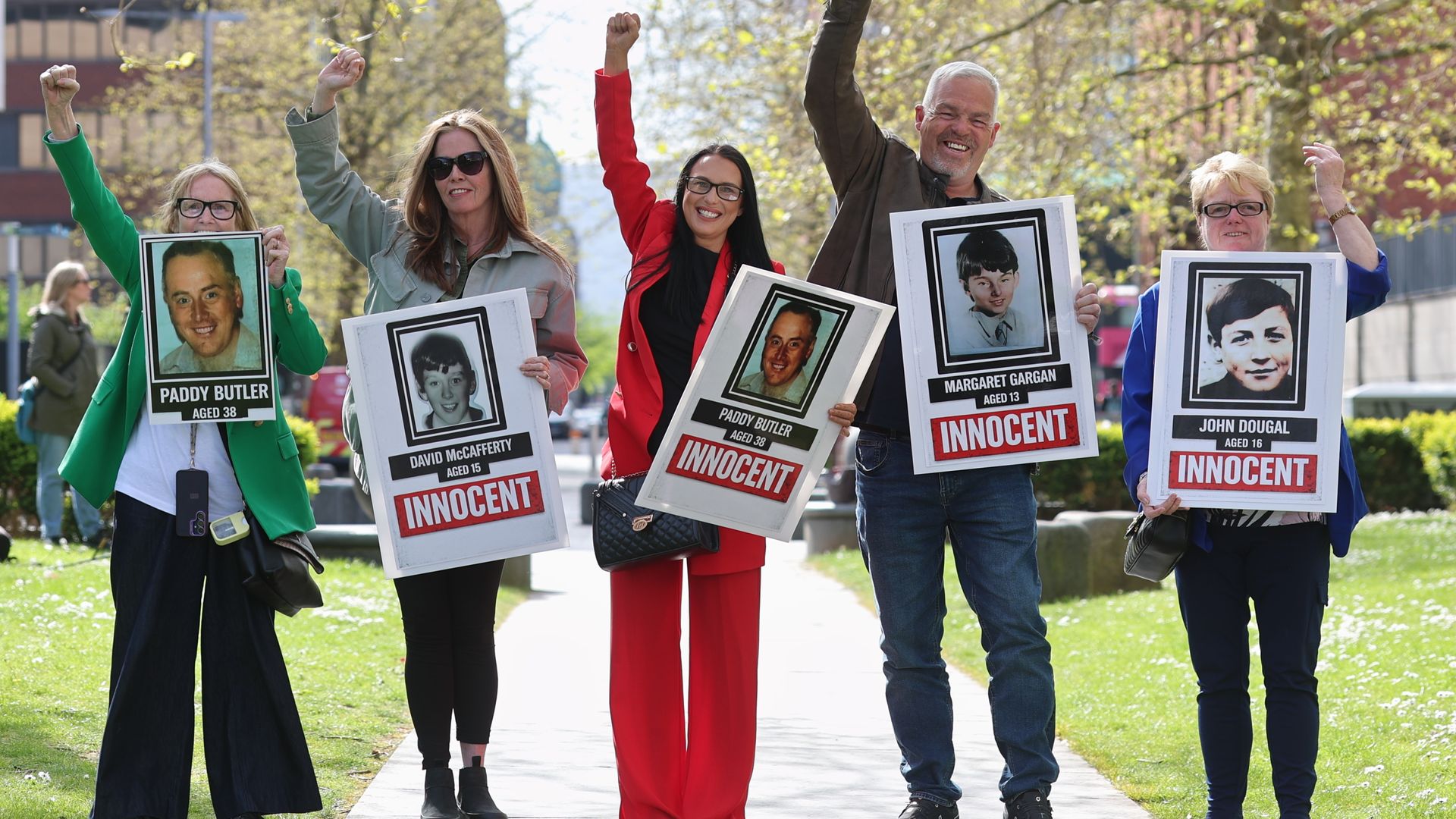
Decades later, that tremor returned. It arrived not as an earthquake, but as a courtroom finding. A verdict that sliced through the quietude of a city trying to outrun its ghosts. The finding was stark, clinical, and devastating: soldiers had overreacted and lost control. Five people dead. Five lives extinguished in a moment of frantic, unmoored violence.
To understand what happened that day, you have to push aside the polished language of official reports. You have to step out of the sterile, air-conditioned rooms where history is sanitized and walk the streets where the air tastes of coal smoke and uncertainty.
Think of a young man, let’s call him Liam. He is nineteen. He has been thrust into a city that feels like a coiled spring. He is carrying a rifle that weighs more than his own moral compass, surrounded by brothers-in-arms who are just as terrified as he is. He is operating under orders, but orders are abstractions. Fear is physical. It is the racing of a heart against the ribs. It is the metallic taste of adrenaline.
When the threshold of control is crossed, it happens in a heartbeat. It is the difference between a disciplined response and a descent into primal reaction. In that specific incident, the barrier between professional duty and chaotic aggression shattered. The soldiers didn’t just fail; they abandoned the very foundation of their mandate. They lost the ability to distinguish between a threat and a civilian, between a calculated action and a reflexive impulse.
The inquiry into these deaths did not just conclude that the rules of engagement were bent. It concluded they were discarded. When an authority figure—be it a soldier, a police officer, or a state official—loses control, the vacuum left behind is filled by tragedy.
There is a weight to being a witness to history, even when that witness is a dusty file in a legal archive. I remember the stories told in the hushed tones of living rooms across this city. The accounts of families who didn't just lose a loved one; they lost their version of the future. The empty chair at the Sunday dinner table isn't just a physical absence. It is a structural failure in the architecture of a family. It changes the way parents look at their children. It changes the way a neighborhood looks at the men in uniform patrolling the perimeter.
Why does this matter now, so many years removed from the smoke and the shouting?
Because the failure to hold power accountable is a corrosive agent. It eats away at the trust that holds a society together. When state forces are found to have acted without discipline, it isn’t just an individual failing. It is a systemic breakdown. The soldiers involved were not acting in a vacuum. They were the tip of a spear forged by a strategy that valued dominance over de-escalation, force over empathy.
Consider the mechanics of that breakdown. A soldier is trained to operate in a state of high alert. But when that alert becomes a default setting, the world begins to look like a target range. Subtle movements are perceived as hostile. Shadows become threats. Voices become sirens. This is the danger of prolonged conflict: it dehumanizes the perpetrator just as surely as it destroys the victim. By the time the trigger is pulled, the human element has been stripped away. There is only the reaction. And the reaction, as the court found, was the end of restraint.
The legal findings serve as a painful correction to the narrative. For years, the official story was a thin veneer of justification. Now, the mask has been removed. We are left to confront the raw, uncomfortable reality of what happens when those tasked with maintaining order become the architects of chaos.
There is a peculiar, hollow sound to justice served late. It doesn't bring back the five. It doesn't mend the broken years. But it does provide a frame of reference. It marks the ground where the line was crossed. It asserts that there is a standard of humanity that must be upheld, regardless of the heat of the moment, regardless of the fear, regardless of the uniform.
Standing on a street corner in Belfast today, the city feels different. The brickwork has been scrubbed clean. The checkpoints are gone. But the memories are embedded in the mortar. When we talk about these events, we aren't just reciting history. We are conducting a post-mortem on a moment where humanity failed. We are acknowledging that the cost of losing control is not measured in abstract terms, but in the permanent absence of souls who once breathed the same damp, heavy air.
The silence that follows the revelation is heavy. It asks us to consider how we would act if we were placed in that same, impossible position. Would we hold the line? Or would we, too, succumb to the pressure of the moment, the panic, the instinct to lash out?
It is the most difficult question of all.
It is also the only one that truly matters.
The rain continues to fall. It washes the dust from the streets, but it cannot wash away the truth of what transpired. The pavement remembers. And as long as we continue to listen, the dead are never truly silent. They continue to speak, not in words, but in the enduring, stubborn demand for a world where control is never again mistaken for carnage.