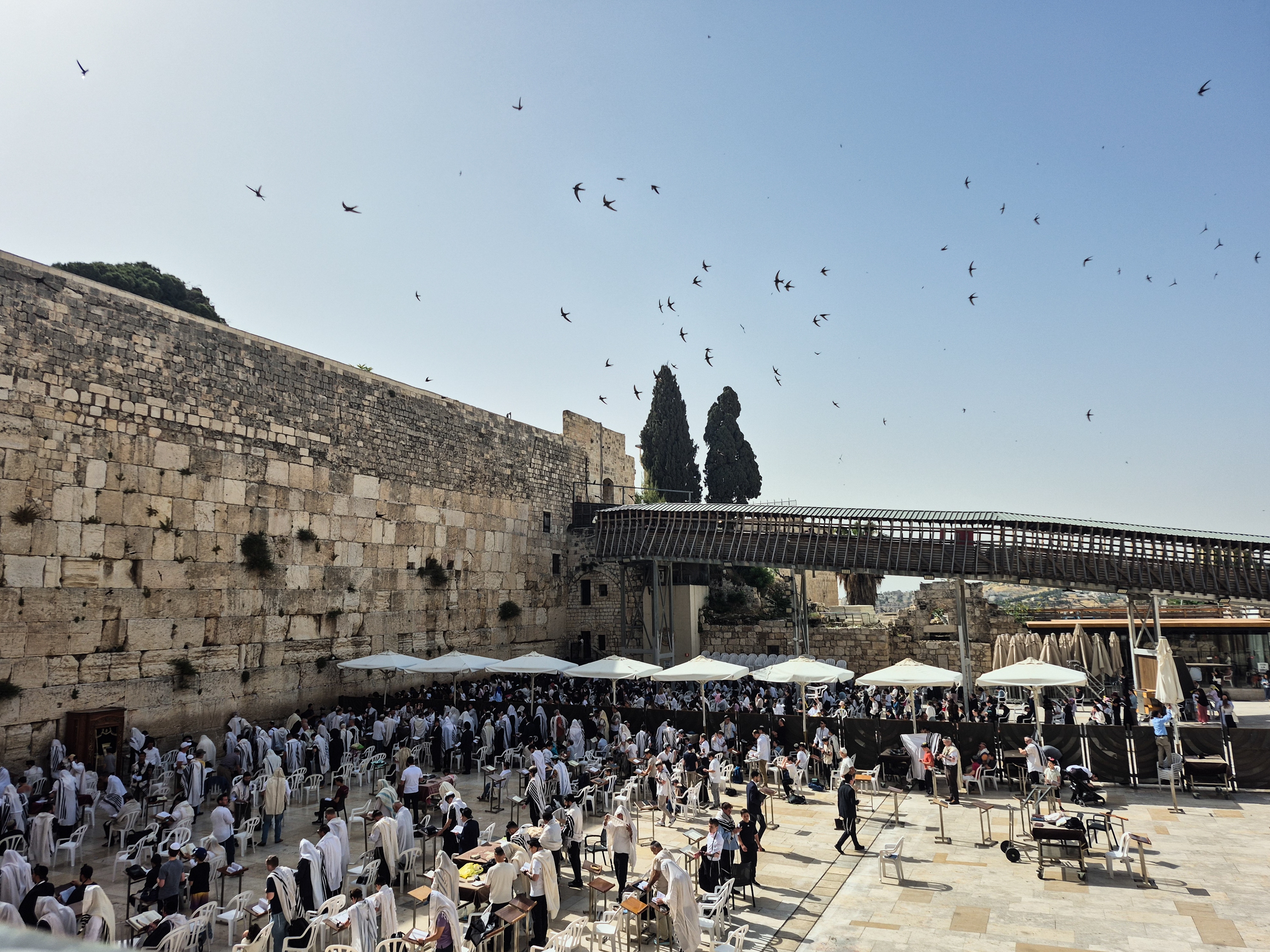
Good intentions are the fastest way to ruin an ecosystem.
Every spring, a familiar narrative makes the rounds in international media: a lone, passionate hero takes to the skies or risks life and limb to rescue a charismatic species. In Israel, this narrative currently belongs to paragliders and urban climbers attempting to intervene in the migratory patterns of Common Swifts (Apus apus) nesting in the ancient crevices of Jerusalem’s Western Wall. It makes for stunning photography. It reads like a cinematic triumph of human empathy over concrete urbanization.
It is also an ecological distraction.
The romantic obsession with individual animal rescue operations masks a uncomfortable truth: micro-interventions do nothing to alter macro population declines. Worse, they frequently cause the very disruptions they claim to prevent. Human interference under the guise of "saving" wildlife often ignores basic avian biology, diverts funding from scalable habitat protection, and treats a systemic environmental challenge as a series of isolated, photogenic crises.
The Biology of the Swift: Evolution Doesn't Need a Paraglider
To understand why vigilante rescue missions are flawed, you have to understand the sheer evolutionary perfection of the Common Swift. These birds are not fragile urban dependents; they are apex aerial specialists. A swift can spend ten months on the wing without ever touching the ground. They eat, sleep, and mate in mid-air.
When swifts select nesting sites in ancient masonry like the Western Wall, they are utilizing deep fissures that have provided thermal regulation and predator protection for centuries.
The "lazy consensus" pushed by human-interest journalism suggests that these birds are constantly trapped, struggling, and in need of human hands to extricate them from urban architecture. But evolutionary data shows a different reality. Avian mortality at the nest site is heavily driven by natural selection—predation by local raptors, internal competition for optimal crevices, and vector-borne parasites.
When well-meaning enthusiasts paraglide near nesting cliffs or use ropes to scale urban roosts to "check" on nests, they introduce a massive variable: anthropogenic stress.
Avian biologists have documented that human proximity to nesting sites triggers a spike in corticorsterone levels in birds. For a species that relies on hyper-efficient energy conservation to survive a grueling multi-continental migration from sub-Saharan Africa, a single forced flush from a nest can be fatal. The adult bird dumps critical energy reserves into a panic flight, leaving eggs or chicks exposed to immediate predation or lethal temperature drops.
The Misallocation of Conservation Capital
I have seen environmental groups and well-funded initiatives spend tens of thousands of dollars on specialized rescue gear, drone monitoring, and public relations campaigns centered around a handful of high-profile birds. It is a classic trap: funding the symptom because the cure is too boring to market.
Single-bird rescue operations offer an immediate emotional return on investment. A video of a paraglider releasing a rehabilitated swift gets millions of views. But if you analyze the cost-per-bird-saved ratio, the math collapses.
True avian conservation is unglamorous. It looks like zoning laws, pesticide bans, and large-scale architectural mandates.
The primary threats to the Common Swift are not a lack of paragliders in Jerusalem. The threats are two-fold and structural:
- The Insect Apocalypse: Global insect populations are declining at an estimated rate of 1% to 2% annually due to industrial agriculture and heavy pesticide use. Swifts are obligate insectivores. They are running out of fuel long before they ever reach the Western Wall.
- Modern Architecture: Sleek, glass-and-steel facades completely lack the deep cavities, weep holes, and rough stonework that older construction offered. We are building birds out of our cities.
If you want to save the swifts, you do not launch a paraglider. You lobby for municipal building codes that require the integration of nesting bricks in every new commercial development. You fight the deregulation of neonicotinoid pesticides. But those actions require political willpower and multi-year legal battles, not a parachute and a camera crew.
Dismantling the "People Also Ask" Assumptions
Whenever this topic trends, the same fundamentally flawed questions populate search engines. Let us answer them with cold reality rather than sentimentality.
Do urban birds need human intervention to survive in ancient cities?
No. Cities that retain historic architecture inadvertently create prime habitats. The birds survived the Roman Empire, the Ottoman Empire, and centuries of urban warfare without wildlife rehabilitation centers. The best thing humans can do for urban wildlife in historic zones is to leave the structures alone and prevent aggressive sandblasting or chemical sealing of deep masonry joints.
Can paragliding or drone monitoring help map endangered bird nests?
Practically, it is the worst tool for the job. Low-altitude flight creates acoustic and visual disturbances that mimic large aerial predators like the Peregrine Falcon. Modern, non-invasive thermal imaging from fixed, distant points can map nesting sites with zero disturbance to the colony. Using a paraglider for nest mapping is like using a monster truck to inspect a manicured lawn—it is loud, unnecessary, and destructive.
The Downside of the Hands-Off Approach
Admitting that hands-off conservation is superior requires accepting a brutal truth: some birds will die, and you will have to watch it happen.
If a juvenile swift falls from a nest in the Western Wall, its chances of survival are nearly zero. On the ground, their long wings and exceptionally short legs make it impossible for them to take off vertically. The human impulse is to pick it up, feed it tweezers full of mealworms, and try to force it into flight.
But a hands-off strategy recognizes that natural selection operates ruthlessly in urban colonies. The weak, the diseased, and the poorly positioned chicks fail. Attempting to artificially inflate survival rates of substandard fledglings can weaken the overall genetic resilience of the local population over generations.
The downside to this contrarian view is obvious: it lacks empathy in the micro-moment. It forces us to sit on our hands. It demands that we prioritize population-level data over individual emotional satisfaction.
Stop Romanticizing the Rescue
The narrative of the heroic lone rescuer is an indictment of our environmental policy, not a celebration of it. When an ecosystem requires constant, high-risk human intervention to keep its species alive, that ecosystem is already functionally dead.
We need to stop praising the spectacle of paragliders floating past ancient walls to pluck birds from crevices. It is a symptom of a culture that prefers performance art over systemic change.
If we genuinely care about the millions of swifts tracing the Great Rift Valley migratory flyway every year, we need to retire the capes, put down the cameras, and start fixing the boring, unsexy infrastructure problems that are actually killing them.
Stop trying to rescue the bird. Start rebuilding the world they fly through.