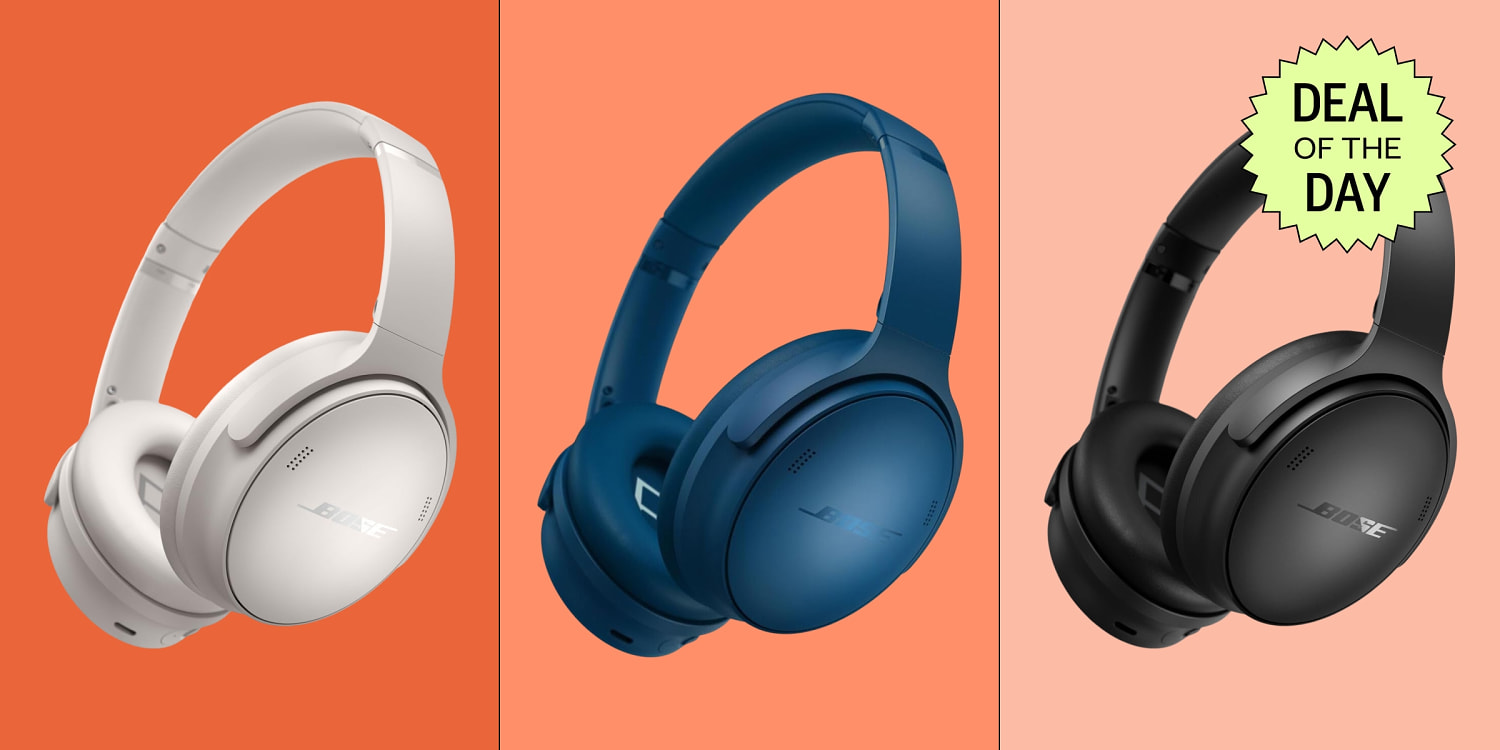
A 53 percent retail markdown on flagship active noise-canceling (ANC) hardware is never an act of corporate generosity; it is a calculated inventory liquidation event driven by product lifecycle obsolescence and margin compression. When Bose QuietComfort headphones drop to less than half their Manufacturer’s Suggested Retail Price (MSRP) during the Q4 Black Friday window, consumers are witnessing the intersection of hardware depreciation, acoustic engineering commoditization, and retail channel clearing. To evaluate whether this price point represents genuine consumer surplus or a value trap, buyers must audit the underlying acoustic architecture, the battery degradation curve of warehouse stock, and the opportunity cost against newer spatial-audio flagships.
Standard consumer tech coverage treats a 53 percent discount as a binary buying signal. That approach ignores the unit economics of consumer audio. High-end headphones carry gross margins typically ranging between 55 and 65 percent at full MSRP, driven by brand equity and proprietary Digital Signal Processing (DSP) algorithms rather than raw Bill of Materials (BOM) costs. Once a product crosses the 18-to-24-month mark in its lifecycle, research and development (R&D) costs are fully amortized. At that stage, the manufacturer’s primary financial objective shifts from margin maximization to working capital recovery—converting aging warehouse inventory into cash before storage fees and lithium-ion shelf-degradation erode the asset value to zero. For another perspective, read: this related article.
The Hardware Lifecycle and Margin Compression Model
Consumer electronics follow a predictable pricing decay curve dictated by three variables: component commoditization, flagship cannibalization, and retail floor space velocity.
- Component Commoditization: The core transducers, Bluetooth System-on-Chips (SoCs), and micro-electromechanical systems (MEMS) microphones used in standard QuietComfort models rely on mature supply chains. Over a two-year production run, supplier yields improve and per-unit component costs drop by 15 to 25 percent. Bose can sustain a 53 percent retail cut during peak Q4 volume without taking a direct unit loss because the current BOM cost is substantially lower than it was at launch.
- Flagship Cannibalization: Bose bifurcated its over-ear lineup by introducing the QuietComfort Ultra tier, which houses newer proprietary spatial audio processing (CustomTune) and updated industrial design. Keeping the legacy QuietComfort model near its original $349 MSRP creates pricing friction that stalls movement. Dropping the legacy unit by 53 percent establishes a clean price-tier separation, capturing price-elastic buyers who would otherwise defect to mid-tier competitors like Anker Soundcore or Sony’s WH-CH720N.
- Retail Channel Velocity: Big-box retailers allocate shelf and digital fulfillment capacity based on gross margin return on investment (GMROI). During November, inventory that does not turn rapidly incurs severe opportunity costs. A 53 percent markdown acts as an algorithmic trigger on major e-commerce platforms, pushing the SKU into top-of-funnel deal aggregators and clearing warehouse bays for Q1 product allocations.
Understanding this pricing structure clarifies what the buyer is actually acquiring: mature, reliable acoustic hardware stripped of its early-adopter brand tax, sold at a price point close to its true manufacturing and distribution floor. Further reporting regarding this has been provided by Wired.
Deconstructing the Acoustic and ANC Architecture
To determine if the discounted hardware still performs at a competitive threshold, one must isolate the physical and computational mechanisms of noise cancellation. Active noise cancellation relies on destructive interference—capturing ambient sound waves via external feedforward and internal feedback microphones, inverting their phase by 180 degrees through a dedicated DSP chip, and outputting the anti-noise wave through the driver alongside the audio signal.
The QuietComfort architecture excels in low-frequency attenuation (20 Hz to 1 kHz). This frequency band encompasses steady-state mechanical drones: aircraft cabin rumble, HVAC systems, and road noise. Because low-frequency sound waves have long wavelengths, the DSP has ample processing time to calculate and invert the phase accurately before the wave reaches the eardrum.
The limitation of this hardware generation appears in the mid-to-high frequency spectrum (1 kHz to 8 kHz), where human speech and sudden transient noises reside. Short wavelengths require ultra-low-latency processing and superior physical passive isolation to block effectively. While the QuietComfort’s plush synthetic protein-leather earcups provide solid passive damping, the older DSP lacks the transient response speed found in current-generation flagship silicon. In practical operational terms, these headphones will neutralize an airplane engine with near-total efficiency, but sharp office chatter or mechanical keyboard clicks will still bleed through at attenuated volumes.
The Passive-Active Trade-off
Acoustic engineers must balance clamping force against wearer fatigue. High clamping force improves the acoustic seal, boosting passive isolation in the high frequencies and reducing the computational workload on the ANC circuitry. However, excessive clamping force induces temporal pressure and heat buildup over multi-hour sessions.
Bose engineered the QuietComfort chassis around low clamping force and lightweight polymers (roughly 240 grams). This prioritizes long-duration ergonomic compliance over maximum passive seal. The trade-off is structural: the headphones rely heavily on continuous active processing to compensate for a lighter physical seal. If the battery depletes, passive isolation alone is mediocre compared to heavier, tighter-clamping studio monitors.
Evaluating the Battery Degradation Risk on Deep-Discount Stock
A critical blind spot in deal analysis is the electrochemical reality of discounted electronics. Lithium-ion cells degrade through two distinct mechanisms: cycle aging (charge and discharge events) and calendar aging (chemical breakdown over time, accelerated by high temperatures and extreme states of charge).
When a product hits a 53 percent Black Friday discount, there is a high statistical probability that the units being liquidated have sat in distribution centers for 12 to 24 months. Lithium-ion batteries stored at 100 percent charge—or allowed to self-discharge below 20 percent over long storage periods—suffer permanent capacity loss due to the thickening of the Solid Electrolyte Interphase (SEI) layer on the anode.
Buyers acquiring deep-discount stock face a non-zero risk of receiving a unit whose rated 24-hour battery life has already degraded by 10 to 15 percent prior to the first charge. Because Bose designs the QuietComfort earcups with glued and soldered internal battery assemblies rather than user-replaceable cells, battery exhaustion dictates the terminal lifespan of the entire device. The 53 percent discount effectively prices in this shortened operational runway.
Codec Bottlenecks and Connectivity Constraints
Audio fidelity over wireless protocols is governed by the Bluetooth codec pipeline, which compresses digital audio data for transmission and decompresses it at the receiver. The standard QuietComfort model supports SBC and AAC codecs. It omits high-bitrate proprietary codecs such as Qualcomm aptX Adaptive or Sony’s LDAC.
For users within the Apple ecosystem (iOS/macOS), the absence of aptX or LDAC is functionally irrelevant. Apple devices natively cap wireless transmission at 256 kbps AAC, and the QuietComfort’s DSP handles AAC decoding cleanly without measurable latency drift during video playback.
For Android and Windows users utilizing lossless streaming tiers (such as Tidal, Qobuz, or local FLAC libraries), the lack of high-bitrate codec support creates a hard data bottleneck. High-resolution audio streams are downsampled to standard AAC or SBC before transmission, discarding upper-harmonic detail and dynamic range. Furthermore, without aptX Low Latency, Windows users attempting competitive gaming or real-time audio editing will encounter noticeable audio-visual desynchronization, forcing reliance on the included 2.5mm-to-3.5mm analog cable.
The Decision Matrix: Capital Allocation for the Buyer
Purchasing discounted audio hardware requires matching the specific technical profile of the device against your primary operational environment. Use the following triage framework to execute the purchase decision:
- Execute the purchase if your primary use case is transit, aviation, or open-office isolation on iOS/macOS. At 53 percent off, the cost-per-decibel of low-frequency noise reduction is unmatched in the market. The lightweight chassis eliminates hotspot fatigue on transcontinental flights, and the AAC codec limitation has zero impact on Apple hardware.
- Execute the purchase if you require tactile physical controls. Unlike newer capacitive touch-surface headphones that suffer from false inputs in cold weather or high humidity, the QuietComfort utilizes physical mechanical buttons for volume, playback, and ANC mode cycling. In operational environments requiring blind tactile feedback, physical switches remain superior.
- Reject the purchase if you operate primarily on Android/Windows with lossless audio sources. The codec bottleneck prevents you from utilizing your source hardware’s full output resolution. Allocate your capital toward discounted Sony WH-1000XM4 or XM5 units (for LDAC support) or Sennheiser Momentum 4 units (for aptX Adaptive support), even if their percentage discount is smaller.
- Reject the purchase if call quality in high-wind or chaotic environments is a mission-critical requirement. The microphone array on the standard QuietComfort model prioritizes voice isolation in quiet-to-moderate rooms. In high-wind conditions or loud street environments, its beamforming algorithms struggle to separate vocal fundamentals from broadband ambient noise, resulting in aggressive digital gating that clips the user's speech.
Immediate Post-Purchase Verification Protocol
If you acquire the QuietComfort headphones at the 53 percent markdown, treat the first 14 days—the standard retail return window—as a hardware stress-test period to eliminate the risk of warehouse shelf-degradation.
First, connect the headphones to the Bose Music application immediately upon unboxing to verify the manufacturing date encoded in the serial number and force any pending firmware updates. Firmware patches frequently optimize the DSP noise floor and Bluetooth multipoint handoff stability.
Second, execute a controlled battery drain test. Charge the unit to 100 percent, set the volume to exactly 50 percent with ANC locked to maximum, and run continuous audio playback until shutdown. If total runtime falls below 20 hours (more than a 15 percent variance from the 24-hour specification), the lithium-ion cell has suffered severe calendar aging in storage. Initiate an immediate RMA exchange while peak promotional inventory is still available.
Third, test the multipoint Bluetooth switching latency between your primary computer and mobile device. Older Bluetooth 5.1 implementations can occasionally suffer from audio stutter when two active streams compete for priority. Confirm that the handshake behavior aligns with your daily workflow before discarding the packaging.
The 53 percent markdown converts the Bose QuietComfort from an overpriced legacy SKU into a high-efficiency utility tool. Do not buy it expecting flagship spatial audio or high-resolution wireless fidelity. Buy it strictly as a discounted, ergonomically superior low-frequency noise filter—and verify the battery health on day one.