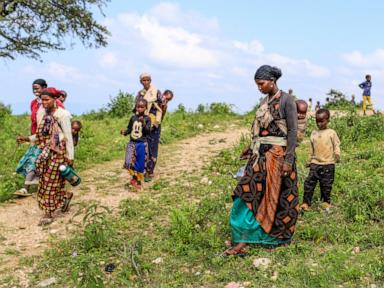
Cross-border displacement from Ethiopia into Kenya trades immediate kinetic survival for slow-onset nutritional insolvency. When mothers flee armed conflict or drought across the southern Ethiopian border into Kenyan border counties—primarily Marsabit, Mandera, and Turkana, or onward to Kakuma—they enter a structural trap. Physical safety is achieved upon crossing the boundary, yet the economic architecture of host regions systematically strips these households of income-generating capacity while international humanitarian rations fail to cover basic basal metabolic requirements. Standard humanitarian reporting treats this crisis as an emotional narrative of maternal sacrifice. In operational reality, it is a predictable failure of supply-chain funding, legal labor restrictions, and local market inflation colliding inside arid and semi-arid lands.
The Structural Trade-Off Between Kinetic Safety and Economic Agency
Displacement across the Moyale or Mandera corridors immediately alters a household's production function. In their regions of origin—whether Oromia, Somali, or southern Ethiopia—households relied on agro-pastoralist asset bases, informal kinship credit networks, and localized trade. Crossing into Kenya severs all three mechanisms simultaneously.
First, asset liquidation occurs prior to or during transit. Families sell livestock at distressed prices to fund transport or bribe gatekeepers, converting productive capital into rapidly depleting cash reserves. Second, Kenyan refugee policy, historically governed by encampment mandates under the Refugees Act, restricts freedom of movement and formal work permits. Even with the implementation of the Shirika Plan aimed at transitioning camps into integrated settlements, the practical reality for newly arrived Ethiopian mothers in border towns and camps remains de facto exclusion from formal wage labor.
This legal friction forces displaced women into the lowest tiers of the informal economy:
- Piecework labor: Domestic washing, fetching water, or hauling firewood for host community households at wages suppressed by an oversupply of desperate labor.
- Petty trade: Reselling small quantities of charcoal, khat, or vegetables, which requires working capital these mothers do not possess and exposes them to municipal confiscation.
- Dependency on humanitarian transfers: Relying on World Food Programme (WFP) cash-based transfers or in-kind rations that are subject to chronic funding shortfalls.
The causal chain is straightforward. Removing legal right-to-work protections while eliminating productive assets leaves mothers with only their physical labor to monetize. Because single-parent, female-headed households carry the full burden of childcare without extended family support networks, available labor hours are severely constrained. The result is an immediate negative cash-flow gap between daily caloric expenditure and daily earned income.
Deconstructing the Caloric Deficit Mechanism
A household enters nutritional crisis when total caloric acquisition falls below the aggregate metabolic floor of its members. For displaced Ethiopian mothers in northern Kenya, this deficit is driven by four compounding variables rather than a single point of failure.
1. Humanitarian Ration Haircuts
Global humanitarian financing operates on annual donor pledges rather than guaranteed endowments. As global displacement crises multiplied through 2024, 2025, and 2026, funding for protracted East African operations repeatedly fell short of operational targets. When donor funding drops, agencies execute ration cuts—reducing either the tonnage of grain and pulses distributed or the monthly Kenyan Shilling (KES) value loaded onto electronic food vouchers. A ration calibrated to provide 2,100 kilocalories per person per day is routinely reduced to 60 percent or less of that baseline. The deficit is not absorbed evenly; it is pushed directly onto household purchasing power.
2. Arid Land Supply Chain Friction
Northern Kenyan counties suffer from severe infrastructure deficits. Paved road networks are sparse, transport costs from agricultural hubs in central Kenya are high, and local agricultural output in Marsabit and Turkana is negligible due to recurring multi-season droughts. Every kilogram of maize meal, cooking oil, and beans carries a heavy logistics premium. When fuel prices rise or seasonal rains wash out transport corridors, retail food prices in border markets spike faster than the national consumer price index. Cash transfers lose real purchasing power within weeks of disbursement.
3. The Maternal Buffering Effect
In food-insecure households, intra-household food allocation is rarely egalitarian. Behavioral economics and nutritional anthropology consistently document the "maternal buffering" phenomenon. When total household calories fall below 100 percent of requirements, mothers systematically reduce their own intake to preserve the caloric allocation of their children.
This mechanism follows a predictable degradation curve:
- Dietary simplification: Elimination of protein, dairy, and micronutrients in favor of pure carbohydrate staples (maize, sorghum) to maximize calories per shilling spent.
- Meal frequency reduction: Dropping from three meals to one meal per day, typically consumed in the evening to prevent sleep disruption from hunger pangs.
- Maternal fasting: The mother skips the single daily meal entirely, surviving on tea with sugar or water while dividing the solid food among younger children.
4. Lactation and Metabolic Burn
The physiological cost of maternal buffering accelerates when the mother is pregnant or lactating. Exclusive breastfeeding requires roughly 450 to 500 additional kilocalories per day above baseline metabolic needs. When a lactating mother restricts her intake to feed older children, her body draws down maternal fat and muscle reserves to maintain milk volume. Once maternal stores are depleted, milk production drops, transferring the caloric deficit directly onto the infant. At this stage, the household transitions from chronic food insecurity to acute malnutrition, measurable through plummeting Mid-Upper Arm Circumference (MUAC) scores.
The Invisible Health and Water Multiplier
Caloric intake cannot be analyzed in isolation from water, sanitation, and hygiene (WASH) infrastructure. In informal settlements around Moyale or congested reception centers in Kakuma, clean water is a priced commodity.
When cash is scarce, mothers face a direct capital allocation dilemma: spend limited shillings on potable water and firewood, or spend them on food. Choosing food often means sourcing untreated water from shallow wells or seasonal riverbeds and undercooking beans or grains to conserve charcoal.
The biological consequence is enteric infection and diarrheal disease. A child suffering from acute diarrhea loses fluids and nutrients rapidly, rendering whatever calories they do consume metabolically useless. Malnutrition weakens the immune system, increasing susceptibility to waterborne pathogens, which in turn prevents nutrient absorption. Breaking this cycle requires simultaneous intervention in caloric supply, water purification, and primary healthcare—a coordination standard rarely met in underfunded border operations.
Where Conventional Aid Models Fail
Standard humanitarian interventions fail to resolve this crisis because they treat a structural market problem as a temporary logistics problem. Three operational flaws persist across response frameworks:
- Static Cash Transfer Indexing: Electronic vouchers and mobile money transfers are adjusted too slowly to reflect hyper-local inflation in remote border markets. By the time vulnerability assessments register a 30 percent spike in maize prices and program managers approve a transfer value revision, households have already liquidated their remaining assets or taken on predatory informal debt.
- Registration Bottlenecks: Newly arrived asylum seekers frequently wait months for biometric registration and formal documentation. During this administrative limbo, families are excluded from standard monthly distribution cycles, relying entirely on emergency reception rations or charity from equally impoverished neighbors.
- Siloed Programming: Food security teams distribute grain, WASH teams build boreholes, and protection teams monitor gender-based violence, often operating under separate funding streams and reporting timelines. When a mother must walk five kilometers outside a settlement perimeter to collect firewood because cooking fuel was omitted from the non-food item kit, she is exposed to physical assault—reintroducing the exact security threat she fled Ethiopia to escape.
Operational Interventions to Stabilize Household Nutrition
Resolving the caloric deficit for displaced Ethiopian mothers requires shifting from reactive food drops to targeted economic and nutritional engineering. Aid administrators, county governments, and donor agencies must execute four specific adjustments:
- Automate Inflation-Indexed Cash Transfers: Replace fixed quarterly voucher values with automated monthly adjustments pegged directly to real-time retail price monitoring of a standardized food basket in Marsabit, Mandera, and Turkana markets.
- Deploy Blanket Supplementary Feeding for Pregnant and Lactating Women: Eliminate means-testing delays for mothers with children under two. Provide immediate, high-density lipid-based nutrient supplements alongside standard household rations upon border arrival, prior to formal refugee status determination.
- Decentralize Micro-Enterprise Grants and Fuel Alternatives: Distribute fuel-efficient stoves and briquette-making equipment alongside small, unconditional cash grants ($50 to $100) tailored specifically to female-headed households. Reducing firewood expenditure immediately frees up 15 to 25 percent of a household's daily cash outlay for protein and vegetables.
- Enforce Immediate Right-to-Work Documentation at Border Entry: Operationalize the integration framework of the Shirika Plan at the county level by issuing immediate temporary movement and work permits upon biometric registration, allowing Ethiopian mothers to legally access agricultural labor, commercial trade, and vocational markets without fear of police extortion.
Until humanitarian operations align financial transfers with real-time border market prices and remove legal barriers to maternal income generation, physical sanctuary in Kenya will continue to produce measurable nutritional decline.