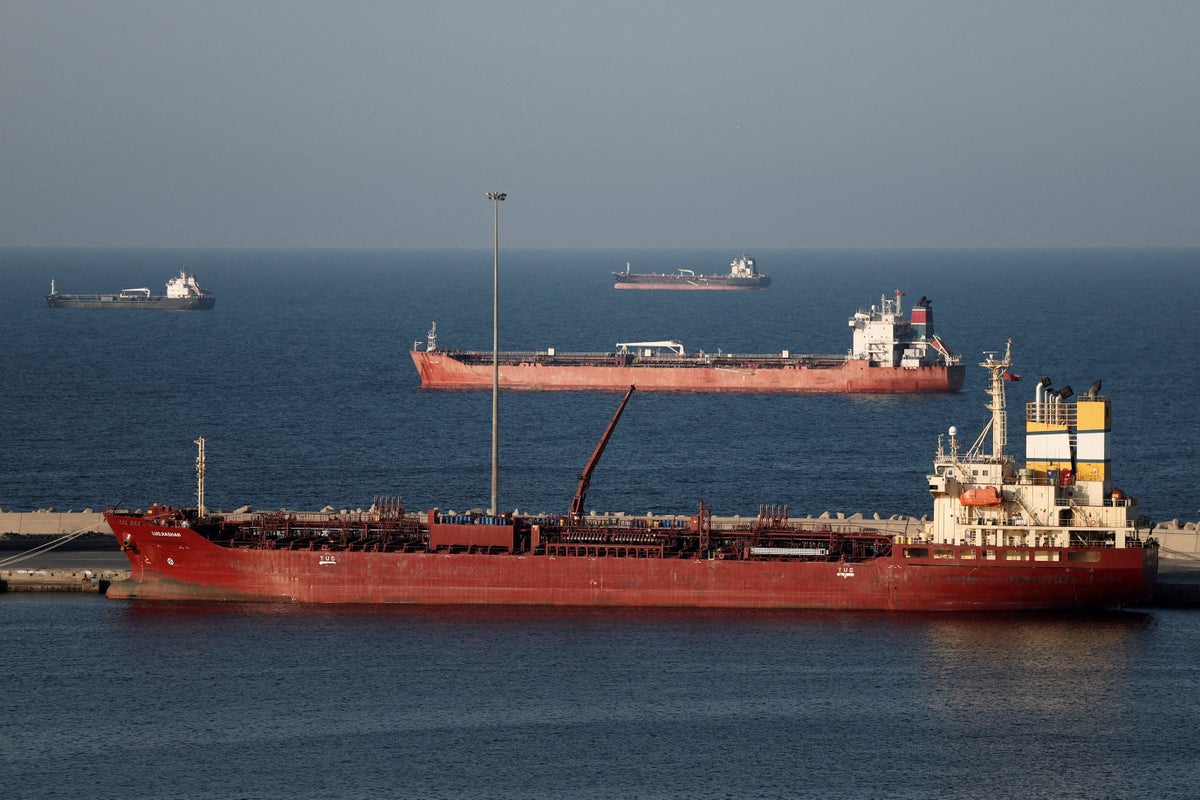
The proposed imposition of transit fees by the Iranian government on vessels traversing the Strait of Hormuz represents a shift from kinetic naval harassment to a sophisticated legal-economic strategy of non-kinetic warfare. By attempting to monetize a geographical choke point that handles roughly 20% of the world’s petroleum consumption, Tehran is testing the elasticity of international maritime law against the realities of regional hegemony. This maneuver is not merely a revenue-generating exercise; it is an effort to establish a "sovereign rent" over a global common, effectively weaponizing the United Nations Convention on the Law of the Sea (UNCLOS) through selective interpretation.
The Structural Mechanics of Transit and Sovereignty
The Strait of Hormuz operates under the legal regime of transit passage, a principle established to ensure that international navigation through straits used for international commerce remains unimpeded. Iran’s legislative push to demand "security fees" or "environmental compensation" relies on a fundamental misinterpretation of territorial waters versus international corridors. If you found value in this piece, you might want to check out: this related article.
The conflict hinges on three distinct legal tiers:
- Territorial Sea Limits: Under UNCLOS, a state’s sovereignty extends 12 nautical miles from its coast. However, the Strait of Hormuz is only 21 miles wide at its narrowest point. This creates an overlap where the entire navigable channel falls within the territorial waters of Iran and Oman.
- Transit Passage Rights: Article 38 of UNCLOS stipulates that all ships and aircraft enjoy the right of transit passage, which shall not be impeded. Crucially, this right cannot be suspended by the coastal state for any reason, including "security concerns," provided the vessel is moving continuously and expeditiously.
- The Non-Signatory Leverage: While Iran signed UNCLOS in 1982, it never ratified the treaty. Tehran argues it is only bound by the older 1958 Convention on the Territorial Sea and the Contiguous Zone, which provides for "innocent passage" rather than "transit passage." Innocent passage allows a coastal state much broader latitude to suspend transit if it deems the vessel prejudicial to its peace or security.
The Cost Function of Maritime Compliance
From a logistics and supply chain perspective, the imposition of fees introduces a "Friction Tax" that scales far beyond the nominal dollar value of the toll itself. If Iran successfully mandates a fee, the immediate economic impact follows a predictable cascade of cost increases. For another look on this event, check out the recent coverage from The Guardian.
Direct Toll Expenses
The proposed fee structure often mirrors the Suez Canal model, though without the corresponding infrastructure investment. If Tehran applies a fee based on Net Tonnage (NT) or deadweight tonnage (DWT), a Very Large Crude Carrier (VLCC) carrying two million barrels of oil could face six-figure surcharges per transit.
Insurance Premium Volatility
The maritime insurance market, centered in London (Lloyd’s), reacts to political risk with "War Risk" surcharges. The moment a sovereign state claims the right to stop or board vessels for "non-payment of fees," the Strait is reclassified as a high-risk zone. This triggers:
- Kidnap and Ransom (K&R) premiums: Increased costs for crew safety.
- Hull and Machinery (H&M) surcharges: Protection against physical seizure or damage.
- Loss of Hire: Coverage for the time a ship is detained during a payment dispute.
Operational Latency
The mechanism of fee collection is a primary bottleneck. If Iran requires vessels to stop, report, or utilize specific "escort services" to justify the fee, the resulting congestion in the narrow 2-mile wide shipping lanes increases the probability of maritime accidents. A delay of just 24 hours for a VLCC can cost a charterer $50,000 to $100,000 in demurrage.
The Environmental and Security Pretext
Tehran frequently cites the environmental degradation of the Persian Gulf as the logical basis for these fees. This is a strategic pivot to "Green Geopolitics." By framing the toll as an environmental levy, Iran attempts to align its actions with global sustainability trends, making it harder for international bodies to condemn the move outright.
However, the "Security Fee" argument is the more potent lever. Iran maintains that its Revolutionary Guard Corps (IRGC) Navy provides the primary security infrastructure for the Strait. The logic is as follows: if the international community benefits from the stability Iran provides in its territorial waters, the international community must subsidize that stability. This creates a circular logic where Iran creates the tension (seizures, mine placement) and then demands payment to resolve the very instability it generated.
Strategic Asymmetry and the Counter-Strategy
The global response to a Hormuz toll is constrained by the "Energy Zero-Sum" reality. Unlike the Suez Canal, which has a long-distance alternative via the Cape of Good Hope, the Strait of Hormuz has no viable maritime bypass for the volume of oil it carries.
The Pipeline Myth
Proponents of regional stability often point to the East-West Pipeline in Saudi Arabia or the Habshan–Fujairah pipeline in the UAE as "relief valves." While these can move approximately 6.5 million barrels per day combined, the Strait handles over 20 million. The math is brutal: 70% of the region’s export capacity is physically locked behind the Strait of Hormuz.
Legal and Military Escalation Tiers
The enforcement of a toll would require Iran to physically intercept non-compliant vessels. This transitions the dispute from a fiscal one to a military one.
- Level 1: Administrative Harassment: Using radio warnings and electronic interference to pressure vessels into self-reporting and paying via digital accounts.
- Level 2: Selective Seizure: Boarding ships from nations with weak naval presence or those with direct diplomatic friction with Tehran to set a precedent.
- Level 3: Full Blockade Enforcement: Establishing a "toll gate" manned by IRGC fast-attack craft.
This third level would almost certainly trigger a response from the U.S.-led International Maritime Security Construct (IMSC). The strategic risk for Iran is that by formalizing a fee, they provide a specific, quantifiable "casus belli" for international intervention that "shadow war" activities (like unattributed mine attacks) do not.
Macroeconomic Implications for Energy Markets
A $1 per barrel "security fee"—which has been floated in various Iranian legislative circles—would inject $20 million daily into the Iranian treasury. For the global market, this acts as an artificial floor on oil prices. Because the fee is applied at the source, it is highly regressive, impacting Asian markets (China, India, Japan, South Korea) disproportionately, as they consume 76% of the oil passing through the Strait.
This creates an uncomfortable diplomatic friction point. China, Iran’s primary economic lifeline, would be the largest payer of these fees. This suggests that Iran’s toll plan is perhaps more of a bargaining chip for sanctions relief than a long-term fiscal policy. Tehran is essentially holding the "Global South’s" energy supply hostage to force the "Global North" back to the negotiating table regarding the Joint Comprehensive Plan of Action (JCPOA) or frozen assets in foreign banks.
The Operational Reality of Enforcement
If a ship captain refuses to pay, the Iranian authorities face a "Credibility Gap." To maintain the integrity of their fee system, they must be willing to use force. However, the act of seizing a vessel for a civil debt (non-payment of a toll) is a violation of the "Right of Hot Pursuit" limitations in international law.
Coastal states can only pursue and stop a ship if there is "good reason to believe" the ship has violated the laws and regulations of that state. Because the right of transit passage explicitly limits the coastal state’s regulatory power to specific areas (pollution, fishing, traffic separation), a self-created "transit fee" sits on shaky legal ground. Most international courts would view this as an illegal "tax on transit."
The strategic play for maritime stakeholders is not to negotiate the price of the toll, but to reinforce the legal "non-recognition" of the fee. Any payment, even under protest, validates the Iranian claim of jurisdictional authority over the transit corridor. The most likely path forward involves a bifurcated shipping market: "Tier 1" vessels under the protection of naval convoys that refuse payment, and "Tier 2" independent operators who pay the "extortion tax" as a cost of doing business, effectively creating a two-speed energy market in the Persian Gulf. The ultimate resolution will not be found in maritime law, but in the ability of the international community to maintain a credible military presence that makes the "collection" of such fees more expensive for Iran than the revenue they would generate.