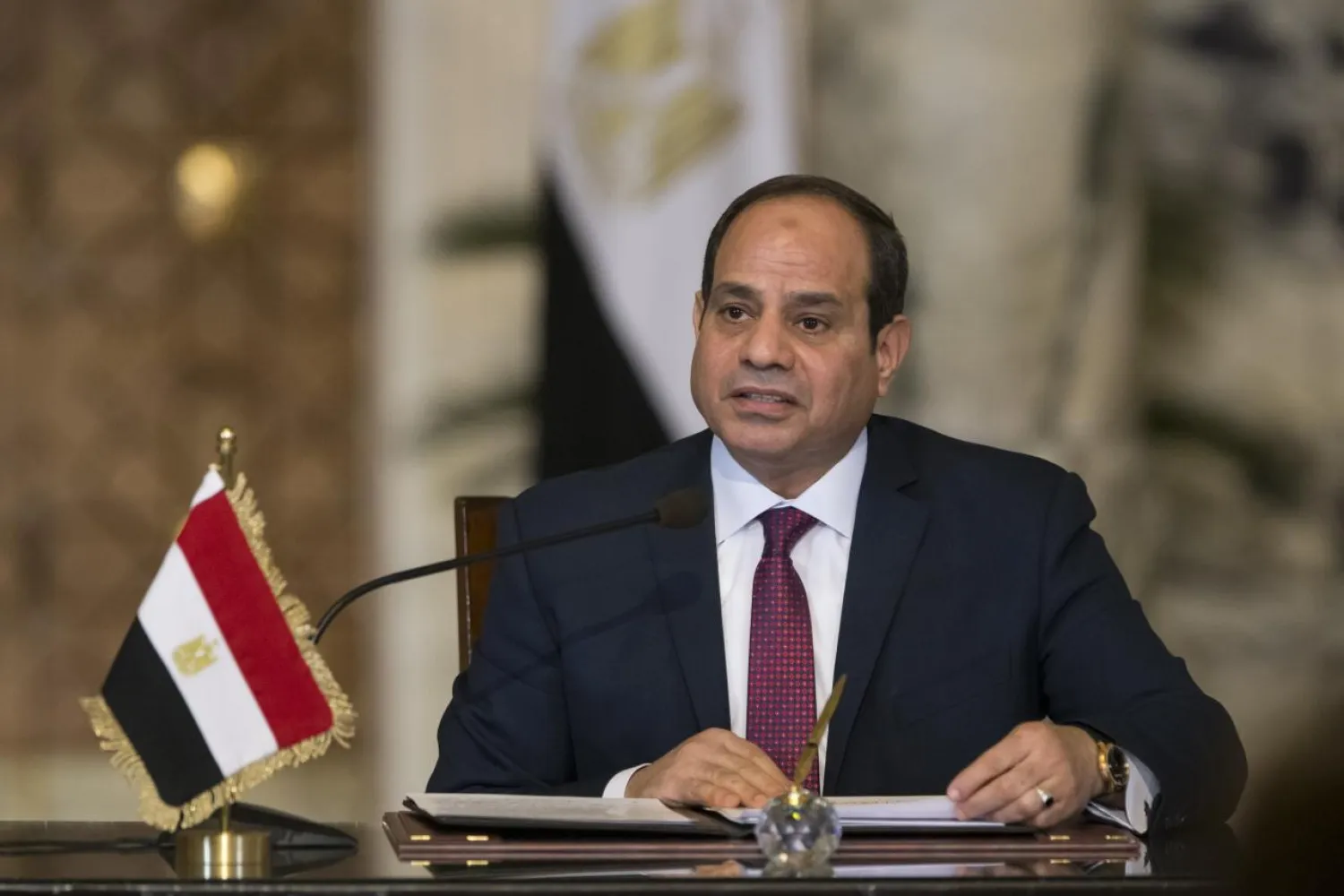
Borders define nations, but in the Middle East, they also test the limits of sovereignty, survival, and regional stability. When Egyptian President Abdel Fattah el-Sisi draws a red line against the forced displacement of Palestinians from Gaza, he isn't just speaking for Cairo. He is drawing a line that has held firm through intense diplomatic pressure, shifting alliances, and devastating military escalations. Most international commentary treats this stance as a simple logistical refusal. That misses the entire point. The rejection of displacement goes to the heart of Egyptian national security, regional strategy, and the survival of the Palestinian national movement itself.
If you want to understand why Cairo refuses to budge, you have to look past the superficial headlines and examine the deep historical, political, and security calculations driving Egyptian foreign policy today.
The Existential Security Calculus in Sinai
For decades, the Sinai Peninsula has been a sensitive security zone for Cairo. Insurgencies, smuggling tunnels, and regional friction have tested the Egyptian military's grip on the eastern border. The idea of hundreds of thousands—or millions—of displaced Gazans crossing into Sinai creates a nightmare scenario for Egyptian military planners.
President el-Sisi has stated repeatedly that moving Palestinians into Egyptian territory would turn the Sinai Peninsula into a launchpad for militant operations against Israel. That dynamic would shatter the 1979 Egypt-Israel Peace Treaty overnight. Once a border becomes a militarized zone for proxy warfare, undoing the damage takes generations. Cairo knows this better than anyone.
Beyond military security, there is the demographic and economic reality. Egypt is currently grappling with its own domestic economic hurdles, inflation pressures, and infrastructural strains. Absorbing a massive refugee population fleeing a pulverized enclave is simply not viable. Egyptian officials have argued consistently that shifting populations across international borders solves nothing. Instead, it exports a regional crisis into a fragile domestic economy.
Liquidating the Palestinian Cause
When el-Sisi warns against attempts to annihilate or displace the Palestinian cause, he is echoing a deep-seated Arab fear that forced removal is permanent. History provides grim precedent. Refugees who leave their homes during conflict rarely return.
If Gaza's population is pushed out—whether into the Sinai desert or further afield—the physical land of Gaza is effectively emptied. Once emptied, the prospect of a contiguous, independent Palestinian state vanishes. That outcome serves hardline political agendas that seek to permanently bury the two-state solution.
Egyptian diplomacy views this as an unacceptable geopolitical shift. Cairo has positioned itself as a steadfast defender of Palestinian rights not merely out of rhetorical solidarity, but because a stateless, displaced population destabilizes the entire Levant. By insisting that Palestinians remain on their land, el-Sisi aims to preserve the legal and territorial basis for future statehood.
High-Stakes Diplomacy Behind Closed Doors
The diplomatic pressure on Egypt has been unrelenting. Western capitals, international organizations, and regional players have all attempted to sway Cairo's position as humanitarian catastrophes unfold inside the enclave. Yet, el-Sisi has maintained a rigid wall of opposition.
Recent high-level meetings in Cairo—such as el-Sisi's discussions with Palestinian President Mahmoud Abbas—highlight a synchronized Arab effort to counter displacement plans. These talks focus heavily on coordinating humanitarian aid delivery, pushing for lasting ceasefires, and planning for postwar governance that keeps Palestinians anchored to their soil.
Egypt doesn't act alone, but it anchors the regional resistance to population transfers. Other Arab nations, including Saudi Arabia and Jordan, have echoed these warnings, recognizing that forced displacement sets a dangerous regional precedent. If one population can be uprooted and pushed across a border with impunity, the sovereignty of other states in the region becomes entirely negotiable.
Navigating Superpower Pressures and Ceasefire Realities
Navigating Washington's shifting political landscape adds another layer of complexity. Different American administrations bring varying proposals for the Middle East, some of which have floated sweeping relocation ideas or large-scale resettlement concepts. El-Sisi has navigated these proposals with careful diplomatic balancing.
Cairo engages constructively with international partners on ceasefire frameworks and hostage exchanges, but draws a hard boundary when external plans infringe upon Egyptian sovereignty or Palestinian land rights. When U.S. or European mediators table proposals that skirt around the core issue of permanent displacement, Egyptian intelligence and diplomatic corps push back quietly and firmly.
This balancing act requires immense skill. Egypt relies on foreign aid, military cooperation, and international financial backing, yet it cannot afford to capitulate on an issue as central to its national identity and security as the Palestinian border. Crossing this red line would alienate the Egyptian public, whose sympathy for the Palestinian cause remains profound and vocal.
The Humanitarian Dilemma and Post-War Reconstruction
Refusing displacement does not mean ignoring human suffering. Cairo has continuously pushed for massive humanitarian aid inflows, medical evacuations for wounded civilians, and the opening of border crossings for relief supplies. The tension lies in the distinction between providing temporary aid versus enabling permanent population transfer.
Egyptian strategists argue that humanitarian relief must be delivered inside Gaza, not outside it. Setting up tent cities inside Egyptian territory plays directly into the hands of those who want to empty the Strip. Therefore, Cairo's strategy centers on securing the enclave, pushing for a complete military withdrawal, and preparing the groundwork for massive reconstruction in place.
Rebuilding Gaza where it stands is a monumental task. The infrastructure is in ruins, unexploded ordnance litters neighborhoods, and basic services have collapsed. Yet, international donors and regional powers must face the reality that reconstruction cannot begin while the threat of forced removal hangs over the population. Security and stability must precede cement and steel.
Charting a Realistic Path Forward
The stance taken by Cairo is clear, uncompromising, and rooted in hard-nosed realism. President el-Sisi's rejection of Palestinian displacement is neither temporary nor negotiable. It is a calculated defense of Egyptian national borders and an insistence that regional peace cannot be built on the erasure of a people.
To break the current cycle, international pressure must shift away from managing displacement and toward enforcing compliance with international law. Ceasefires must hold, blockades must lift, and diplomatic channels must reopen with the explicit goal of establishing a viable Palestinian state. Anything less guarantees that the region will remain trapped in an endless loop of conflict, displacement, and crisis. The borders of the Middle East are difficult to redraw without breaking everything around them. Cairo understands this truth, and its leaders refuse to let the break happen on their watch.