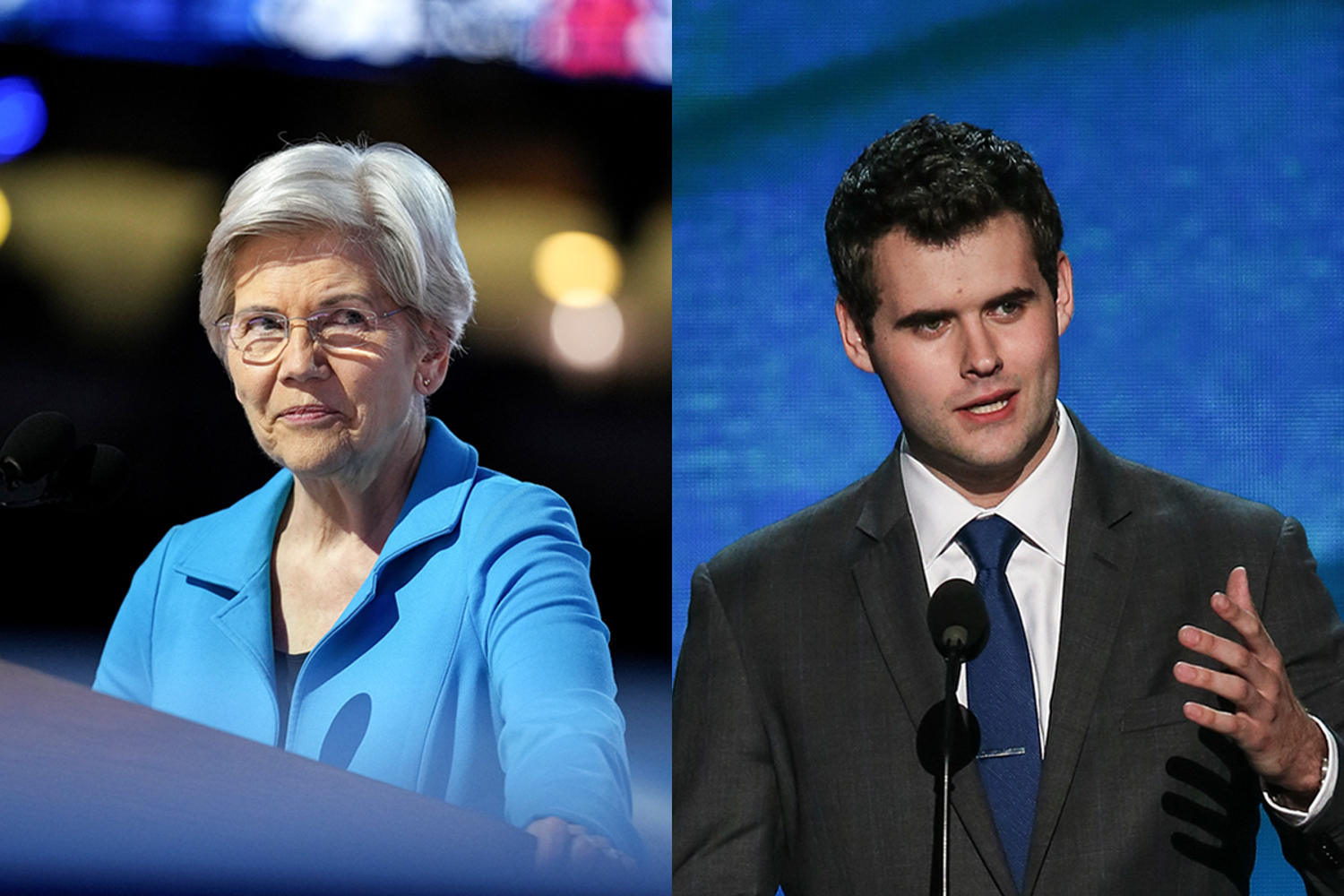
Elizabeth Warren’s decision to plant her flag in Iowa soil for a progressive Senate challenger is not merely a routine campaign stop. It is a calculated stress test for the populist economic message that has defined her career. By throwing her weight behind a candidate running to the left of the establishment, Warren is attempting to prove that "Big Structural Change" can still resonate in a state that has drifted steadily toward the Republican column over the last decade. This move signals a definitive shift in Democratic strategy, moving away from the cautious, centrist overtures of the past and toward a confrontational, pocketbook-focused platform designed to peel away working-class voters who feel abandoned by both parties.
The optics of a Massachusetts firebrand navigating the diner booths of Council Bluffs or the community centers of Des Moines will undoubtedly be used as fodder by the opposition. However, the underlying mechanics of this endorsement reveal a deeper desperation within the party. Iowa, once the ultimate purple prize, has become a laboratory for Republican dominance. For progressives, the mission is no longer about winning over the suburban moderate who worries about decorum. It is about reaching the voter who is angry about the price of insulin, the consolidation of corporate farming, and the erosion of local manufacturing.
The Strategy of Disruption
Democratic leadership has long treated the Midwest with a "do no harm" mentality. This usually involves recruiting candidates with military backgrounds or business resumes who promise to be a "steady hand." Warren is tossing that playbook into the shredder. Her presence in the state serves to validate a brand of politics that identifies specific villains—monopolistic agribusiness, private equity firms, and predatory lenders.
This isn't about pleasantries. It is about a scorched-earth policy regarding corporate influence. By backing a progressive in the Senate primary and general election cycle, Warren is betting that the "populist" label can be reclaimed from the right. The theory is simple but risky. If you give people a clear enemy and a concrete plan to lower their costs, they will overlook the cultural friction that often separates coastal progressives from Midwestern voters.
The risk, of course, is alienation. Iowa’s electorate is not a monolith, but it is increasingly skeptical of outside influencers telling them how to manage their local economy. Warren’s task is to frame her policy goals not as social engineering, but as economic liberation.
The Agribusiness Bottleneck
You cannot talk about Iowa politics without talking about the soil. For decades, the consolidation of the agricultural industry has squeezed the independent farmer. A handful of companies now control the seeds, the fertilizer, and the processing plants. This creates a bottleneck where the farmer takes all the risk and the conglomerate takes all the profit.
Warren’s legislative history on anti-monopoly laws is her strongest currency here. When she speaks to an Iowa crowd, she isn't just talking about abstract "equity." She is talking about the "Right to Repair" tractors and the breaking up of the Big Four meatpackers. This is where the progressive platform meets the reality of the rural economy.
Historically, the Democratic party lost its grip on these voters when it stopped talking about the power of the middleman. By returning to these trust-busting roots, Warren is attempting to revive a tradition of prairie populism that once made the Midwest a stronghold for labor and farm unions. It is a difficult sell in an era of intense hyper-partisanship, but it is the only path left for a party that has seen its rural support evaporate.
The Healthcare Vacuum
Beyond the farm, Iowa’s rural hospitals are disappearing. When a facility closes in a small town, it isn't just a loss of services; it is the death of an anchor institution. The progressive candidate Warren is supporting views healthcare not as a market to be tweaked, but as a public good that has been looted by insurance providers and hospital administrators.
The argument being made on the trail is that the "moderate" approach of incremental subsidies has failed to keep the doors open. In these communities, the promise of a government-backed healthcare option or more aggressive price controls on pharmaceuticals isn't a radical theory. It is a matter of basic survival. The challenge lies in convincing a skeptical public that the federal government—a favorite punching bag for local politicians—is capable of delivering on that promise without a mountain of red tape.
Internal Party Friction
Warren’s arrival in Iowa is also a shot across the bow of the national Democratic establishment. There is a quiet, simmering tension between the wing of the party that wants to protect vulnerable incumbents and the wing that wants to expand the map by running "unapologetic" candidates.
The traditionalists argue that Iowa is too far gone for a progressive to win. They point to the 2020 and 2024 cycles as evidence that the state has fundamentally changed. Warren’s counter-argument is that the state changed because the party stopped giving people a reason to vote for something, offering only a reason to vote against the other side.
This ideological tug-of-war has real-world consequences for funding and staffing. If Warren’s candidate shows strength, it forces the Democratic Senatorial Campaign Committee to reconsider its investment strategy. If the candidate falters, it will be cited as a cautionary tale for years to come, further entrenching the centrist "safe" candidate model that has, so far, failed to reclaim the Iowa statehouse or its federal seats.
The Ghost of the Iowa Caucus
The shadow of the revamped primary calendar looms large over this campaign. After Iowa lost its first-in-the-nation status, some felt the state would be ignored by national figures. Warren’s visit proves that Iowa remains a symbolic battleground. For a certain type of politician, the state is the ultimate proving ground for whether a message has "legs" beyond the base.
Warren is not just campaigning for a candidate; she is campaigning for her own relevance in a post-Biden party. She knows that the next iteration of the Democratic platform will be forged in the losses and surprise wins of the 2026 midterms. If she can help turn the tide in a state like Iowa, she cements her role as the party's intellectual architect.
The voters she is targeting are the "double haters"—those who find the current GOP platform too chaotic but find the Democratic establishment too detached. Reaching them requires a specific kind of grit. It requires standing in a fairground or a union hall and answering hard questions about inflation and energy costs without relying on talking points polished in a D.C. boardroom.
Debt and the Next Generation
One of the most potent weapons in Warren’s arsenal is the issue of student debt and vocational training costs. While often framed as an issue for elite university graduates, the burden of debt sits heavy on Iowa’s youth who are trying to stay in their home towns. Whether it is debt from a community college nursing program or a trade school, the financial weight prevents young people from starting businesses or buying homes in the communities where they grew up.
Warren’s candidate is leaning heavily into the idea of debt cancellation as a rural revitalization tool. The logic is that if you free up that monthly cash flow, it stays in the local economy. It goes to the local hardware store or the local grocery. This framing is an attempt to strip away the "coastal" stigma of the policy and present it as a common-sense injection of capital into struggling towns.
The Counter-Attack
The opposition is already framing this as a "socialist invasion." The Republican incumbent and their allies are banking on the idea that Warren is too "academic" for the Iowa palate. They will point to her record on regulation as a threat to the state's ethanol industry and its various corporate interests.
This is the central conflict of the campaign. Is a regulator a protector or a predator? To the corporate boardrooms in Des Moines, Warren is a predator. To the worker who hasn't seen a real wage increase in a decade, she might just be the only one pointing out who stole the money.
The outcome of this race will dictate the Democratic strategy for the 2028 presidential cycle. If the progressive message gains traction in the cornfields, expect to see a lot more of it in Ohio, Wisconsin, and Pennsylvania. If it fails, the "blue wall" will continue to look more like a fence with significant gaps.
Organizing at the Margins
Winning in Iowa now requires more than just television ads. It requires a ground game that operates in the "reddest" parts of the state. Warren’s candidate is investing in "deep canvassing," a method of door-knocking that focuses on long-form conversations rather than quick scripts.
This is an expensive and time-consuming way to campaign. It relies on a level of volunteer enthusiasm that centrist candidates often struggle to generate. This is where Warren’s endorsement matters most. She brings a donor network and a volunteer base that is willing to travel and do the grueling work of retail politics in unfriendly territory.
The goal isn't necessarily to win every county. It is to lose by less. In a statewide Senate race, cutting the margin in rural areas by 5% or 10% can be just as important as driving up turnout in the cities. It is a game of inches played out across 99 counties.
The End of the Middle
The era of the "moderate" Iowan might be an urban legend. The data suggests the state has polarized just like the rest of the country. In this environment, the "middle of the road" is just a place where you get hit by traffic from both directions.
Warren’s involvement is a recognition that the only way forward is to pick a side and fight. She is betting that the economic anxieties of the moment have become so acute that voters are willing to look past the "D" next to a name if the person attached to it is promising to take a hammer to the status quo.
It is a high-wire act with no net. If she succeeds, she rewires the party's DNA. If she fails, she provides the evidence her critics need to move the party even further toward the center. Either way, the road to the future of the Democratic party currently runs through a series of dusty county roads and high school gyms in the middle of the country.
There is no room for half-measures in a state that has seen its political identity transformed in a single generation. You either offer a total overhaul or you accept the decline. Warren has made her choice. Now it's up to the voters to decide if they're buying what she's selling.


