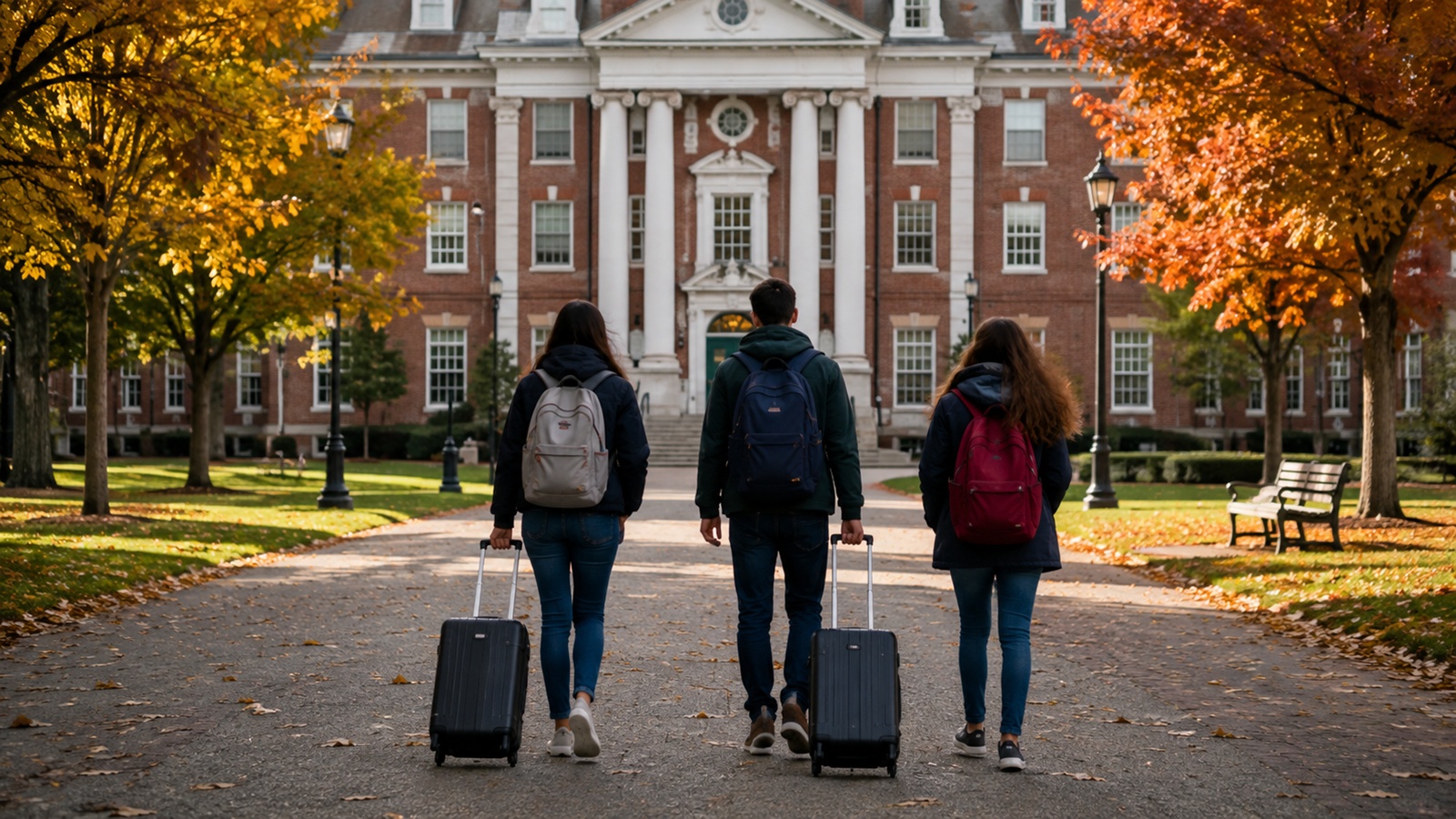
The morning air in Cambridge carries a distinct chill every September, smelling faintly of damp autumn leaves, old paper, and the anxious electricity of ambition.
For months, the grand brick courtyards stood frozen. The oak benches, usually crowded with thinkers who had crossed oceans to get there, sat empty. The silence was heavy. It was a silence born of uncertainty, administrative paralysis, and a sudden scramble of borders that had snapped shut.
Behind the limestone facades, deans and department chairs watched empty lecture halls with a quiet panic. A university without its global pulse is just a collection of expensive buildings. Harvard knew this. Which is why September 15 became a rallying cry. It was not just a date on an academic calendar. It was a deadline for survival.
Let us introduce Elena. (Note: This is a hypothetical scenario designed to illustrate a very real human reality.) Elena is twenty-one, hailing from a bustling suburb of Bucharest. For her, getting an acceptance letter from Harvard was not merely an educational milestone; it was the culmination of ten years of late-night English tutorials, skipped parties, and a family draining their savings account to bet on a single, luminous future.
When the rules shifted, Elena did not see federal guidelines or policy memos. She saw a locked door.
She saw her dream evaporating through a screen of delayed visa appointments, sudden embassy closures, and bureaucratic gridlock. Multiply Elena by thousands, and you understand why the administration began pushing so hard. The urgency wasn't about tuition revenue alone. It was about the loss of human texture. A seminar room discussing international law or macroeconomic policy loses its oxygen when everyone in the room grew up within a fifty-mile radius of each other.
The new United States visa rules arrived like a sudden storm. They created a chaotic scramble across multiple continents, forcing embassies to prioritize student appointments while millions of travelers waited in backlog limbo.
Consider what happens next in the life of a typical international applicant. You have your housing secured, your books ordered, your suitcase half-packed on the bedroom floor. Then, an email arrives. The appointment is canceled. Or postponed. The clock ticks down. Every day of delay feels like a nail driven into the coffin of an academic year.
Harvard’s push to bring students back by the mid-September threshold was a masterclass in bureaucratic pressure. Universities are rarely known for their speed, but when the existential identity of their student body is threatened, machinery moves. They lobbied. They coordinated with consulates. They offered alternative hybrid frameworks, though everyone knew a pixelated screen could never replace the late-night debates over cold coffee in the Science Center.
Why does this matter to someone who has never set foot in Massachusetts? Because the minds that gather in those yards do not stay in those yards. They build the medical breakthroughs we rely on, the economic models that stabilize markets, and the artistic movements that shift our cultural consciousness. When a brilliant mind from Mumbai, Lagos, or Seoul is blocked by a procedural bottleneck, the entire world loses a piece of its future.
The stakes are invisible until they are gone.
Think about the quiet moments on campus. The accidental collisions in the dining hall where a computer science major from Ohio sits next to a literature scholar from Cairo. Those collisions spark ideas that change industries. Bureaucracy tries to categorize humans into neat, numbered lines on a manifest. Reality refuses to fit.
By mid-September, the urgency paid off for many. Flights were boarded. Passports were stamped with the hard-earned ink of clearance. The yards began to fill again with the sound of a dozen different languages blending into the familiar hum of academic life.
Yet, the anxiety remains baked into the system. The friction of crossing borders in a fractured world has not vanished. It has simply taken a new shape.
Elena finally made it. Her desk is small, tucked under a sloping ceiling in an old brick house near the river. She sits there late at night, staring at a blank document, listening to the distant chime of the church bells marking the hour. She is tired, relieved, and intensely aware of how close she came to missing it all.
The chairs in the lecture hall are full once more. But the empty space they occupied for so long left a mark, reminding everyone that the bridge between the local and the global is fragile, demanding constant care, fierce defense, and an unyielding refusal to let the borders win.