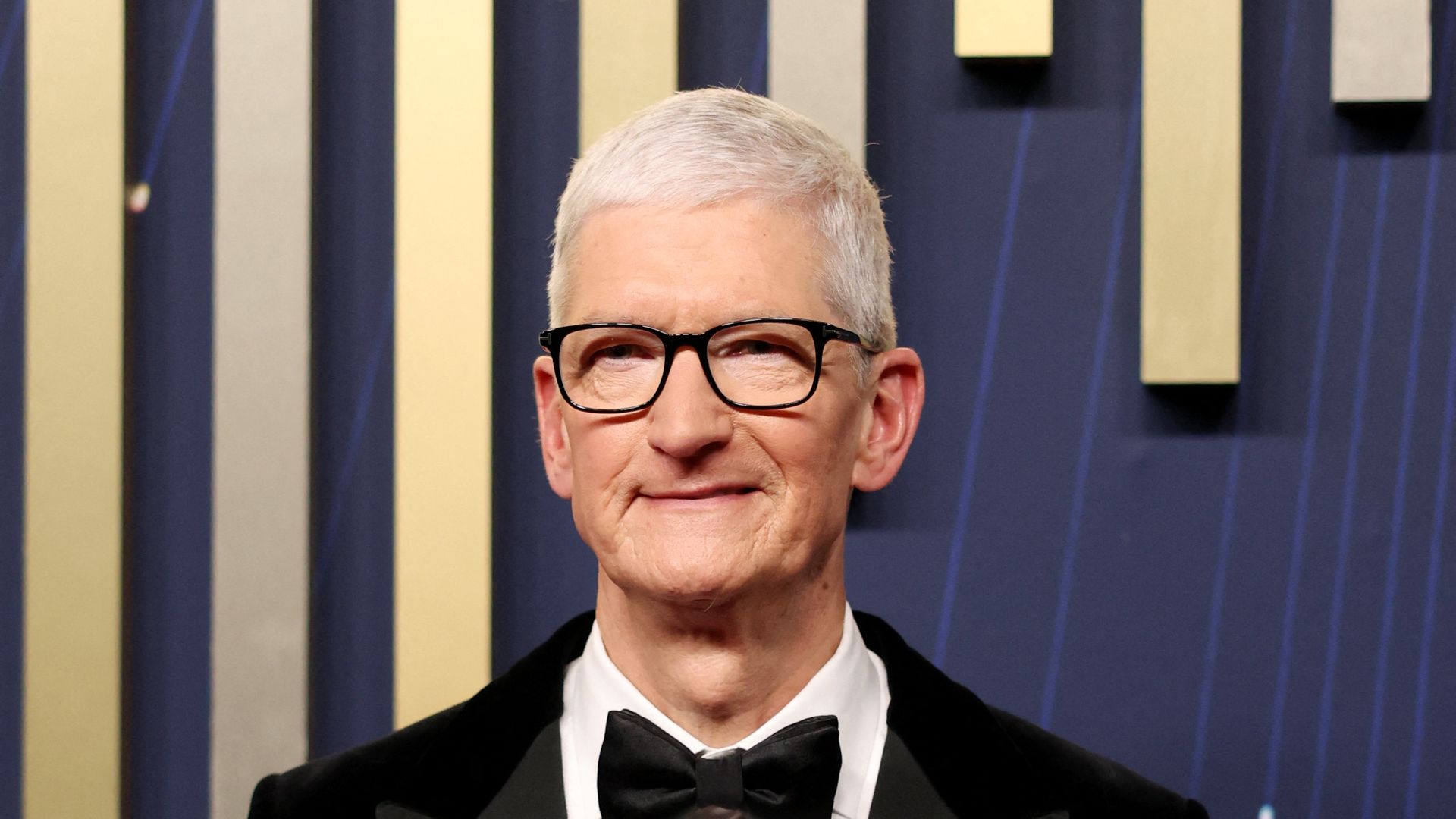
The lights usually stay on late in the executive wing of 1 Infinite Loop, but tonight, the glow feels different. It isn't the hum of frantic productivity or the electric buzz of a product launch. It’s the stillness of an era exhaling. Tim Cook is stepping down. The man who spent more than a decade turning a boutique computer company into a multi-trillion-dollar geopolitical force is closing his laptop for the last time as CEO.
For years, critics called him a supply-chain ghost, a technocrat who lacked the messianic fire of Steve Jobs. They were wrong. Cook didn't just manage a company; he built a fortress. But even the strongest fortresses feel drafty when the architect leaves. The news didn't arrive with a theatrical keynote or a "one more thing." It came with the quiet gravity of a shift in the Earth’s rotation.
The Weight of a Glass House
Imagine you are an employee at a flagship Apple Store. Let's call him Marcus. For Marcus, the CEO isn't a face on a stock ticker; he is the reason the glass on the storefront is polished to a specific micron of clarity. Under Cook, Apple became a religion of precision. Marcus remembers the transition from the chaotic brilliance of the Jobs years to the relentless, crushing consistency of the Cook decade.
It was a period defined by the iPhone becoming the literal center of human consciousness. Cook didn't invent the wheel, but he made sure the wheel was manufactured at a scale that defied the laws of physics and delivered to your doorstep with a satisfying tactile click. Now, Marcus stands on the sales floor, looking at the rows of titanium and silicon, wondering if the soul of the machine stays behind when the operator leaves.
The facts are staggering. Cook oversaw a market cap growth that sounds like science fiction—climbing from roughly $350 billion to over $3 trillion. He navigated a trade war with China, a global pandemic that paralyzed every other industry, and the increasingly thorny thicket of digital privacy laws. He did it all while wearing a uniform of navy blue shirts and a calm that bordered on the supernatural.
But success has a shadow.
The Architect and the Art
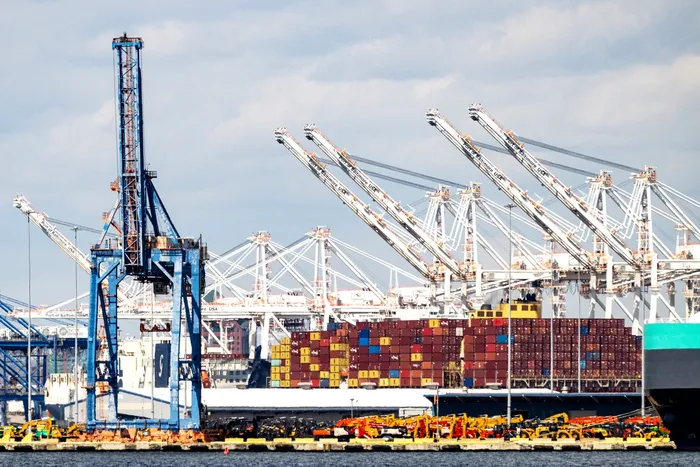
The tension at Apple has always been the tug-of-war between the artist and the engineer. Jobs was the artist, prone to tantrums and moments of pure, unadulterated vision. Cook was the engineer, the master of the "how." He figured out how to move millions of units across oceans without a single hiccup. He turned Apple into a logistics company that happened to sell beautiful things.
The risk of his departure isn't about the stock price—at least, not in the way Wall Street thinks. The risk is about the "why."
When a leader who values operational excellence above all else moves on, the vacuum is usually filled by one of two things: a visionary who breaks everything to build something new, or a committee that manages the status quo into a slow, polite decline. The internal rumblings suggest the succession plan has been curated with the same obsessive detail as a MacBook hinge. Jeff Williams, the Chief Operating Officer, has long been the heir apparent. He is, in many ways, Cook 2.0.
But is a sequel what the world wants?
Consider the metaphor of a high-performance engine. Cook didn't just drive the car; he refined the fuel injection system until it reached a state of terrifying efficiency. But he stayed on the paved roads. He grew the services division—Cloud, Music, TV—into a juggernaut that ensured Apple would make money even if you never bought another phone. He made the ecosystem a walled garden so lush you never wanted to find the gate.
Now, the road is ending. The paved path of the smartphone era is hitting the dirt of artificial intelligence, spatial computing, and a world that is increasingly weary of the glowing rectangles in their pockets.
The Invisible Stakes
The departure of a man like Cook ripples far beyond Cupertino. It affects the factory worker in Zhengzhou whose livelihood depends on the next production cycle. It affects the developer in Berlin who builds their entire business on the rules of the App Store. It affects you, sitting in a coffee shop, wondering why your battery life feels like a countdown clock for your productivity.
The transition is a test of a theory. Can a company survive the loss of its stabilizing force without losing its identity?
We saw what happened when Jobs passed the torch. People predicted the end. Instead, they got the Apple Watch, the AirPods, and a stock chart that looked like a ramp to the moon. Cook proved that the "adult in the room" could be just as transformative as the "rebel in the garage." He traded the black turtleneck for a steady hand, and the world rewarded him for it.
But the silence in the hallways today is heavy. There is a specific kind of anxiety that comes when the person who answered all the hard questions for twelve years suddenly says, "Your turn."
The Human Toll of Perfection
To understand the Cook era is to understand the cost of being the most valuable entity on the planet. Cook lived a life of monastic discipline. 3:45 AM wake-up calls. Grueling gym sessions. Hundreds of emails before most people had their first cup of coffee. He was the embodiment of the brand: efficient, private, and seemingly indestructible.
There is a story—perhaps apocryphal, but widely believed within the company—of a meeting where Cook realized a supplier in China was underperforming. He looked at an executive and said, "Why are you still here?" The executive left the room, drove straight to the airport, and flew to China without a suitcase.
That was the Cook way. Total commitment. No excuses.
Now, as he prepares to hand over the keys, there is a sense of exhaustion beneath the professional veneer. The regulatory battles with the European Union, the antitrust suits from the Department of Justice, and the relentless pressure to "innovate" in a world where every new phone looks like the last one—it takes a toll.
He isn't just stepping down from a job. He is stepping out of a pressure cooker that has been at a rolling boil for over a decade.
The Next Hand on the Wheel
The successor doesn't just inherit a company. They inherit a legacy that is almost impossible to live up to. If they change too much, they are accused of betraying the brand. If they change too little, they are accused of stagnation.
The strategy for the next few years is already baked into the hardware. We will see more emphasis on the Vision Pro, more integration of generative intelligence, and a continued push into the healthcare space. The hardware will get thinner. The chips will get faster. The garden walls will get higher.
But the "human element" that Cook brought—the surprising, quiet advocacy for civil rights, the aggressive stance on environmental sustainability, and the refusal to sell out user privacy even when it hurt the bottom line—that is what hangs in the balance. Those weren't just business decisions. They were reflections of the man in the navy blue shirt.
Succession is a messy, fragile business. It’s the moment when a corporation remembers it is actually just a collection of people, all of them looking for a signal.
The Last Sync
In the coming weeks, there will be tribute videos. There will be analyst calls dissecting every syllable of the transition announcement. The stock will dip, then it will recover, because the machine Cook built is too big to fail in a single afternoon.
But for Marcus at the Apple Store, and for the millions of us who have integrated these devices into our nervous systems, the change is visceral. We are losing the person who made sure the world worked the way it was supposed to, even if we didn't always like the price.
The sun sets over the Santa Cruz mountains, casting long shadows across the "spaceship" campus. Somewhere in that massive, circular building, Tim Cook is likely packing a small box. He isn't a man of clutter. He will leave the desk as clean as he found it.
He walks toward the door, the motion-sensor lights clicking off behind him, section by section. The era of the operator is over. The era of the unknown begins.
The chair is empty, but it is still warm.