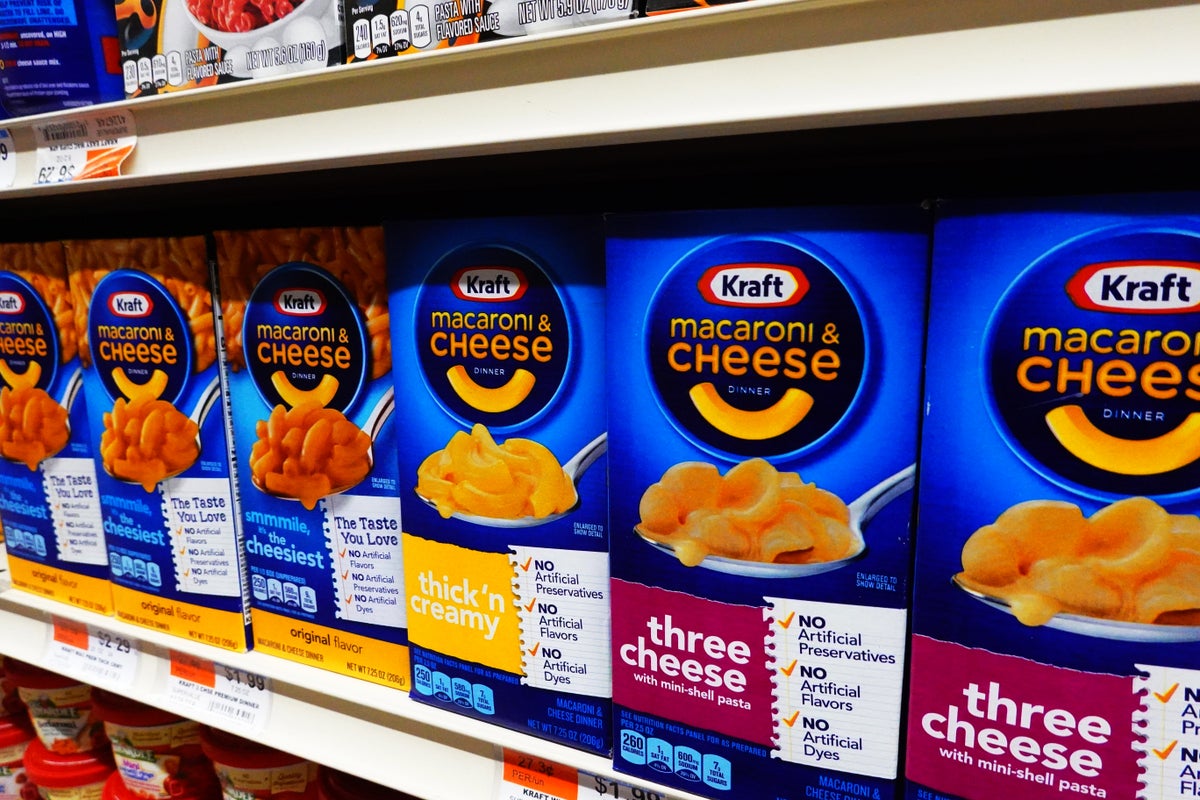
Walk down the center aisle of any supermarket and you’ll see them: the bright red labels, the iconic glass bottles, and the yellow boxes that have defined the American pantry for a century. They are the artifacts of middle-class stability. For decades, a bottle of Heinz ketchup or a box of Kraft Mac & Cheese wasn't just a grocery item. It was a signal that, no matter how chaotic the workweek had been, the basics were covered.
But look closer at the people pushing the carts. Notice the way a hand hesitates over a jar of mayonnaise. Watch the eyes dart from the brand-name label to the generic store version sitting two inches to the right. There is a silent, mathematical war happening in the mind of the American consumer, and for the first time in a generation, the giants of the food industry are losing.
Carlos Abrams-Rivera, the man now steering the massive vessel that is Kraft Heinz, isn’t looking at these shoppers through the tinted windows of a corporate jet. He’s looking at them through the cold, hard lens of a balance sheet that reflects a terrifying reality. Consumers aren't just "tightening their belts." They are running out of rope.
The Breaking Point of a Household Budget
Consider a person we’ll call Sarah. She works forty-five hours a week, manages a household of four, and has historically viewed the grocery store as a place of routine rather than a place of stress. Two years ago, Sarah didn’t look at the price of ketchup. It was a staple. You needed it, you grabbed it, you moved on.
Today, Sarah is a forensic accountant of her own life.
The "value" that Kraft Heinz is suddenly obsessed with isn't a marketing buzzword for her. It is a survival strategy. When the price of eggs, rent, and electricity spiked simultaneously, the "extra" five dollars she used to spend on premium brands evaporated. She represents a massive demographic that the food industry calls the "lower-income consumer," but in reality, she is the backbone of their entire business model. When Sarah stops buying, the ivory towers in Chicago and Pittsburgh start to shake.
Abrams-Rivera recently admitted that the SNAP (Supplemental Nutrition Assistance Program) benefits—the lifeline for millions—are being exhausted faster than ever. People are literally running out of money before the month ends. This isn't a dip in the market. It’s a fundamental shift in the American appetite.
The Great Migration to the Perimeter
For years, the business strategy for big food was simple: raise prices to cover rising costs and trust that brand loyalty would keep people coming back. It worked for a while. We paid the "inflation tax" because we liked the taste we grew up with.
That loyalty has reached its expiration date.
The problem is that once a consumer like Sarah tries the generic store brand and realizes it’s "good enough," the spell is broken. Kraft Heinz is no longer just competing against other giants like Nestlé or Unilever. They are competing against the very concept of the brand name itself.
To combat this, the strategy has shifted from "how much can we charge?" to "how can we prove we’re worth it?" This is the invisible stake of the current economy. If a company can't convince a struggling mother that their macaroni and cheese offers a moment of joy or a guarantee of quality that justifies an extra sixty cents, that company ceases to be a household staple. It becomes a luxury. And in a world where people are choosing between gasoline and groceries, luxuries are the first thing to go.
The Innovation of the Pennies
You might think that a CEO’s day is spent on high-level mergers or global expansion. For Abrams-Rivera, the battle is fought in the realm of packaging and portion sizes.
Kraft Heinz is betting on a dual-track approach to recapture the disappearing shopper. On one hand, they are leaning into "value" packs—larger quantities that lower the price per ounce. On the other, they are looking at entry-price points. This is the art of making a premium product accessible to someone who only has three dollars left in their pocket.
It is a delicate, almost desperate dance. If they cut the price too much, they erode their profit margins and scare off investors. If they keep prices high, they keep their margins but lose their customers to the "Great Generic Migration."
The company is also pivoting toward "away-from-home" sales. They want their products in the places where you are forced to spend money: schools, hospitals, and stadiums. If they can't get you to put the bottle in your cart, they’ll make sure it’s the only option on the table when you’re out in the world. But even this is a gamble. If families aren't buying the product at the store, they’re likely eating out less, too.
The Psychology of the Pantry
There is a deep, emotional weight to what is happening in the grocery aisles. Food is the most intimate thing we buy. We put it inside our bodies; we give it to our children to make them grow. When a parent has to walk past the brand they trust and reach for the cheaper alternative, it’s not just a financial transaction. It feels like a small, quiet defeat. It is a reminder that the world is becoming more expensive and less certain.
Abrams-Rivera’s focus on value is an acknowledgement of this psychological toll. He knows that once a brand loses its place in the family ritual, it is incredibly hard to win back. If a child grows up eating the store-brand pasta, that becomes their baseline. The "tapestry" of brand heritage—to use a term the corporate world loves—is being unraveled, one grocery trip at a time.
This isn't just about ketchup. It’s about the erosion of the American middle-class lifestyle. The fact that a company as massive as Kraft Heinz has to publicly pivot because their customers are "literally running out of money" should be a flashing red light for the entire economy.
The Weight of the Glass Jar
We often think of global corporations as these untouchable, monolithic entities. But they are surprisingly fragile. They rely on the collective habits of millions of people making the same small choice every single day.
Right now, those choices are changing.
The new CEO isn't just fighting for market share. He is fighting for relevance in a world where the math no longer adds up for the average person. He is trying to bridge the gap between the cost of production and the reality of a dwindling bank account.
Success for him won't be measured in a flashy new product launch or a viral marketing campaign. It will be measured by Sarah. It will be measured by whether or not, on a rainy Tuesday evening when she’s tired and overextended, she decides that the extra few cents for the red label is a small price to pay for a sense of normalcy.
The dinner table is the final frontier of the economy. It is where the macro-trends of inflation, supply chains, and corporate strategy finally meet the micro-reality of a hungry family. Kraft Heinz is betting everything on the hope that they can still find a way to sit at that table. Because if they can't find a way to fit into the budget, they’ll find themselves left behind on the shelf, a shiny relic of an era when we could all afford to be a little less careful.
The lights in the supermarket hum. The scanner beeps. The total on the screen climbs higher. In the silence between the beeps, a hundred-year-old empire is holding its breath, waiting to see which jar gets picked up and which one stays behind in the cold.