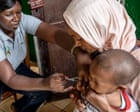
The emergence of mpox in Guinea-Bissau presents a classic epidemiological stress test for a resource-constrained public health infrastructure. With seven laboratory-confirmed adult cases and 46 total suspected cases identified, the structural composition of the outbreak reveals an alarming distribution: pediatric cases under the age of fifteen constitute exactly half of the suspected cohort, including 16 children under four years old. This skew demands a complete shift from broad national health tracking to targeted pediatric containment vectors.
The Surveillance Deficit and Diagnostic Lag
A fragile public health surveillance apparatus creates structural blind spots. When diagnostic confirmation relies on centralized laboratory processing, a temporal gap opens between symptom onset and clinical identification. In Guinea-Bissau, this lag is compounded by limited contact tracing coverage and restricted local testing capacity.
The primary mechanics of this failure involve three distinct bottlenecks:
- Low baseline community awareness regarding early-stage lesion presentation.
- Insufficient numbers of trained personnel for localized sample collection.
- Delays in secondary transportation networks moving biological samples from regional sectors to national reference facilities.
These operational constraints mean that confirmed figures capture only the tip of the transmission iceberg. Adult cases surface more readily due to existing healthcare utilization patterns, whereas pediatric cases slip beneath official tracking until severe complications manifest.
Pediatric Vulnerability and the Transmission Multiplier
Children occupy a distinct epidemiological risk tier during viral outbreaks due to immunological naivety and physiological factors. Unlike smallpox-vaccinated older populations—who retain varying degrees of cross-protection—children born after the global cessation of smallpox vaccination possess zero baseline immunity against orthopoxviruses.
The transmission dynamics within pediatric populations accelerate through predictable social structures:
- Household crowding increases the velocity of non-sexual skin-to-skin contact.
- Shared bedding, clothing, and domestic utensils act as fomites capable of sustaining viral persistence.
- Shared institutional environments, specifically schools, function as focal nodes for concentrated droplet and contact transmission.
With the upcoming academic calendar cycle initiating school reopenings, the risk profile shifts dramatically. Without active screening protocols at entry points, educational institutions will transition from latent community clusters to high-frequency propagation hubs.
Resource Allocation and Containment Economics
Containing a novel pathogen in a low-income setting requires efficient capital deployment. International agency assessments indicate that basic containment mobilization—spanning risk communication, community engagement, and diagnostic distribution—requires immediate flexible funding streams exceeding $150,000.
However, capital alone cannot resolve structural deficits without operational restructuring. Resource allocation must prioritize decentralized triage stations rather than centralized hospitals. Parents frequently delay seeking care due to diagnostic stigma or financial barriers, allowing intra-household transmission chains to multiply unchecked. Deploying mobile health units directly into high-density neighborhoods remains the only mechanism to compress the time-to-isolation window.
Deploy localized, school-entry syndromic screening protocols immediately prior to the academic term to intercept pediatric transmission chains before cluster multiplication occurs.
First-ever mpox cases reported in Guinea-Bissau with children the most vulnerable
This video provides a concise overview of the initial mpox outbreak in Guinea-Bissau and highlights the specific vulnerabilities facing children.
http://googleusercontent.com/youtube_content/1