The humidity in Shelby County, Alabama, has a way of sticking to your skin like a bad memory. It was here, amidst the heavy air and the slow-moving clock of the South, that a legal sledgehammer swung with enough force to vibrate the floorboards of every polling station in America. We are told that progress is a one-way street. We are taught that once a right is won, it is etched in granite, safe from the winds of political change.
That is a lie.
Rights are not granite. They are sand. Without constant protection, the tide pulls them back into the deep, grain by grain, until the shore looks entirely different than it did the day before.
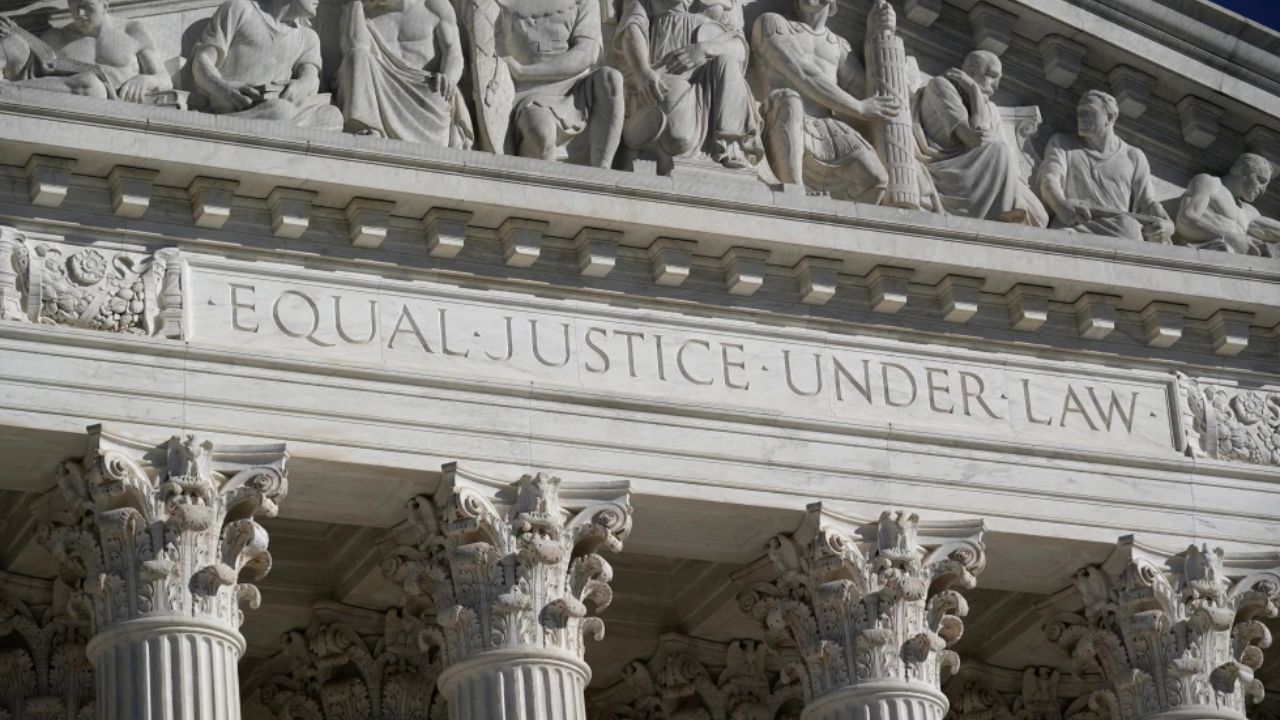
In 2013, the United States Supreme Court looked at the Voting Rights Act of 1965—the crowning achievement of the Civil Rights Movement—and decided it was a relic. They focused specifically on Section 4. This was the "coverage formula," the mathematical and historical logic that identified which states had such a systemic habit of blocking Black voters that they couldn't be trusted to change their own election laws without federal permission. This permission was called "preclearance."
Imagine a neighborhood where one house has caught fire every summer for fifty years. Because of this history, the fire marshal requires that specific house to get an inspection before the owners plug in any new heavy appliances. It’s a burden, sure. But it keeps the block from burning down.
In Shelby County v. Holder, the Court essentially argued that because the house hadn’t burned down recently, the fire marshal was no longer needed. Chief Justice John Roberts famously wrote that "history did not end in 1965." He argued that the conditions that made the Voting Rights Act necessary had been largely eliminated.
The fire marshal was sent home. The inspections stopped.
The Ghost in the Machine
To understand what happened next, we have to look past the mahogany benches of the Supreme Court and into the eyes of someone like "Evelyn." Evelyn is a hypothetical composite of the thousands of voters I have spoken with over a decade of reporting on the ground. She is seventy-two years old. She remembers the taste of the dust kicked up by marchers in Selma. She hasn’t missed an election since she was twenty-one.
For Evelyn, voting isn't just a civic duty. It is a hard-won prayer.
Under the old rules, if Evelyn’s county wanted to move her polling place from the community center down the street to a sheriff’s office ten miles away, they had to prove to the Department of Justice that the move wouldn't unfairly hurt minority voters. They had to show their work.
Once the Supreme Court gutted Section 4, that requirement vanished. The burden of proof shifted. Now, instead of the government having to prove a change was fair, Evelyn and her neighbors have to prove it is unfair. They have to hire lawyers. They have to file lawsuits. They have to spend years in court fighting a change that happened in a heartbeat.
The Supreme Court didn’t technically strike down the right to vote. They just made the path to the ballot box a labyrinth.
Within hours of the Shelby decision, Texas announced it would implement a strict voter ID law that had previously been blocked because it discriminated against Hispanic and Black voters. Other states followed. They purged voter rolls with the enthusiasm of a spring cleaning. They closed hundreds of polling sites. They cut back on early voting days—the very days that hourly workers, the ones without the luxury of a flexible schedule, rely on to make their voices heard.
The Math of Exclusion
We often talk about "voter suppression" as if it’s a dramatic event involving fire hoses and police dogs. Sometimes it is. But in the modern era, it is much quieter. It is bureaucratic. It is boring.
It is the math of the "long line."
If you are a wealthy professional with a car and a flexible job, a two-hour wait at a polling place is an annoyance. If you are a single mother working two jobs and relying on a bus system that runs every forty-five minutes, a two-hour wait is an impossibility. It is a poll tax dressed in the clothing of "administrative efficiency."
Data from the Brennan Center for Justice and other non-partisan monitors show a clear, jagged line starting in 2013. In the states formerly covered by the Voting Rights Act, the rate of voter purges shot up significantly higher than in the rest of the country. Between 2014 and 2016, nearly 16 million voters were wiped from the rolls.
Critics of the Voting Rights Act argue that these measures are necessary to prevent voter fraud. They speak of "election integrity" as a fragile glass vase that must be guarded at all costs. But when you look for the evidence of widespread, systemic voter fraud that could actually flip an election, the numbers dissolve into ghosts. You are more likely to be struck by lightning than to encounter a person systematically committing in-person voter impersonation.
The "integrity" being protected often seems to be the integrity of a specific power structure, rather than the integrity of the democratic process itself.
The Invisible Stakes
Why does this feel so heavy? Because when you make it harder for a specific group of people to vote, you aren't just changing the outcome of one election. You are telling that group of people that their version of America doesn't matter.
Consider the ripple effect of a closed polling place in a rural Black community. It’s not just about the walk. It’s about the signal. It says: We are not looking for you. We do not want to hear from you. When people feel the system is rigged to exclude them, they stop trying. Cynicism is the greatest tool of the oppressor. If I can’t stop you from voting, I will make the process so miserable and confusing that you decide it isn't worth the effort. I will make you feel like your vote is a drop of water in an ocean of indifference.
The Supreme Court’s decision in Shelby County was followed years later by Brnovich v. Democratic National Committee. In that case, the Court further weakened Section 2 of the Voting Rights Act, which is the part that allows people to sue over discriminatory practices. Justice Samuel Alito wrote that "mere inconvenience" is not enough to invalidate a voting rule.
But who gets to define "inconvenience"?
For a Justice sitting in a climate-controlled chamber in Washington D.C., a lack of a ballot drop box might seem like a minor hiccup. For a voter in a precinct where the nearest drop box is now a forty-minute drive away, it is a wall.
The Architecture of the Silence
The genius of the Voting Rights Act wasn't just that it fixed problems; it was that it prevented them. It was a deterrent. State legislators knew that if they tried to gerrymander a district to dilute the power of minority voters, the Department of Justice would be watching.
Now, the watchman is gone.
The result is a patchwork democracy. Your ability to participate in the American experiment now depends almost entirely on your zip code. In some states, voting is a celebration—automatic registration, mail-in ballots, weeks of early voting. In others, it is a gauntlet.
This isn't a "red vs. blue" issue, though it is often painted that way. It is a "power vs. people" issue. Every time a barrier is erected between a citizen and the ballot, the foundation of the republic cracks just a little more.
I remember talking to a young man in Georgia who had been purged from the rolls because his middle name was misspelled by one letter on an old government document. He had his ID. He had his proof of residence. But the system flagged him. He spent his entire lunch break trying to fix it, only to be told he’d have to come back another day with more paperwork.
He didn't come back.
"They don't want me there anyway," he told me. He wasn't angry. He was just tired. That exhaustion is the goal of every restrictive voting law passed in the wake of the Supreme Court's interference.
The Weight of the Pen
The Supreme Court justices often speak of "originalism" and the "plain text" of the Constitution. But the Constitution is not just a document. It is a living promise. When the 15th Amendment was ratified, it didn't just say people have the right to vote; it gave Congress the power to enforce that right.
By stripping away the enforcement mechanisms, the Court has effectively turned the 15th Amendment into a polite suggestion.
We are living in the aftershocks of a quiet earthquake. The 2013 decision didn't make headlines for years in the way a war or a scandal does, but it changed the chemistry of our local governments. It changed who sits on school boards, who picks the sheriff, and who decides how tax dollars are spent in communities that have been ignored for generations.
The invisible stakes are the lives that go uncounted.
When Evelyn stands in a line that stretches around the block, she isn't just standing for herself. She is standing for the idea that a janitor’s voice should carry as much weight as a CEO’s. She is standing for the belief that the government belongs to the governed.
The Supreme Court may have taken the eraser to the Voting Rights Act, but they cannot erase the memory of what it felt like to finally be seen. The struggle for the ballot isn't a chapter in a history book that ended in 1965. It is a daily, grueling labor.
Democracy is not a gift we inherited. It is a debt we have to pay every single time an election cycle rolls around.
The tragedy of the modern era is that we have mistaken the absence of overt violence for the presence of justice. We think because the "Whites Only" signs are gone, the path is clear. But a gate is still a gate, even if it’s painted a neutral color and locked with a digital code instead of a rusted chain.
As long as the "inconvenience" of voting is distributed based on the color of a person's skin or the balance of their bank account, the work of 1965 remains unfinished. The ink is still wet. The story is still being written, and right now, the hand holding the pen is trying to cross out the names of people who have already paid their dues in full.
Evelyn is still in line. The question is whether we will let the sun go down before she reaches the door.