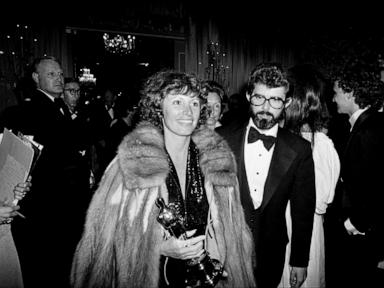
Marcia Lucas, the Academy Award-winning film editor whose structural instincts rescued a disastrous rough cut of the original 1977 Star Wars and fundamentally shaped the American New Wave cinema, died on May 27, 2026, at age 80 following a battle with metastatic cancer. Her passing in Rancho Mirage, California, ends a quiet life lived far outside the corporate machinery of modern Lucasfilm, yet her death highlights an ongoing, decades-long debate regarding creative authorship in Hollywood. While traditional industry retrospectives frame her primarily as the supportive first wife of George Lucas, an interrogation of her filmography reveals an uncomfortable reality. Marcia Lucas was not a mere collaborator; she was the narrative anchor for a generation of auteur directors who frequently lost themselves in technical abstraction.
The conventional Hollywood biography likes a clean, singular narrative. It demands a lone visionary who conjures universes from thin air, a myth that corporate public relations machines heavily protect to maintain the valuation of intellectual property.
To understand why the original Star Wars worked—and why the modern franchise frequently stumbles—one must look at the specific narrative geometry Marcia Lucas brought to the editing bay.
Restructuring the Galaxy
When George Lucas completed the initial assembly of Star Wars: Episode IV – A New Hope, the film was a structural train wreck. Early screenings for close friends like Francis Ford Coppola and Brian De Palma became legendary for their awkward silences. The pacing was turgid, the exposition heavy-handed, and the central stakes entirely absent.
The director excelled at world-building but struggled with human momentum. Marcia Lucas, alongside co-editors Richard Chew and Paul Hirsch, took the raw material and completely re-engineered the film’s internal clock.
Her interventions were radical, structural, and driven entirely by character logic rather than special effects.
- The Death Star Countdown: In the original script and assembly, the Rebel assault on the Death Star lacked any immediate temporal threat to the base on Yavin 4. Marcia manufactured the ticking-clock tension in the editing room, intercutting technical readouts and imperial announcements to create a simulated countdown that forced the audience to care about the passage of seconds.
- The Fate of Obi-Wan: George Lucas famously agonized over what to do with Obi-Wan Kenobi during the escape from the Death Star. It was Marcia who convinced him that the character needed to die at the hands of Darth Vader, transforming Alec Guinness’s character from a lingering narrative third wheel into a potent, spiritual driving force for Luke Skywalker.
- The Trench Run Chemistry: She meticulously tracked the emotional beats of the pilots, adjusting the sequence of explosions and radio chatter so that the audience understood the tactical stakes of every single run down the meridian trench.
The result was an Academy Award for Best Film Editing in 1978. It remains the only film in the entire franchise to win an Oscar in a major filmmaking category outside of technical sound and visual effects achievements.
The Scorsese Connection and Emotional Intelligence
Limiting the assessment of her career to science fiction misses her broader impact on 1970s American cinema. She was the preferred editor for Martin Scorsese during one of his most volatile and brilliant creative stretches, serving as the sole editor on Alice Doesn't Live Here Anymore (1974) and working on both Taxi Driver (1976) and New York, New York (1977).
Marcia Lucas: Selected Editing Timeline
├── 1971: THX 1138 (Assistant Editor)
├── 1973: American Graffiti (Editor - Oscar Nomination)
├── 1974: Alice Doesn't Live Here Anymore (Sole Editor)
├── 1976: Taxi Driver (Supervising Editor)
├── 1977: Star Wars: A New Hope (Editor - Oscar Winner)
└── 1983: Return of the Jedi (Editor)
The stark difference between a Scorsese drama and a George Lucas space opera highlights her versatility. Scorsese’s work demanded an erratic, psychological rhythm that mirrored the internal chaos of his characters. Alice Doesn't Live Here Anymore required a delicate, empathetic touch to ground Ellen Burstyn’s performance in a lived-in, blue-collar reality.
She possessed what industry veterans call a built-in bullsh*t detector. In an industry dominated by young, male directors obsessed with lenses, cameras, and technical innovations, she focused entirely on whether the human beings on screen made emotional sense. If a scene looked spectacular but lacked a heartbeat, she cut it.
The Cost of Corporate Mythmaking
Following her 1983 divorce from George Lucas—coinciding with the release of Return of the Jedi—Marcia Lucas effectively vanished from the official Lucasfilm historical narrative. The divorce was financially complex, resulting in a substantial settlement, but the cultural cost was far higher. As the franchise evolved into a multi-billion-dollar corporate asset, the official history increasingly consolidated around the singular genius of its creator.
This corporate scrubbing serves a distinct economic purpose. A franchise tied to a singular, reproducible formula of a lone genius is easier to market, brand, and sustain than an unstable history of collective, messy artistic collaboration.
In her rare late-career interviews, notably for the docuseries Icons Unearthed, she expressed sharp frustration with how the franchise developed after her departure, particularly criticizing the narrative choices of the Disney-era sequel trilogy. Her critiques were not born of malice, but of an editor’s frustration with a fundamental lack of character-driven logic.
The modern entertainment industry operates on a assembly-line model where visual effects houses generate action set-pieces years before a script is finalized, turning the contemporary editing process into a salvage operation rather than an artistic discipline. Marcia Lucas represented the exact opposite approach. She proved that the most powerful special effect in cinema is not a laser blast or a starship, but a perfectly timed cut to a human face.
The credits roll, the screen goes dark, and the true architects of our cultural mythology fade into the background, leaving behind a body of work that refuses to be forgotten.