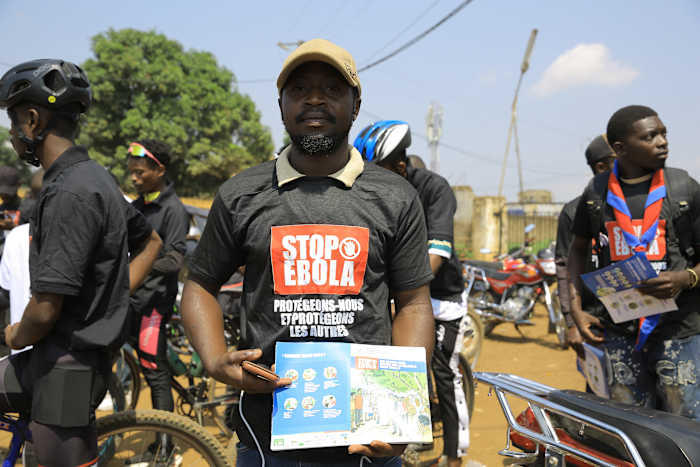
Outbreaks move fast. Public health infrastructure often moves slow. That gap costs lives. When more than 16,000 doses of the Ervebo vaccine touched down in the Democratic Republic of Congo during an Ebola flare-up, it marked a turning point in how we handle ancient pathogens.
You've probably heard about Ebola on the news. You might picture remote villages, hazmat suits, and panic. But the reality on the ground is far more tactical. It’s about cold chain logistics, community trust, and getting the right shot into the right arm before the virus outpaces the response.
Let's look at why this specific shipment matters and what public health campaigns usually get wrong.
The Cold Chain Logistics Nightmare
Shipping vaccines isn't like sending Amazon packages. Ervebo requires ultra-cold storage. Transporting thousands of doses deep into rural regions of the DR Congo without a reliable power grid sounds impossible.
It requires specialized freezers, backup generators, and motorbikes navigating muddy tracks. Health workers don't just drop off boxes. They monitor temperatures obsessively. If the cold chain breaks, the vaccine is useless.
- Freezer capacities are limited in provincial clinics.
- Transport teams rely on solar-powered refrigeration units.
- Every single vial is tracked manually to prevent spoilage.
People underestimate the sheer physical effort. Volunteers carry coolers on foot across rivers. They navigate terrain that vehicles can't touch. That's the real ground game nobody talks about in official press releases.
Ring Vaccination Stops the Spread
Mass vaccination sounds like the logical move during an epidemic. It's actually inefficient. Resources are scarce, and you don't have time to immunize a whole province.
Instead, epidemiologists use ring vaccination. You vaccinate the contacts of a confirmed case. Then you vaccinate the contacts of those contacts. You build a human firewall around the virus.
"Ring vaccination cuts off the fuel supply for the outbreak. If the virus can't find a new host, it dies out."
This strategy worked wonders in previous West African and Congolese outbreaks. It requires intense contact tracing. You need local health workers who speak the language and know the communities. Trust beats technology every single time.
Overcoming Community Resistance
Science doesn't administer vaccines. People do. And people are often terrified.
If you show up in a remote village dressed like an astronaut with a needle, residents will run. They have every right to be suspicious. Foreign interventions have a messy history in Central Africa.
Effective teams change their approach completely. They sit down with village elders. They answer questions honestly. They admit what they don't know.
- Local nurses lead the conversation, not foreign doctors.
- Misinformation about side effects gets addressed immediately.
- Traditional healers are brought into the loop as allies.
When you respect local culture, compliance shoots up. When you impose solutions from the top down, resistance forms instantly.
What This Means for Future Outbreaks
We are getting better at this. Years ago, an Ebola diagnosis was almost a death sentence, and containment took months or years. Today, experimental vaccines and treatments change the math.
The 16,000 doses arriving in DR Congo prove that global stockpiles can be mobilized rapidly. But stockpiles sitting in Geneva don't save anyone. The bottleneck has always been deployment speed.
You can't treat public health as a purely medical issue. It's logistics, sociology, and psychology combined. The next time an outbreak hits headlines, look past the scary case numbers. Look at the supply chains, look at the local workers, and look at how fast the rings go up. That tells you how the story ends.
Wash your hands, support local health initiatives, and stop buying into panic narratives.