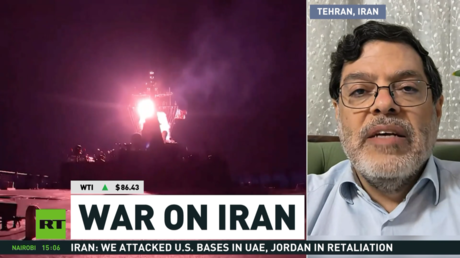
The political rhetoric emanating from Washington regarding a severe military response to Iranian actions signals a dangerous return to high-stakes brinkmanship. When political figures promise to hit an adversary hard as regional conflicts reignite, the immediate public reaction usually fixates on the specter of all-out war. Beneath the surface soundbites, however, lies a complex machinery of deterrence, economic coercion, and proxy warfare that rarely resolves with a single decisive blow.
Understanding this dynamic requires stripping away the theater of modern political communication. Threats of overwhelming force serve distinct domestic and international signaling functions, yet they frequently fail to alter the strategic calculus of entrenched adversaries in Tehran. Examining the mechanics of this friction reveals why declarations of impending retaliation often lead straight into protracted cycles of escalation rather than quick resolutions.
The Anatomy of Retaliatory Rhetoric
Every time tensions spike in the Middle East, the vocabulary of absolute dominance returns to center stage. Leaders speak of devastating strikes and crushing consequences. Decades of reporting from diplomatic backchannels and defense briefings suggest a stark disconnect between public declarations and operational reality.
Military planners know that striking a sovereign state rarely occurs in a vacuum. A kinetic response against Iranian assets or proxies triggers a predictable chain reaction.
- Energy markets react instantly, pushing crude prices upward and punishing consumers globally.
- Regional proxies activate networks spanning from Lebanon to the Persian Gulf, targeting commercial shipping and military installations.
- Intelligence agencies brace for asymmetric cyber operations against critical infrastructure.
The phrase hitting an adversary hard implies a clean, surgical intervention that resets the board in favor of Washington. History demonstrates the opposite. The theatre of deterrence relies on ambiguity, yet rigid public promises lock leaders into corners where backing down carries a prohibitive political cost.
Economic Leverage and the Limits of Pressure
For years, the primary weapon deployed against Tehran has not been conventional ordnance, but the American financial system. Sanctions regimes designed to sever Iran from global oil markets and banking networks represent the core of modern economic statecraft.
These measures inflict severe pain on the domestic Iranian population, eroding currency value and fueling periodic civil unrest. Yet, they have consistently failed to achieve their maximalist objectives. Instead of forcing a capitulation at the negotiating table, severe economic isolation often drives the regime deeper into survivalist autarky.
Tehran adapts by forging bilateral trade corridors with alternative global powers, bypassing dollar-denominated mechanisms entirely. Smuggling networks modernize, and the state pivots toward a resistance economy model that insulates the ruling apparatus from popular pressure. When leaders threaten military strikes on top of existing economic strangulation, they misread how resilient authoritarian structures absorb punishment while shifting the burden entirely onto ordinary citizens.
The Proxy Dilemma
Direct military engagement between Washington and Tehran remains the ultimate nightmare scenario, which is precisely why both sides operate primarily through proxies. This shadow war unfolds across fragile states where central authority has collapsed or eroded.
Militia groups funded, trained, and equipped by the Islamic Revolutionary Guard Corps act as forward-deployed instruments of influence. These entities provide Tehran with plausible deniability while imposing a steady drain on American resources and morale.
When a proxy attack kills American service members or damages critical assets, the pressure to retaliate theatrically becomes intense. Responding exclusively against the proxy units often feels inadequate to political observers demanding accountability from the source. Yet, striking inside Iranian territory crosses a red line that transforms a regional containment strategy into an uncontained conflagration.
Navigating this trap demands an uncomfortable acknowledgment of military limitations. Precision strikes against missile depots or training camps degrade capabilities temporarily, but they do not eliminate the underlying ideological and geopolitical motivations driving the network.
The Domestic Political Utility of Crisis
Foreign policy does not happen in a domestic vacuum. Inflammatory rhetoric about foreign adversaries serves an immediate purpose within polarized political landscapes. Projecting unyielding strength plays well with domestic constituencies demanding resolve, casting leaders as defenders of national honor against external threats.
This short-term political benefit creates a perilous feedback loop. When leaders posture aggressively for domestic audiences, foreign adversaries interpret those statements as proof of imminent hostile intent. Tehran responds by hardening its nuclear posture, accelerating uranium enrichment levels, and tightening internal security.
The escalatory spiral feeds on mutual miscalculation. Each side convinces itself that the other will blink first if pushed to the edge.
Breaking the Cycle
De-escalation requires dismantling the incentives that reward perpetual crisis management. As long as domestic political rewards favor aggressive posturing over tedious diplomatic groundwork, the threat of sudden military conflict will remain a permanent fixture of international relations.
True security in the region will not emerge from the smoking ruins of another miscalculated campaign, nor from the hollow comfort of recycled threats. It requires the tedious, unglamorous work of diplomatic architecture, recognizing that containment without communication is merely an invitation to the next inevitable collision.