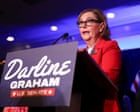
The political commentariat loves a clean narrative. They want their candidates pre-packaged, polished in a media training incubator, and marinated in committee assignments for three decades before stepping onto a debate stage. When Darline Graham admitted on camera during her primary runoff against Representative Ralph Norman that she was not that informed on national security, the Washington establishment treated it like an apocalyptic event. Pundits wailed. Purity-test gatekeepers on both sides of the aisle clutched their pearls.
They assumed her lack of baseline foreign policy trivia disqualified her from power. They missed the entire mechanical reality of how modern legislative bodies actually operate.
Let's look past the fainting couches and break down the lazy consensus dominating this race.
The Myth of the Subject-Matter Expert Legislator
We operate under a collective delusion that a United States Senator needs to sit in an office reading dense intelligence briefings and drafting complex statutory text line-by-line. That is not what a senator does. That is what an army of underpaid, hyper-caffeinated thirty-year-old staffers does.
When critics hammered Graham for her debate stumble, they operated under the assumption that career politicians like her opponent, a multi-term congressman, possess some mystical grasp of geopolitical machinery that a former state agency head lacks. I have watched career politicians burn millions of dollars on legislative vanity projects that achieved nothing except keeping think-tank consultants employed. Expertise in Washington is rarely about understanding the mechanics of statecraft; it is about knowing how to extract media coverage from predetermined outcomes.
Graham spent years running the South Carolina Commission for the Blind, managing real budgets, dealing with state-level bureaucratic friction, and navigating actual human services delivery. That is infinitely more applicable executive experience than sitting on a congressional subcommittee listening to lobbyists read talking points.
The Machine Outspends the Ideology
To understand why Graham won this primary runoff, you have to stop looking at ideological purity metrics and start looking at brute-force electoral mechanics. The lazy consensus claims this was a pure ideological tug-of-war between the MAGA grassroots and the remnants of the old Palmetto State political machine.
Reality is much colder.
Graham's campaign and her allies outspent Norman by a staggering margin, pouring over seven million dollars into television ads during a hyper-compressed two-week runoff sprint. Backed by Donald Trump's full-throated endorsement and an emergency cash deployment from the MAGA Inc. super PAC, the campaign deployed a heavy-handed mobilization apparatus that completely overwhelmed Norman's geographical base in the northern counties.
Horry County and the explosive coastal population around Myrtle Beach broke hard for Graham. These voters do not care about twenty-year voting records or committee seniority. They care about alignment with a movement. Norman discovered too late that legislative tenure is a liability when your opponent is running under a brand identity that transcends local resume building. Voters didn't want a seasoned legislative tactician. They wanted a proxy.
The Dangerous Allure of the Political Outsider Fetish
My contrarian warning goes both ways. While the establishment's panic over Graham's initial policy stumbles was overblown, the populist celebration of raw amateurism is equally hazardous.
Imagine a scenario where every legislative seat is filled by administrative blank slates who treat governance purely as a loyalty test. You end up with a Capitol completely dependent on unelected administrative state actors and partisan staffers to write every word of law. When a politician proudly wears their lack of preparation as a badge of honor, they outsource their vote to the highest-bidding lobbyist or the most aggressive faction within their party apparatus.
Graham survived the primary because South Carolina's coastal growth and presidential backing insulated her from institutional critique. But surviving a primary against a fractured field is a far cry from surviving the invisible machinery of the Senate floor.
The voters made their choice. They traded a five-term incumbent for a career public administrator. Now comes the hard part: realizing that winning the branding war is the easiest thing you will ever do in Washington.