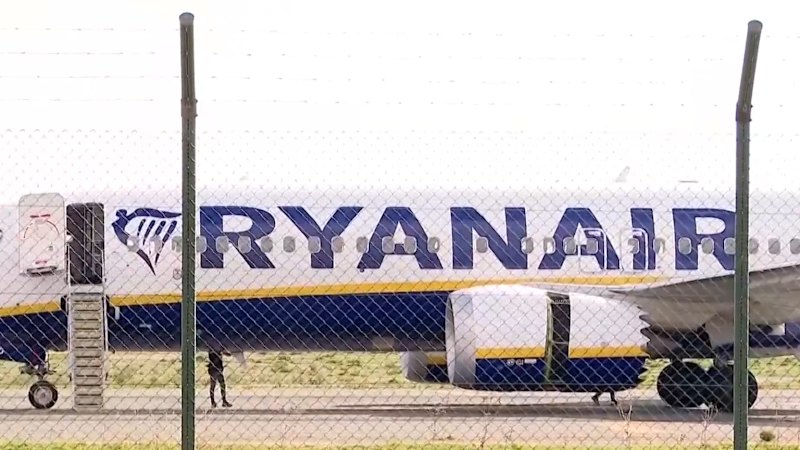
Every time a wave of bomb threats hits European flights, the headlines write themselves. Panic. Chaos. Scrambled fighter jets. Grounded airliners. Outraged pundits demanding tougher security theater at every terminal from Frankfurt to Madrid.
It makes for great television. It makes for terrible analysis.
The lazy consensus goes like this: an uptick in bomb threats on planes across Europe means aviation security is slipping, bad actors are finding new ways to target commercial travel, and the only logical response is to tighten the screws even harder on passengers and airlines.
Wrong. Dead wrong.
If you treat a spike in aviation bomb threats as a physical security failure, you are fighting the last war with the wrong weapons. Most of these threats are not operational plots to blow up an aircraft. They are psychological, digital, and systemic disruptions—often generated remotely, cheaply, and at scale—designed to hijack media cycles, burn airline cash, and force over-reactive policy changes that attackers never could have achieved through hardware alone.
Let’s pull the emergency brake on the conventional wisdom and look at what is actually happening in the skies and control rooms of Europe.
The Lazy Consensus vs. The Operational Reality
Walk into any post-incident press briefing after a major aviation threat and listen to the vocabulary. Officials talk about "potential dangers," "high alert," and "zero tolerance." To the average traveler sitting in an airport lounge staring at a delayed departure board, that sounds reassuring.
In aviation risk management, "zero tolerance" is a slogan, not a strategy. Commercial aviation already operates under one of the most layered security regimes in human history. Before a bag gets near a belly hold and before a passenger steps onto a jet bridge, there are multiple screening checkpoints, explosive trace detection, baggage reconciliation rules, air traffic control protocols, and national defense coordination.
When a threat comes in—whether via a phone call to an airport switchboard, an email to an airline call center, a social media post, or a coordinated batch of warnings aimed at multiple carriers—authorities face an asymmetric math problem. A hoax costs pennies and five minutes of typing. A real device costs lives and headlines that last for decades. Because the downside of guessing wrong on a genuine threat is catastrophic, regulators and airlines default to caution: diversions, emergency landings, tarmac sweeps, and passenger offloadings.
Attackers know this math cold. That is the whole point.
A threat does not need to be credible to be expensive. A single unscheduled diversion of a widebody aircraft in European airspace can trigger tens of thousands—sometimes hundreds of thousands—of euros or dollars in fuel burn, landing and handling fees, crew duty-time violations, passenger rebooking and care obligations under regulations like EU261, and cascading schedule delays across an entire hub network.
Multiply that across dozens of flights over a few days or weeks, and you don’t need a bomb to disrupt European mobility. You just need an inbox, a burner account, a VPN, or a bot script, plus a media ecosystem eager to amplify every alert.
Threat vs. Hazard vs. Disruption
Aviation safety professionals draw sharp lines between terms that cable news blends into a single frightening blur.
- A hazard is something with the potential to cause harm—such as an explosive material or an unauthorized item aboard an aircraft.
- A threat is an indication, circumstance, or event with the potential to cause harm—including a communicated warning that an explosive is present, whether real or fabricated.
- A disruption is the operational shockwave: delayed flights, diverted routes, stressed crews, stranded travelers, and public anxiety.
Confusing a threat with a hazard is the central mistake in most coverage of bomb threats on planes across Europe. When authorities respond to a warning, they are almost always managing a probability and consequence problem under time pressure, not confirming that a device is ticking behind seat 14B.
I have spent years working around aviation operations, crisis response, and risk modeling, and I have watched organizations blow millions of dollars buying shiny new screening gear or adding extra layers of manual friction after high-profile scares, only to leave their actual weak spots untouched. If a threat arrives digitally from outside the airport perimeter—or targets call centers, flight dispatchers, or air navigation service providers—adding another queue at the security checkpoint does nothing to stop the next wave.
Are We Asking the Wrong Questions About Aviation Threats?
When people search for answers after a string of warnings hits European carriers, they usually type variations of the same few questions: Why are bomb threats happening so often? Are planes still safe to fly? What do airlines do when there’s a bomb threat?
Each of those questions has a piece of truth in it, and each one nudges you toward the wrong conclusion if you don’t reframe it.
"Why are bomb threats happening so often?"
Because the barrier to entry for causing high-visibility disruption has collapsed. Historically, making a credible-sounding threat required local knowledge, physical access, or direct nerve. Today, bad actors—ranging from lone trolls and extortionists to coordinated agitators—can fire off warnings across borders, spoof identities, use automated translation, and time their messages to hit peak travel windows or news cycles.
A spike in reported threats is often a spike in threat volume and coordination, not proof that dozens of hidden plotters have suddenly infiltrated European airports. Treating every wave as a single monolithic campaign can also blind investigators to copycats piggybacking on the headlines.
"Are planes still safe to fly?"
Yes—and saying "planes are safe" is not dismissive of passengers who get stuck on a tarmac for four hours. Safety in commercial aviation is measured by hull losses and fatalities per passenger mile, where modern commercial airliners remain extraordinarily safe compared to almost any other mode of transport.
In fact, a diversion or precautionary inspection triggered by a threat is usually a sign that the safety system is reacting conservatively to uncertainty, not that an aircraft was seconds away from falling out of the sky. The frustration passengers feel is real. The physical danger on most of those flights is vanishingly small.
"What do airlines do when there’s a bomb threat?"
They hand control over to established protocols and law enforcement. Airlines do not get to casually shrug off a bomb threat and keep flying just because it feels inconvenient. Once a threat is deemed plausible or requires verification under national and international aviation security rules, decision authority shifts toward air traffic control, national security agencies, airport authorities, and the pilot in command.
That might mean landing at the nearest suitable airport rather than the destination, taxiing to a remote stand far from terminals and fuel farms, evacuating via stairs or slides if conditions warrant, and deploying bomb disposal units and K-9 teams. It is slow. It is loud. And it is designed to isolate risk when information is incomplete.
The Hidden Mechanics Behind European Aviation Disruptions
Europe makes a uniquely tempting stage for aviation disruption for reasons that have nothing to do with weak security.
First, Europe is densely connected. A single aircraft flying a multi-leg rotation—say, Stockholm to Amsterdam, then Amsterdam to Milan, then Milan to Athens—can pass its delay to three or four other flights before sunset. When a threat hits hub-and-spoke or high-frequency short-haul networks, the ripple effects spread fast.
Second, Europe is a patchwork of sovereign airspaces, national police forces, civil aviation authorities, and EUROCONTROL network coordination. Even with strong European frameworks and international standards set by the International Civil Aviation Organization (ICAO), cross-border incidents require rapid handoffs between different jurisdictions, languages, and legal thresholds. Friction is built into the map.
Third, European media markets are hyper-attuned to security anxieties. When multiple flights are affected across different countries in a short span, coverage quickly frames it as a continental crisis. That framing feeds public nervousness, which in turn pressures officials to show visible, forceful action—rewarding the exact kind of attention-seeking behavior that drives many hoaxers and agitators in the first place.
A Thought Experiment on Escalation
Imagine a scenario where a group sends coordinated bomb threats targeting 15 flights across four European countries on a busy Friday afternoon, using untraceable channels and zero physical presence at any airport. Not a single explosive exists. Yet six flights divert, four departures are held for hours, thousands of passengers miss connections, and prime-time news runs wall-to-wall coverage for 48 hours. If authorities respond by doubling down on theatrical, high-visibility airport lockdowns every time a low-effort message arrives, what happens next month? The group sends 60 messages instead of 15. The cost to aviation rises exponentially while the cost to the sender stays near zero.
That thought experiment highlights a brutal truth of modern risk management: if your response makes every low-effort threat a guaranteed mega-disruption, you are subsidizing your own headache.
What Heavy Hitters in Risk and Aviation Actually Emphasize
Serious analysts in aviation security, crisis management, and decision theory—people like risk researcher Gerd Gigerenzer on how humans misread probabilities under fear, or aviation safety thinkers who study high-reliability organizations—converge on a few uncomfortable principles that rarely survive a soundbite.
- Rare events distort human judgment. People naturally overestimate dramatic, sudden risks (like an aviation incident) and underestimate mundane, high-frequency risks (like driving to the airport in bad weather). Media coverage supercharges that bias.
- Verification and triage beat blanket panic. Not every threat carries the same indicators, context, or credibility. Smart security systems invest heavily in intelligence analysis, behavioral and technical attribution, and tiered response protocols so authorities can move fast on real risks without handing maximum leverage to obvious noise.
- Resilience matters more than theater. You cannot prevent every crazy phone call or anonymous message on Earth. You can build airline operations, passenger communication systems, and cross-border coordination that absorb shocks, clear aircraft quickly once cleared, and get travelers moving again without melting down.
Where My Contrarian View Can Bite You
Let’s be honest about the downside of pushing back against hyper-reactive responses.
If you argue that most aviation bomb threats are hoaxes or psychological disruptions—and that officials should avoid overreacting to every scare—you risk creating normalization bias. If authorities or crews become too cynical or too quick to dismiss warnings as "probably fake," they could under-react to the one time a threat is real or paired with a genuine probe of security procedures.
History punishes complacency just as harshly as it punishes panic. The goal is never to ignore threats; the goal is to calibrate responses based on evidence, triage credibility rigorously, and design systems that don’t buckle every time someone pulls a digital fire alarm.
Actionable Moves for Travelers and Operators
If you fly through Europe—or run operations that depend on European air travel—waiting for politicians to fix the news cycle is a losing play. Do this instead:
- Book smart when traveling through major hubs. Leave wider connection buffers during peak travel windows, avoid tight "last flight of the night" itineraries when your arrival time actually matters, and keep essential medications, chargers, and one change of clothes in your carry-on. If a flight diverts or gets held on the tarmac for hours, checked bags are the last thing that catches up.
- Use direct airline channels, not just airport monitors. When an incident unfolds, airport departure boards often lag behind operational reality. Have the airline app installed, enable push notifications, and know how to rebook via the app or chat rather than standing three hours deep in a single terminal queue.
- Demand intelligence and resilience, not just longer lines. If you work in travel, corporate security, or policy, push for better threat-verification workflows, faster post-clearance recovery playbooks, and clearer public communication. A system that can safely clear a plane and recover its schedule in 90 minutes beats a system that panics for eight hours every single time.
Stop confusing noise with a detonation. Understand the disruption game being played, protect your own itinerary accordingly, and keep your eyes on what actually keeps people safe.