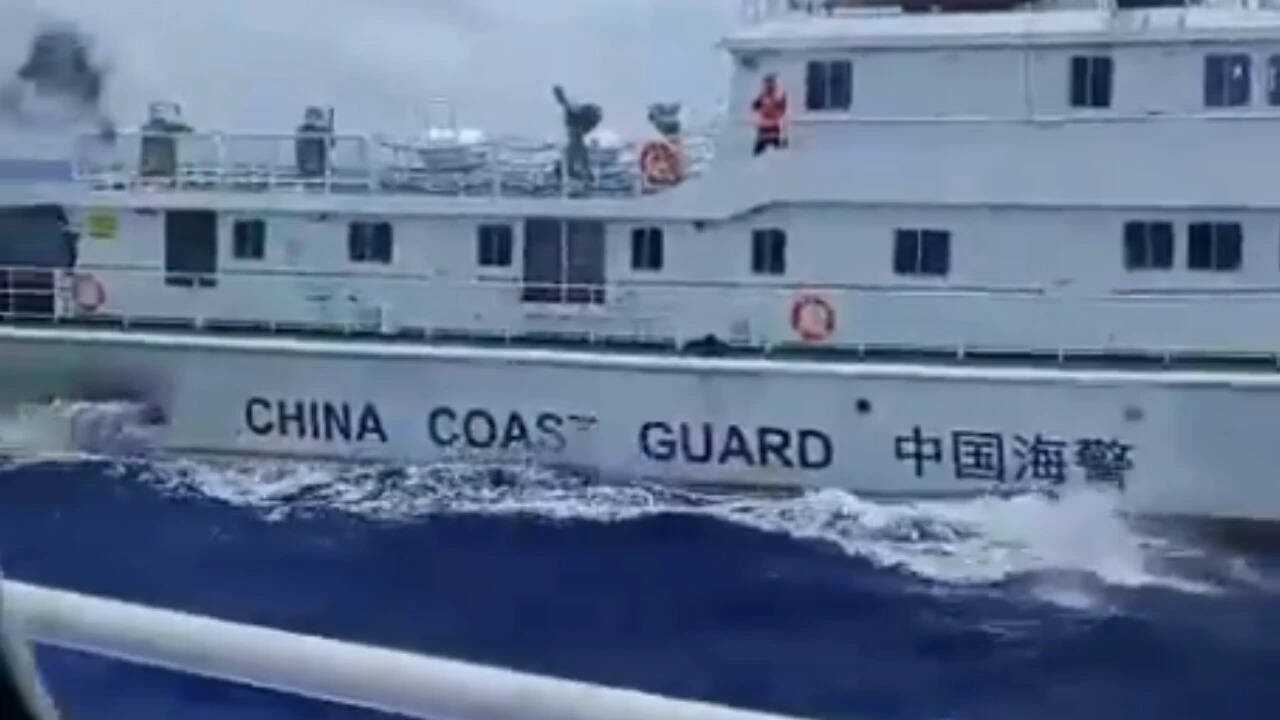
The headlines write themselves with lazy predictability whenever hulls crunch in the Spratly Islands. A Chinese coast guard ship cuts across the bow of a Philippine supply vessel. Alarms wail. Smartphones capture the spray of grey water and the sickening scrape of steel on fiberglass. Western cable news networks immediately broadcast the incident as a clear-cut David versus Goliath morality play, casting Beijing as the unchecked maritime bully and Manila as the innocent victim caught in a geopolitical crossfire.
It makes for clean television. It also completely misunderstands how modern statecraft actually operates.
Accepting the mainstream framing requires swallowing a comforting fairy tale: that these collisions are accidental miscalculations, or sudden bursts of impulsive aggression by hotheaded captains on the high seas. I have spent years tracking gray-zone operations, watching how fleets maneuver in contested corridors. What looks like reckless seamanship on a thirty-second TikTok clip is actually a calculated, highly disciplined doctrine of attrition.
The conventional wisdom insists that Beijing is risking a catastrophic hot war every time a cutter rams a wooden utility boat near Second Thomas Shoal. The exact opposite is true. This choreography is precisely designed to avoid war while permanently altering the map.
The Myth of the Accidental Clash
Look closely at the footage cable news loops endlessly. You rarely see catastrophic hull breaches or kinetic weapon exchanges. You see controlled, low-velocity bumps, water cannons deployed with surgical precision, and meticulous positioning designed to disable rudders or block resupply lines without crossing the threshold of Article V of the US-Philippines Mutual Defense Treaty.
This is not loss of control. It is total control.
Military planners in Beijing understand a fundamental reality that Washington and Manila keep missing: dominance in the twenty-first century belongs to whoever is willing to escalate incrementally below the threshold of a formal armed attack. When a massive China Coast Guard cutter crowds a much smaller Philippine Bureau of Fisheries and Aquatic Resources vessel, it is executing a textbook application of maritime lawfare mixed with physical coercion.
The lazy consensus holds that these actions expose Beijing’s desperation or insecurity. That is wishful thinking. By normalizing these daily incursions, the larger power establishes a new baseline reality. Every month that passes without a definitive counter-response codifies a new status quo. The gray zone expands outward, grain by grain, until the disputed reef is effectively integrated into an administrative zone enforced by white-hulled enforcers who answer to central command.
The Manila Trap
On the other side of the ledger, Philippine strategy has fallen into a dangerous and predictable trap. Relying on transparency initiatives—filming the rammings, publishing the radar tracks, appealing to international public opinion—feels cathartic. It wins moral victories in foreign policy journals and earns sympathetic statements from allied capitals.
Moral victories do not deter a ten-thousand-ton coast guard cutter.
By leaning entirely into the victim narrative, Manila boxes itself into a corner. It creates an internal political expectation that every provocation must be met with defiance, yet it lacks the physical mass to match China’s shipbuilding juggernaut. When your entire counter-strategy relies on the hope that international embarrassment will shame a nuclear-armed superpower into abandoning core territorial claims, you aren't playing chess. You are waiting for a miracle while your opponent stacks the board.
The uncomfortable truth is that small states cannot win a war of attrition in their own front yard against a peer competitor without fundamentally rethinking their alliance architecture and operational doctrine. Pledging resolve while watching your supply boats get disabled by water cannons month after month is not resistance; it is slow-motion strategic exhaustion.
Dismantling the UNCLOS Delusion
Legalistic arguments fare no better against the cold logic of maritime facts on the water. For years, legal scholars have pointed to the 2016 Permanent Court of Arbitration ruling that dismantled Beijing's expansive historic claims under the UN Convention on the Law of the Sea. Analysts treat that ruling as an unassailable trump card.
It is an illusion.
International law without an enforcement mechanism is merely a collection of strongly worded suggestions. A tribunal in The Hague cannot tow away a dredge, it cannot repair a smashed radar mast, and it cannot deter a coast guard fleet that views sovereignty as a question of physical presence rather than judicial interpretation. Clinging to the 2016 ruling as a substitute for hard power has created a dangerous intellectual laziness across foreign ministries from Washington to Canberra.
When you tell a population that international law is on your side, you create an expectation of protection that legal documents alone can never fulfill. Then, when a civilian vessel gets rammed, the public reacts with shock and outrage, wondering why the rules-based international order failed to stop the steel bow from crushing the rail. The order didn't fail. It was never designed to stop a state willing to absorb diplomatic costs in exchange for geographic control.
The Real Objective of the Gray Zone
Why risk international condemnation over a rusted-out World War II landing craft sitting on a shallow reef?
Because Second Thomas Shoal is a test case for the entire Indo-Pacific architecture. If a handful of persistent supply missions can be slowly choked out through bureaucratic harassment, mechanical exhaustion, and non-kinetic interdiction, the message to regional capitals is unmistakable: the United States security umbrella has a red line, and it sits far short of defending remote coral outposts.
The collisions are not the main event. They are the friction applied to wear down the resolve of the adversary until abandonment looks like the only rational choice left. Every time a vessel turns back with a smashed propeller, the psychological barrier to the next encroachment drops.
What Actually Works
If the current playbook is failing, what does a winning strategy look like? It requires abandoning the comfort of perpetual protest and adopting asymmetric, high-stakes deterrence.
First, stop treating coast guard vessels as mere law enforcement nuisances. Treat them for what they are: the frontline tip of a revisionist military strategy. When gray-zone tactics are met only with polite diplomatic protests and video releases, the aggressor is incentivized to dial up the pressure.
Second, diversify the physical response. Relying entirely on wooden or light-hulled civilian supply boats guarantees asymmetric losses. If resupply missions are non-negotiable national security priorities, they must be backed by hardened, multi-agency escorts that raise the political and financial stakes for the aggressor. If a collision must happen, make sure the math of the encounter ensures both sides feel the pain equally.
Third, shatter the illusion that deterrence can be outsourced. Declaratory policies and expressions of ironclad support from foreign allies are useful, but they are no substitute for domestic naval hard power and localized denial capabilities.
The next time a hull scrapes against steel in the South China Sea, do not look at it as a tragic accident or a spontaneous flashpoint. Recognize it for what it is: another calculated step in a silent war that is already being won by the side holding the throttle. Stop filming the impact. Change the math.