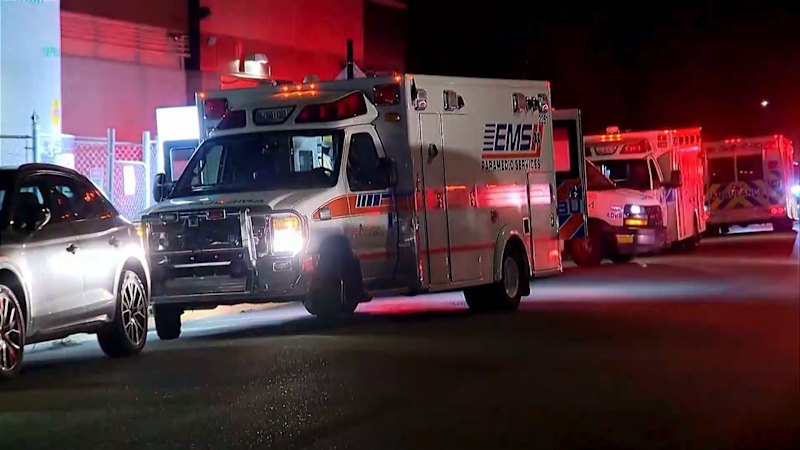
Five Canadian soldiers are dead. Dozens more have suffered severe burns. And yet the standard media narrative around the October 17, 2026 fire at Canadian Forces Base Wainwright has already calcified into predictable clichés.
Read the typical coverage of this tragedy and you will find the same lazy consensus repeated word for word. A "routine training exercise." A "freak wind shift." A "communications lockdown" treated like a spooky plot twist. A solemn promise of "thorough investigations."
That framing is not just shallow. It is dangerous.
Calling live-fire infantry and reserve training on an automatic grenade launcher range under dry autumn brush and high-wind warnings a "routine training exercise" erases agency and excuses structural blind spots. Treating a sudden wind shift as an act of God ignores a far harder admission already surfacing from military leadership: officials knew about the fire for hours, believed it was contained, and let training continue.
If you walk away from the CFB Wainwright fire thinking the culprit was simply bad weather or bad luck, you are asking the wrong question entirely. The real question is not how a spark became a blaze. The real question is why modern military training protocols treat "contained" brush fire near live ordnance and troops as an acceptable operating condition rather than a hard stop.
The Myth of the "Routine" Live-Fire Exercise
Every time a military training accident claims lives, the press and public reach for the word "routine." It sounds reassuring. It implies predictability, checklists, and low risk.
Live-fire ranges are never routine. They are controlled hazard zones where hot propellant, fragmentation, unburned energetic material, and dry organic fuel coexist in the same space. At CFB Wainwright, soldiers from the 3rd Battalion, Princess Patricia's Canadian Light Infantry, alongside Army reservists, were training on an automatic grenade launcher range on October 17. Environment and Climate Change Canada had already issued weather warnings for strong winds across parts of Alberta that day.
When you mix incendiary or explosive munitions with curing grass and brush under wind advisories, you are not running a benign drill. You are managing active fire risk in real time.
I have spent years studying wildland-urban interface fires, industrial safety audits, and high-consequence operational failures where organizations mistake familiarity for safety. I have seen operations teams blow millions on sensors, checklists, and safety officers while still normalizing "acceptable" hazards because nothing went wrong last Tuesday. Normalization of deviance—a concept sociologist Diane Vaughan documented in her work on the space shuttle Challenger disaster—is the quiet killer in high-risk organizations. When a range fire starts and gets put out or appears boxed in during training, people get used to it. The shock wears off. The threshold for halting operations creeps upward.
That is the lazy consensus competitor coverage misses. They frame the tragedy as a bolt out of the blue that overwhelmed stoic professionals. In reality, high-consequence accidents rarely start with a single catastrophic mistake. They build on small compromises that felt reasonable at the time.
"Contained" Is Not an Operational Guarantee in Wind-Driven Brush
Here is the sharpest nuance buried beneath the headlines: reporting indicates military officials were aware of the fire for hours, thought it was contained, and allowed training to proceed before winds shifted and pushed flames over the troops and beyond the base perimeter.
Anyone who has fought or analyzed grass and brush fires knows how fragile "containment" is when wind speeds climb.
A fire line on paper is not a concrete wall. In dry prairie and parkland brush, smoldering pockets hide deep in root systems, duff, and uneven terrain. Spot fires jump ahead of a head fire when gusts pick up. Even when flames look low or slow-moving, radiant heat preheats surrounding vegetation, dropping its ignition threshold and turning a manageable perimeter into a fast-moving wall of fire within minutes.
Consider a thought experiment. Imagine a scenario where a range safety officer sees a small brush fire ignite downrange during live firing. Suppression crews knock down the visible edge, and the wind is blowing away from the firing line. On paper, the hazard looks isolated. Training continues to meet tight readiness schedules. Ten minutes later, a gust front shifts the vector, ignites unburned fuel between the fire and the troops, and cuts off clean egress routes.
You do not need an explosion or a terrorist attack—and investigators have indicated no signs of either—to create a mass-casualty burn event. All you need is fuel, wind, heat, time, and a decision to keep people in the path of a dynamic hazard.
Why People Ask the Wrong Questions After a Base Fire
Scroll through the questions people actually search after an incident like CFB Wainwright, and you will see how distorted public focus becomes.
Was there an explosion or an attack?
Early rumors often jump straight to explosions, sabotage, or oil and gas infrastructure. Officials have stated there is no indication of oil and gas involvement or terrorist activity. Fixating on explosions misses the deadlier reality of wildland and brush entrapment: thermal radiation and smoke do not need a shockwave to kill or critically injure dozens of people. When wind drives flames through infantry positions—and then across base boundaries toward rural areas and the town of Wainwright—heat transfer and oxygen depletion do the devastating work.
Why was the base put under a communications lockdown?
Critics and anxious families often view a communications lockdown as cover-up behavior. Former senior military officers have noted it is standard protocol after a major incident. Both truths can sit side by side: locking down comms protects operational security, family notification dignity, and clinical/investigative integrity—yet institutional secrecy in the first 24 to 48 hours also starves the public of clear situational context, creating a vacuum that rumor fills instantly. Saying "lockdown equals conspiracy" is lazy. Pretending lockdown causes zero friction with public trust is equally naive.
Will multiple investigations fix the problem?
Multiple parallel probes—military police, board of inquiry, safety reviews—are already underway. Investigations are necessary for accountability and legal clarity. They are not a cure by themselves. Too often, inquiries produce thick binders of recommendations while underlying pressures—tight training calendars, weather-window bottlenecks, stretched range-suppression resources—remain untouched.
What Actually Works When Fire Meets Live Training
If military leaders and safety commanders want fewer burn units filled after training exercises, polite condolences and generic "we will learn from this" pledges will not cut it. Real risk reduction requires hard operational rules that hurt in the short term.
- Treat active fire plus wind warnings as an automatic training pause, not a judgment call. If a brush fire ignites on a live-fire range on a wind-warning day, halt live ordnance and pull non-essential personnel back until fire-behavior specialists verify full extinguishment—not mere visual containment.
- Audit escape routes and safety zones before every iteration, not just at exercise start. Wind shifts change safe zones into traps. Commanders must verify upwind or crosswind egress and buffer zones continuously as conditions evolve.
- Separate range suppression from range execution. The people trying to hit training quotas should never be the same ones deciding whether a smoldering range edge is "good enough" to keep firing. Independent safety authority has to carry veto power without career penalty.
- Train for rapid burn and smoke survival—and stock serious medical surge capacity. When soldiers suffer severe thermal injuries—with dozens hospitalized and many requiring specialized burn care and ventilation—delaying medical triage or evacuation by even minutes compounds mortality.
The Cost of Being Wrong About Risk
There is a catch to taking a hard-line stance on range safety and weather thresholds. If you shut down live-fire training every time wind gusts spike or dry brush smolders, readiness timelines slip. Units fall behind on qualification matrices. Budgets and schedules get messy. Over-cautious rules can breed cynicism if troops feel leadership is reacting to headlines rather than physics.
That is the real trade-off. You can either accept slower, more interrupted training schedules during high-risk weather windows, or you can accept the statistical probability that a wind-driven fire will eventually catch people who stayed too close for too long.
Five service members—Sergeant Morgan Wong, Private Shaun Farrell, Private Aidan Goulding, Private Hayden Lykkemark, and Private William Douglas Dal Bianco—have paid the ultimate price, while dozens of their brothers- and sisters-in-arms endure grueling recoveries. Honouring them does not mean sanitizing the conditions that put them in harm's way. It means fixing the rules before the next gust blows.