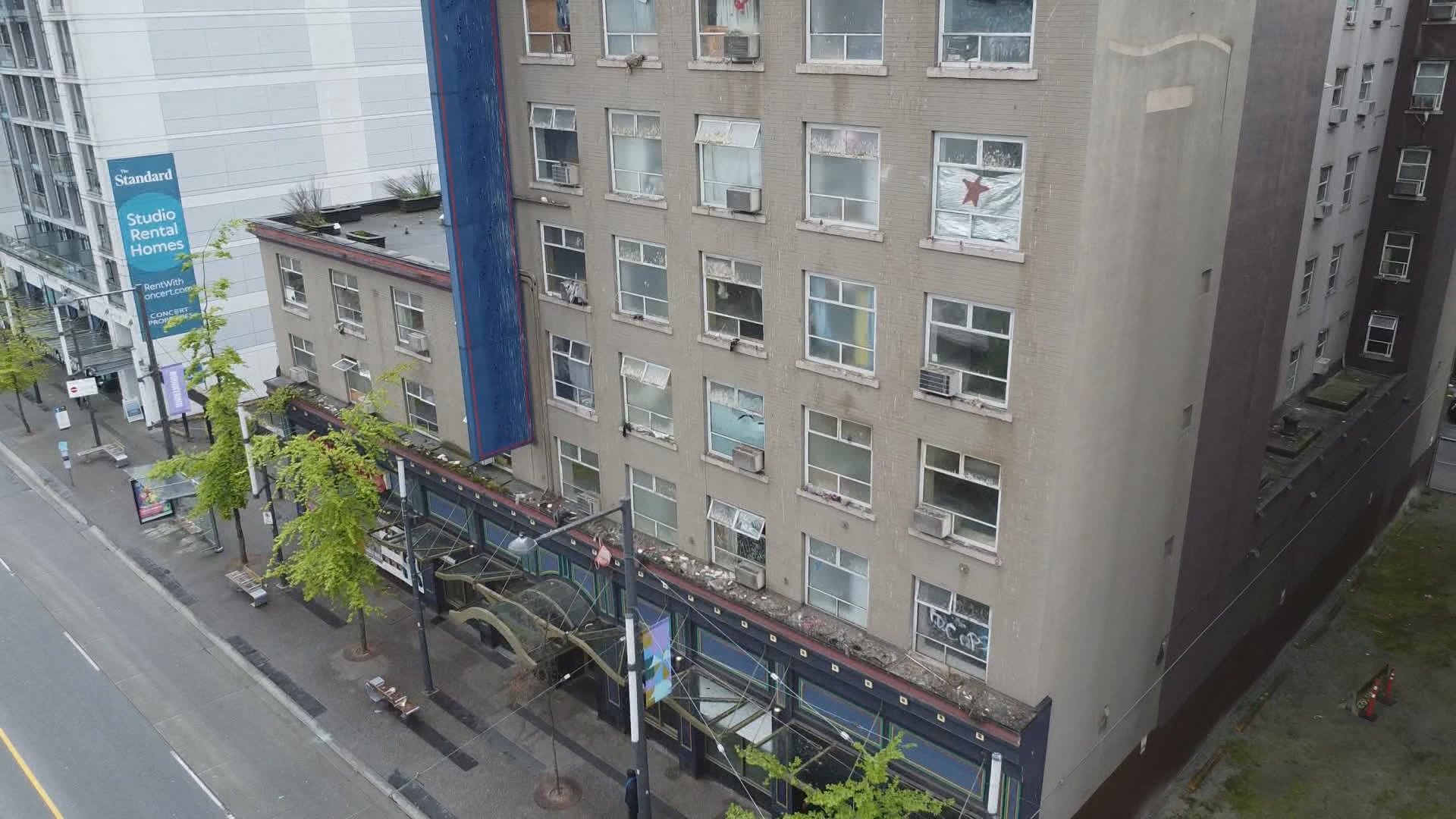
The media coverage surrounding Single Room Occupancy (SRO) evictions on Granville Street follows a tired, predictable script. A resident misses a deadline to vacate. Advocacy groups issue a press release demanding a halt. The city or housing authority issues a boilerplate statement about "ongoing transitions" and "supportive pathways." Everyone wrings their hands, yet the systemic rot remains entirely unaddressed.
The lazy consensus treats these missed deadlines as isolated administrative failures or simple acts of defiance. It frames the solution as more time, more extensions, and more bureaucratic patience. This is a fundamental misunderstanding of the entire ecosystem.
Having analyzed municipal housing rollouts and urban displacement data for over a decade, I can tell you the brutal truth nobody wants to voice: the deadline itself is a fiction, and the modern SRO model is an expensive holding pen that incentivizes institutional paralysis rather than actual rehabilitation or housing security.
We are asking the wrong questions. The question isn't why a vulnerable resident refused to leave a dilapidated building past a specific date. The real question is why we continue to funnel millions of dollars into a broken pipeline that treats human beings like inventory to be shuffled across a spreadsheet.
The Myth of the Seamless Transition
Municipal housing strategies love to use corporate jargon to describe human displacement. They promise structured relocations where residents move from crumbling, century-old SROs into modern, supportive complexes.
It almost never works that way on the ground.
When a housing authority sets a hard deadline for residents to clear out of a property like a Granville Street SRO, they are operating under the assumption that the receiving end of the pipeline is ready, safe, and stable. In reality, the alternative housing stock is frequently mired in construction delays, staffing shortages, or severe safety issues of its own.
Consider the mechanics of the system. According to data from BC Housing and the City of Vancouver regarding social housing waitlists, thousands of individuals remain in a state of perpetual limbo. When an agency forces a relocation, they aren't solving homelessness; they are managing a shell game. They move fifty people out of a building slated for redevelopment, crowd them into temporary shelters or substandard modular units, and declare a policy victory.
The resident who stays past the deadline isn't just resisting a bureaucratic order. They are making a rational risk assessment. They know that the room they have—no matter how flawed, moldy, or unsafe—is a known quantity. The promised "supportive housing" down the road is often a chaotic environment where tenant autonomy is stripped away by restrictive guest policies and heavy-handed surveillance.
The Financial Incentives of Perpetual Crisis
To understand why these eviction standoffs keep happening, look at the economics of the non-profit housing sector.
Massive sums of taxpayer money pour into the management of these properties. Yet, a significant portion of these funds is swallowed by administrative overhead, security firms, and endless consultant reports. The status quo is highly profitable for the industry built around managing poverty.
Imagine a scenario where a private corporation failed to deliver on its core service for decades while continuously demanding larger subsidies. It would be liquidated. In the social housing sector, failure is rewarded with increased funding under the guise of crisis management.
- The Cost Per Unit: Maintaining a single SRO unit can cost taxpayers thousands of dollars a month when factoring in emergency services, building maintenance, and non-profit staffing.
- The Outcome: Residents remain trapped in spaces that lack private bathrooms, kitchens, or basic dignity, while the building's physical infrastructure continues to degenerate.
If the goal were true housing security, the funds currently wasted on patching up unlivable heritage buildings would be redirected into building permanent, self-contained social housing units with real tenancy rights. Instead, the system preserves the SRO model because it justifies the ongoing existence of the bureaucracy that manages it.
Dismantling the Premise of Tenant Compliance
The public discourse frequently asks: "Why don't they just accept the alternative housing offered?"
This question is deeply flawed. It assumes that all housing offers are equal and that the tenant is being difficult. Let's look at the reality of what happens when an SRO clears out.
Often, the alternative offered is miles away from the resident's established community, medical care, and social networks. For someone dealing with chronic health conditions or addiction, moving five kilometers away from their support network is not a lateral move—it is a life-threatening disruption.
Furthermore, many supportive housing buildings operate under a different legal framework than standard residential tenancies. Residents are sometimes classified as "occupants" rather than "tenants," stripping them of basic protections under the Residential Tenancy Act. They can be evicted at a moment's notice without the right to a formal dispute resolution process.
Staying past a deadline in a Granville Street SRO is a desperate attempt to maintain a shred of leverage. Once a resident leaves that room, they lose whatever microscopic bargaining power they had with the state.
The Downside of the Hardline Stance
There is an opposing, equally misguided view that argues for immediate, forceful eviction to allow redevelopment to proceed. Proponents of this approach claim that holding up a project for a few holdouts hurts the broader community and stalls economic progress.
This view ignores the downstream financial reality.
When you forcibly evict a vulnerable person without a viable, dignified long-term housing solution, they do not disappear. They end up in hospital emergency rooms, provincial courtrooms, or entrenched encampments in public parks. The cost of a single individual cycling through the justice and healthcare systems far exceeds the cost of providing proper housing.
A study by the Mental Health Commission of Canada demonstrated that providing stable, permanent housing with no strings attached actually saves the public purse money over time by reducing the burden on emergency services. The hardline approach isn't fiscally conservative; it is economically illiterate. It prioritizes short-term optics over long-term fiscal responsibility.
Stop Managing Poverty and Start Building Housing
The entire approach to the Granville Street SRO crisis is backward. The city cannot zone or bureaucratic its way out of a structural deficit of real housing.
We must stop treating SROs as a legitimate form of long-term housing. They were built over a century ago as temporary lodging for seasonal workers, not as permanent medicalized housing for a traumatized population. Expecting these buildings to serve that function is madness.
The path forward requires a complete rejection of the current paternalistic model.
- Grant Full Tenancy Rights: Every individual relocated from an SRO must be given a standard lease protected by provincial tenancy laws, not an "occupancy agreement" that leaves them vulnerable to administrative whims.
- Phase Out SROs Entirely: Establish a strict, legally binding timeline to decommission every single SRO room in the city, replacing them with self-contained apartments featuring private kitchens and bathrooms.
- Defund the Bureaucracy: Divert capital away from non-profit administrative structures and channel it directly into rapid-housing construction methods, such as mass timber or pre-fabricated modular complexes that can be deployed in months rather than years.
The standoff on Granville Street is not an anomaly. It is the natural, inevitable output of a system designed to process people rather than house them. Continuing to extend deadlines while maintaining the underlying structure is an exercise in futility. The system doesn't need reform; it needs to be dismantled.