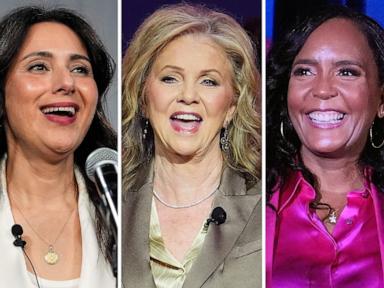
Reaching 17 female governors simultaneously across the United States represents a 34% executive representation threshold, converting what was historically treated as an anomaly into an established institutional baseline. Standard electoral coverage reduces this milestone to a simple headcount, obscuring the underlying structural shifts in candidate recruitment, primary filtration, and executive credibility. When 17 states—spanning diverse geographic, economic, and partisan profiles—elect women to their highest executive office, the data indicates a fundamental alteration in how voters evaluate executive risk and competence.
The Mechanics of the Executive Pipeline Bottleneck
To understand why 34% representation marks a structural inflection point, one must examine the historical mechanics of the gubernatorial pipeline. Unlike legislative seats, which operate as multi-member or district-based portfolios where risk is distributed across a caucus, the governorship is a unitary executive office. Voters apply a distinct risk-calculus to chief executives, heavily weighting crisis management, fiscal stewardship, and command authority.
Historically, three structural bottlenecks constrained female entry into this tier:
- The Credentialing Deficit: Voters and party gatekeepers traditionally required executive-adjacent credentials—such as state attorney general, lieutenant governor, or major-city mayor—before viewing a female candidate as viable for the top ticket. Male candidates frequently bypassed these intermediate tiers, moving directly from business, military service, or junior legislative roles into gubernatorial primaries.
- Primary Capital Asymmetry: Early-stage fundraising relies heavily on established donor networks that exhibit risk aversion. Until recently, institutional donors treated female gubernatorial candidates as higher-variance investments, starving campaigns of the early liquidity required to survive contested primaries.
- The Double-Bind Penalty: In unitary executive races, candidates must project both decisiveness and approachability. Linguistic and behavioral traits signaling command authority in male candidates frequently triggered likability penalties when deployed by female candidates, depressing crossover and independent vote share.
The simultaneous election of 17 female governors demonstrates that these bottlenecks have weakened across multiple electoral environments simultaneously. Rather than relying on a single ideological wave or one party's recruitment apparatus, the expansion reflects parallel adaptations in both major political coalitions.
Deconstructing the Partisan and Geographic Distribution
A rigorous analysis of the 17-state benchmark requires separating aggregate headcounts from partisan and regional mechanics. Political coverage often conflates numeric milestones with uniform ideological shifts, ignoring the distinct pathways Democratic and Republican women take to the governor's mansion.
In Democratic-leaning and competitive battleground states, female candidates have largely institutionalized the traditional pipeline. They frequently ascend through statewide down-ballot offices—serving as attorneys general, secretaries of state, or lieutenant governors—before consolidating party support. This pathway minimizes primary fragmentation and positions the nominee as the continuity candidate on governance and institutional stability.
In Republican-leaning states, the mechanism operates differently. Female executives in conservative jurisdictions have increasingly bypassed traditional legislative seniority by positioning themselves as ideological outsiders, fiscal enforcers, or direct allies of populist movements. By anchoring their campaigns on border security, tax reduction, or regulatory rollback, these candidates neutralize gender-based skepticism among conservative primary electorates. Once a candidate secures the Republican nomination in a structurally red state, the general election partisan baseline virtually guarantees victory.
This divergence proves a critical point: female executive success is no longer tethered to a single partisan brand or demographic coalition. The mechanisms of nomination differ sharply between the two parties, yet both pathways now reliably produce general election winners.
The Incumbency and Open-Seat Conversion Rate
Electoral milestones are rarely achieved through challengers unseating entrenched incumbents. In modern American politics, gubernatorial incumbency carries a substantial structural advantage, driven by state-level media dominance, control over budgetary allocations, and crisis-response visibility.
The surge to 17 female governors relies heavily on two specific conversion dynamics:
- Open-Seat Capture: Term limits across roughly three-quarters of US states force regular executive turnover. Female candidates have significantly improved their win rates in open-seat primaries, where the absence of an incumbent levels name-recognition and fundraising disparities.
- Incumbency Retention: Female governors elected in prior cycles have demonstrated high reelection durability, surviving hostile national political environments by localizing their political brands and focusing on tangible economic metrics such as infrastructure delivery, workforce development, and state-level tax adjustments.
When female candidates capture open seats and subsequently convert them into durable incumbencies, the baseline floor of representation rises permanently. Each successful reelection removes a seat from the contested column for an entire four-year cycle, allowing party recruitment networks to focus capital on the next tier of open-seat opportunities.
Re-evaluating Voter Risk Calculus and Executive Competence
The persistence of 17 female governors forces a revision of longstanding political science assumptions regarding voter stereotyping. Classic electoral models posited that voters default to gender heuristics during low-information races, assigning women higher competence on education and healthcare while penalizing them on taxation, crime, and economic management.
Current gubernatorial outcomes contradict this binary model. State chief executives spend the vast majority of their political capital managing state budgets, negotiating with legislatures over tax codes, recruiting corporate relocations, and deploying National Guard units during civil or weather emergencies. The fact that voters in over a third of the country have entrusted these portfolios to women indicates that executive competence is now evaluated primarily through partisan alignment and individual track records rather than demographic heuristics.
Several operational factors explain this shift in voter perception:
- Down-Ballot Proof of Concept: As more women serve as state attorneys general and state treasurers, voters observe them managing multi-billion-dollar budgets and complex legal apparatuses prior to a gubernatorial run. This eliminates the "untested executive" attack line during general elections.
- Crisis Visibility: Governors hold unilateral emergency powers. High-profile crisis management during public health emergencies, supply chain disruptions, and severe weather events has normalized the image of female executives commanding state agencies and holding daily operational briefings.
- Nationalization of State Politics: As state-level races increasingly mirror national partisan alignments, split-ticket voting has declined. A voter's partisan preference now overrides secondary demographic reservations, ensuring that any candidate who survives a major-party primary receives near-total consolidation from their party's base in November.
The Structural Limitations of the 34% Threshold
Treating 17 female governors as an irreversible trajectory toward automatic 50% parity ignores significant structural friction remaining in the electoral system. Strategy requires acknowledging the ceilings built into the current political map.
First, geographic clustering limits rapid expansion. Several states—particularly in the Deep South and parts of the Midwest—have never elected a female governor, and their internal legislative pipelines remain heavily male-dominated. Without deep benches of female state senators, lieutenant governors, or members of Congress in these specific jurisdictions, open-seat opportunities will continue to default to male candidates.
Second, primary election dynamics remain volatile. While general election voters have largely neutralized gender penalties, primary electorates are smaller, more ideologically rigid, and more susceptible to asymmetric attacks regarding electability. In crowded multi-candidate primaries, donors and party operatives still occasionally coalesce around male candidates under the flawed assumption that they represent a safer general election bet in swing states.
Third, media scrutiny continues to exhibit structural asymmetry. Coverage of female executives disproportionately focuses on interpersonal style, family structure, and intra-party friction compared to coverage of male peers, whose media profiles center more heavily on policy mechanics and legislative victories. This framing tax requires female candidates to spend disproportionate communications bandwidth establishing baseline authority.
Institutionalizing the Executive Pipeline
Political organizations, donor networks, and party committees seeking to convert this 17-state milestone into permanent executive parity must abandon broad awareness campaigns in favor of targeted pipeline engineering.
The primary point of intervention is the down-ballot executive tier. Recruitment efforts must prioritize placing female candidates into offices with direct fiscal and legal authority—specifically state comptroller, treasurer, lieutenant governor, and attorney general—at least two election cycles prior to targeted gubernatorial open seats. These offices provide the exact operational credentials required to neutralize primary electability arguments and establish statewide fundraising infrastructure.
Simultaneously, institutional donor networks must shift capital allocation earlier in the election cycle. Writing checks after a candidate wins a primary does not alter the structural composition of the field; early seed capital deployed 18 to 24 months before a primary filing deadline is the decisive variable that allows non-traditional candidates to build data operations, secure top-tier media consultants, and deter primary challengers. When capital allocation aligns with down-ballot credentialing, the 17-state benchmark ceases to be a historical record and becomes the permanent operational floor of American state governance.