The salt air at Calais smells of diesel, wet concrete, and fried dough. For most travelers, it is a liminal space—a place of impatient queueing, passport stamps, and the low hum of ferry engines waiting to bridge the twenty-one miles between France and the white cliffs of Dover.
It is supposed to be mundane. It is supposed to be safe.
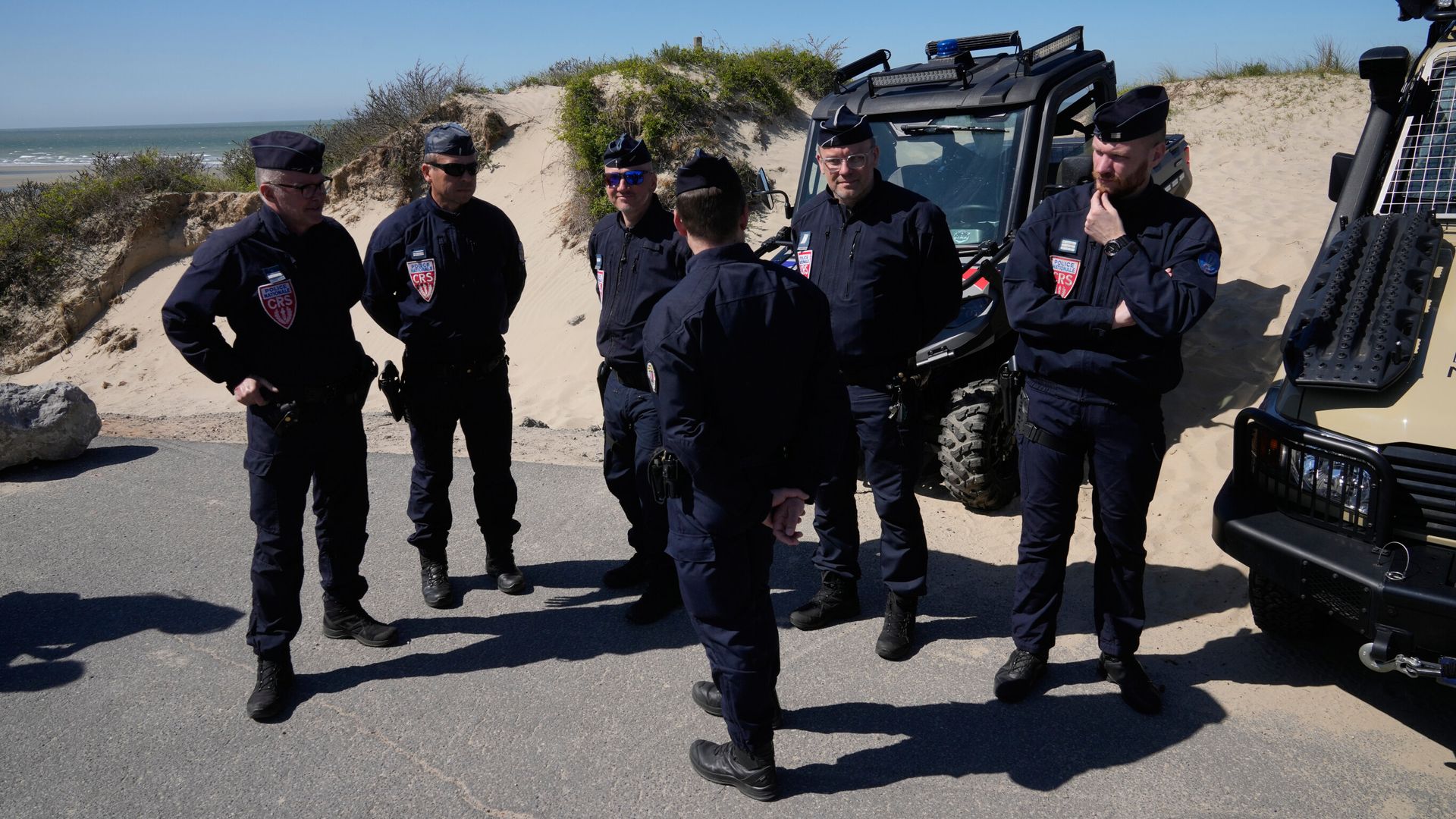
Yet on a brisk morning along the northern French coast, that routine shattered when French border authorities intercepted a group of British nationals carrying tear gas canisters. They were not tourists who had packed the wrong camping gear. According to security officials, they were suspected far-right activists moving across international lines with chemical irritants designed for crowd dispersal and street confrontation.
Read that again. Tear gas. Packed into luggage, driven onto a ferry or through a tunnel, and carried across a border by citizens of a country that prides itself on the rule of law.
Most news reports will give you the cold, clinical version of this event. They will cite the number of arrests, quote a brief statement from the French interior ministry, and move on to the next headline before your coffee gets cold. They treat it like a minor logistics failure at a border checkpoint.
They are missing the point entirely.
When political extremism stops being an angry comment section and starts packing chemical weapons into the trunk of a car, the story is no longer about a single border stop in northern France. It is about how radicalization travels, how borders are tested, and what happens when ideological fury decides that geography is no longer a boundary.
The Anatomy of a Crossing
To understand why a handful of canisters in a car near Calais matters so much, we have to step away from the police blotter and look at the human mechanics behind the trip.
Consider a hypothetical scenario—a composite drawn from years of documented counter-terrorism and extremism research across Europe. Imagine a twenty-six-year-old man from a post-industrial town in the Midlands. Let’s call him Liam. Three years ago, Liam’s biggest concerns were making rent, fixing the alternator on his Vauxhall, and watching Saturday football. He wasn't born hating anyone. He didn't wake up one morning and decide to smuggle crowd-control munitions across the English Channel.
It happened slowly. First came the algorithm, feeding him outrage during late-night scrolling sessions. Then came the encrypted messaging apps, where the outrage was given a name, a target, and a sense of brotherhood. In those digital rooms, men who felt invisible in their own towns were suddenly told they were soldiers in an existential war.
And soldiers, eventually, want to march.
This is the invisible shift that security analysts across the UK and Europe have been warning about for years. Far-right extremism is no longer a collection of isolated local thugs shouting on a street corner. It has become a transnational network. Activists in Britain share tactics, funding, branding, and ideology with counterparts in France, Germany, and Scandinavia. They attend the same mixed-martial-arts tournaments in Eastern Europe. They use the same coded memes. They study the same street-fighting manuals.
When suspected British activists are detained in France with tear gas, we are watching that digital network materialize in the physical world. We are seeing the moment an online echo chamber decides to buy a ferry ticket.
Why Tear Gas Changes the Equation
You might wonder why tear gas—a substance often viewed as less lethal than firearms or explosives—sets off such loud alarm bells in European intelligence circles.
The answer lies in intent and escalation.
Under both UK and French law, tear gas is not a self-defense trinket. In Britain, carrying CS gas or pepper spray is classified under the Firearms Act; possessing it carries severe criminal penalties, up to and including prison time. In France, while certain defensive sprays are tightly regulated for domestic use, transporting tear gas grenades or canisters in the context of political mobilization is treated as carrying a weapon.
More importantly, tear gas is a tool of tactical street warfare. You do not pack tear gas canisters to have a peaceful debate outside a town hall. You pack them when you anticipate—or intend to provoke—chaos. You bring them to blind counter-protesters, to overwhelm police lines, or to create panic in crowded public spaces.
I have stood on the edges of demonstrations in European cities when a canister pops. The sound is a dull, metallic thud, almost disappointing at first. Then the white cloud rolls low across the asphalt. Within seconds, your eyes slam shut as if someone threw hot sand into them. Your throat constricts. You cough until your ribs ache, stumbling blindly into strangers, desperate for clean air.
In a dense crowd, that panic kills people. People get trampled. Emergency responders cannot reach the injured. Police are forced to escalate their own use of force just to regain visibility and control.
Bringing that kind of chemical agent across an international border signals a chilling level of premeditation. It tells us that these individuals weren't caught up in the heat of a spontaneous protest. They planned. They acquired restricted materials. They concealed them. And they crossed an international frontier with the clear expectation of physical conflict.
The Myth of the Lone Channel
For centuries, Britain’s island geography fostered a comforting illusion: trouble happens over there, on the continent, and the English Channel keeps it at bay.
That illusion died a long time ago, yet our public conversation still clings to it. When headlines break about British nationals detained abroad for political violence or weapons possession, the instinctive reaction is often defensive disbelief. How did they get there? Why were the French dealing with our problem?
The truth is uncomfortable. Cross-Channel extremism is a two-way street, and northern France—particularly the stretch between Calais and Dunkirk—has become a flashpoint for precisely this kind of friction.
For years, the coastal camps and transit routes around Calais have been a magnet not just for desperate migrants trying to reach the UK, but for far-right vigilante groups from both sides of the water. French identitarian groups have staged theatrical "border patrols" in the Alps and along the northern coast, mimicking military operations to harass migrants and generate viral propaganda. British groups have repeatedly tried to link up with them, viewing northern France as the front line of their ideological crusade.
French authorities know this pattern intimately. Since the wave of violence and extremist mobilization that shook Europe over the past decade, France has sharpened its domestic intelligence apparatus and broadened its powers to dissolve extremist associations and intercept suspected militants before they reach a rally.
When French police stopped those British suspects, they weren't acting on a random hunch. Border security between the UK and France relies heavily on intelligence sharing—passenger name records, automatic number plate recognition, and watchlists maintained by counter-extremism units on both sides of the Channel.
Still, every interception reveals a terrifying reality: for every car that gets pulled over at the port, security services have to worry about the ones that didn't raise a flag.
The Fog of Radicalization
It is easy to look at men detained with tear gas canisters and reduce them to caricatures—mindless villains driven by pure malice. That is a soothing story because it allows the rest of us to feel completely separate from them.
It is also dangerously naive.
If you spend enough time studying how people end up in the back of a police van in Calais, you realize that the recruitment pipeline doesn't start with hatred. It starts with grievance, boredom, and a profound hunger for meaning.
In towns hollowed out by economic stagnation, where community centers have closed and good jobs feel scarce, young men are easy prey for anyone offering a simple explanation for their pain. Extremist recruiters don't hand out manifestos on day one. They offer a gym membership. They offer a pub night. They offer the intoxicating feeling of being part of an elite brotherhood that sees the "truth" while everyone else is asleep.
I remember speaking years ago with a former member of a British nationalist street movement who had spent time in prison for violent disorder. What struck me wasn't his ideology—which was incoherent, cobbled together from half-read blog posts and conspiracy videos—it was his nostalgia for the adrenaline. "For the first time in my life," he told me, "when I walked down the street with those lads, people moved out of the way. I felt ten feet tall."
That is the emotional engine driving this threat. And when you combine that hunger for relevance with modern encrypted logistics and cheap cross-border travel, you get a volatile mixture.
We also have to be honest about what we don't know. In the immediate aftermath of border arrests like the one in France, information is tightly guarded. Prosecutors protect ongoing investigations. Suspects are innocent until proven guilty in a court of law. We do not yet know the full network behind these individuals, whether they were acting independently or under the direction of a larger organization, or what exact event they were traveling to disrupt.
Admitting that uncertainty isn't weakness. It is the only honest way to look at an evolving security threat.
What Happens When the Border Blurs
So what does a border arrest in France actually mean for someone sitting in Manchester, Birmingham, or London?
First, it shatters the comforting fiction that online extremism stays online. For years, tech platforms and policymakers debated whether hateful speech on fringe forums constituted a real-world danger or merely "venting." Every time border guards pull chemical weapons out of a car trunk, that debate ends. Digital radicalization has physical consequences, and those consequences have a passport.
Second, it exposes the delicate, indispensable machinery of European security cooperation. Post-Brexit politics often frames the UK and France as perpetual rivals arguing over fishing rights, trade rules, and small boat crossings. Yet beneath the political theater, British and French intelligence officers depend on each other every single hour to track violent networks that respect neither flags nor treaties. If political friction ever weakens that intelligence pipeline, the extremists win immediately.
Finally, it forces us to confront a mirror we would rather avoid. Extremism is rarely imported wholesale; it grows in the cracks of our own communities. Policing borders and intercepting tear gas canisters at ports are essential defensive measures—like catching sparks before they hit dry timber. They keep people safe in the short term.
They do not put out the fire.
Real resilience requires interrupting the pipeline long before a twenty-something from a quiet town decides to pack chemical irritants into a duffel bag and drive toward the coast. It requires communities that offer young people real belonging instead of synthetic outrage. It requires honest conversations at kitchen tables when a brother, a son, or a friend starts repeating the poisonous scripts of online demagogues.
The Weight of a Suitcase
Picture the scene at the French border again.
The fluorescent lights of the inspection bay buzzing overhead. The heavy thud of a car boot opening. A customs officer reaching past spare jackets and energy drinks, fingers brushing against cold, cylindrical metal.
A single canister of tear gas weighs less than a pound. You can hold it in the palm of your hand. Yet inside that small aluminum shell sits a concentrated cloud of panic, injury, and political poison—carried across twenty-one miles of open water by people who believed their anger gave them the right to choke the air out of someone else's street.
The ferry horns still blow every hour at Calais, carrying families on holiday, lorries full of fresh produce, and commuters heading home. Life moves on across the water, loud and ordinary.
But the luggage in the trunks isn't always what it seems, and the distance between an angry screen and a weaponized border is shrinking every single day.


