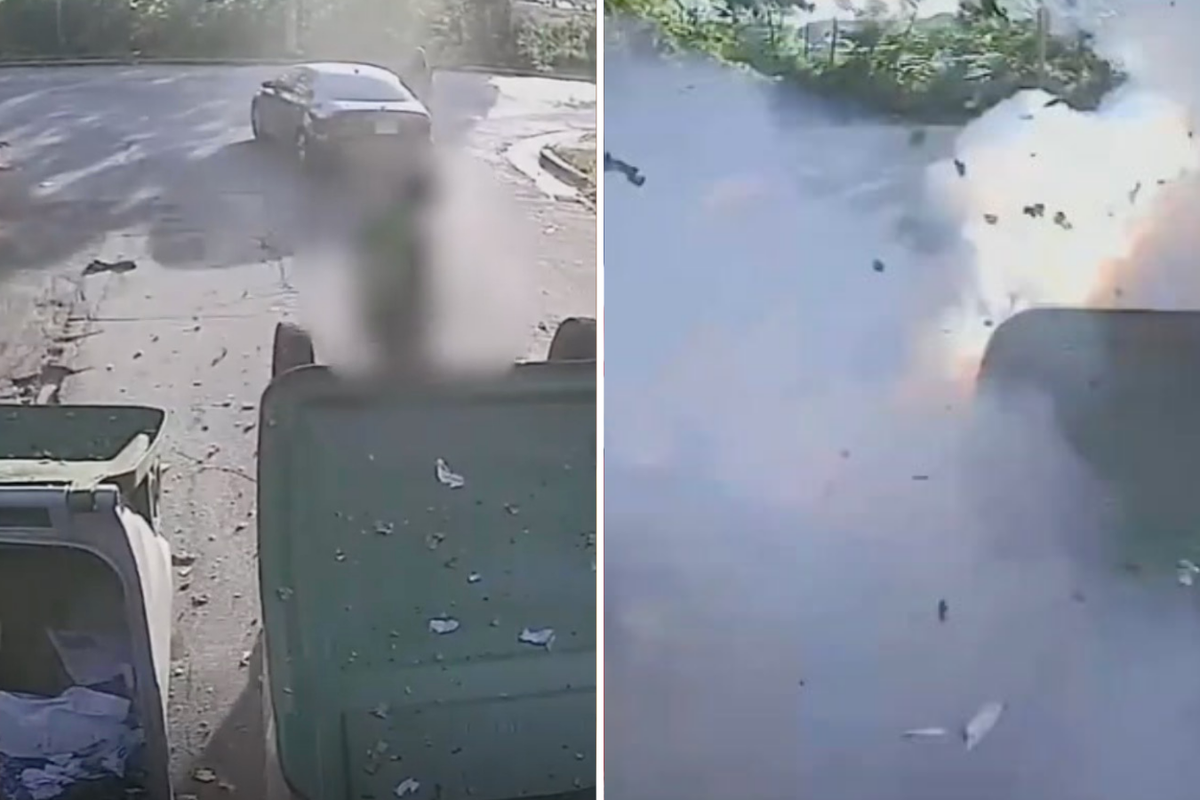
When a municipal sanitation worker lost an eye to metal shrapnel after an illegal oxygen tank imploded inside a trash truck compaction unit, the incident made local headlines for a single news cycle. It was treated as a freak accident, a rare conjunction of bad luck, careless disposal, and mechanical force. That characterization is dangerously false. Sanitation crews across the country confront pressurized gas canisters, lithium-ion batteries, and volatile chemical containers every single morning, turning routine residential routes into hazardous operations where workers face military-grade blast risks without basic protective shields.
The mechanics of this tragedy reveal a systematic failure in municipal waste management. A standard rear-loading or side-loading garbage truck uses hydraulic rams capable of exerting packing pressures between twenty-five and thirty-five pounds per square inch, generating upwards of thirty thousand pounds of force against packed refuse. When a household oxygen tank, pressurized between two thousand and three thousand pounds per square inch, enters this hopper, the steel wall of the cylinder is squeezed until structural failure occurs. The sudden release of potential energy creates a catastrophic rupture, sending jagged metal fragments tearing through heavy reinforced plastic, rubber seals, and aluminum truck bodywork at ballistic speeds.
The Hidden Ordnance in Residential Trash
Sanitation work ranks among the most hazardous civilian occupations in North America. Bureau of Labor Statistics data consistently places refuse and recyclable material collectors near the top of fatal occupational injury lists, well ahead of police officers and firefighters. While traffic collisions traditionally account for a large portion of these casualties, chemical burns, fires, and explosive ruptures have surged significantly over the past decade.
The growth of home healthcare has flooded residential waste streams with medical-grade oxygen cylinders, small propellant canisters, and pressurized breathing apparatuses. Aging residents or their families often clear out medical equipment without knowing that high-pressure steel tanks cannot be processed through standard municipal refuse channels. When discarded in a standard wheelie bin, a pressurized tank remains invisible to the driver operating the hydraulic controls from the vehicle cab.
Public awareness regarding dangerous household items remains practically non-existent. Most citizens assume that if an object fits inside a rolling plastic container, the city equipment can process it safely. Municipalities routinely run basic recycling awareness campaigns, yet they rarely warn residents about the explosive potential of pressurized vessels. A single discarded oxygen cylinder sitting beneath five bags of ordinary kitchen waste forms a hidden bomb waiting for hydraulic activation.
The physics involved in these events are straightforward and lethal. Inside a sealed metal vessel, compressed gas exerts equal outward pressure against the container walls. As the truck compaction blade crushes the cylinder, the structural geometry of the vessel collapses. If the pressure relief valve fails to bleed off the gas rapidly enough, the vessel breaches catastrophically. The resulting expansion produces a shockwave accompanied by high-velocity metal shrapnel capable of penetrating protective eyewear, thick canvas uniforms, and vehicle cabs.
How Hydraulic Compaction Turns Cylinders into Projectiles
Modern garbage trucks are engineering marvels designed for volume reduction, not hazard containment. To maximize route efficiency, modern packer bodies compress trash continuously throughout a shift. The primary blade sweeps material into the body, while the secondary panel compresses it against the existing load. This process operates under automated hydraulic control, meaning the operator cannot feel resistance changes when the blade encounters a rigid steel pressure vessel.
When the hydraulic blade strikes a cylinder, one of two failures occurs. The first is a rupture caused by stress concentration, where the metal outer shell tears open violently. The second failure mode occurs when the cylinder valve shears off under impact. A sheared valve converts a heavy steel cylinder into a unguided missile, launching it out of the loading hopper at high velocity.
Field operators have virtually no line of sight into the compaction zone. Automated side-loaders use mechanical arms to lift and invert bins high above the vehicle cab, dumping contents directly into an enclosed hopper. The driver remains inside the cab during the entire dump cycle, relying on mirrors or low-resolution video feeds that cannot spot a buried cylinder among residential trash bags. By the time the packing cycle begins, any opportunity to intercept the hazardous object has passed.
Sanitation workers operating rear-loading vehicles stand even closer to the danger zone. They physically guide bins into the hopper and activate the packing cycle while standing just feet from the compaction mechanism. When an explosion occurs in a rear-loader, the open design of the loading hopper provides no barrier to deflect outward flying shrapnel, leaving the worker standing directly in the line of fire.
+-------------------------------------------------------------------+
|               HAZARD ANALYSIS: COMPACTION RUPTURE                 |
+-------------------------------------------------------------------+
|  Vessel Type         | Internal Pressure | Primary Hazard         |
+----------------------+-------------------+------------------------|
| Household Oxygen     | 2,000 - 3,000 PSI | Shrapnel / Fire        |
| Propane Cylinder     | 100 - 200 PSI     | Fireball / Deflagration|
| Lithium-Ion Pack     | Chemical/Stored   | Thermal Runaway / Blast|
| Fire Extinguisher    | 100 - 200 PSI     | Cloud / Projectile     |
+-------------------------------------------------------------------+
Regulatory Blindspots in Compressed Gas Disposal
The regulatory environment governing compressed gas containers is a patchwork of federal, state, and local rules that lack enforcement mechanisms at the curb. The Department of Transportation strictly regulates the transport of pressurized gases on public highways, dictating cylinder wall thickness, inspection intervals, and labeling. Once a medical cylinder enters a private residence, those federal protections end.
Local waste management authorities publish long lists of prohibited materials on website subpages and annual mailers. These guidelines explicitly forbid pressurized tanks, car batteries, hot ashes, and liquid solvents. Public compliance relies entirely on an honor system that repeatedly fails in practice. Waste management agencies lack both the personnel and legal authority to inspect individual household bins prior to collection.
Efforts to trace illegal disposal back to specific households face significant evidentiary hurdles. Once an explosion occurs inside a truck body, the physical evidence is mangled, scorched, and mixed with tons of surrounding refuse. Serial numbers on compressed gas tanks are routinely obliterated during hydraulic compaction or the subsequent blast, rendering post-incident identification of the perpetrator nearly impossible.
+-------------------------------------------------------------------+
|               THE REGULATORY BREAKDOWN PATHWAY                    |
+-------------------------------------------------------------------+
|                                                                   |
| [Federal Transport Rules] ---> Ends at Private Residence          |
|                                                                   |
| [Municipal Ordinances]    ---> Prohibits Canisters (No Audits)    |
|                                                                   |
| [Curbside Collection]    ---> Zero Line of Sight into Bins        |
|                                                                   |
| [Hydraulic Compaction]    ---> Violent Blast / Evidence Destroyed |
|                                                                   |
+-------------------------------------------------------------------+
Insurance carriers covering municipal waste operations have begun raising premiums for cities that fail to implement safety protocols. Yet most city risk managers view these incidents through the lens of liability management rather than preventative engineering. They settle claims with injured workers, pay out equipment damage claims, and allow the underlying operational model to continue unchanged.
Private contractors handling municipal waste operate under tight margins, where route speed takes priority over hazard detection. Drivers are expected to complete hundreds of bin pickups per shift, leaving no time to open lids and manually inspect contents. In many jurisdictions, drivers face disciplinary action if they miss route completion targets, creating a direct conflict between operational speed and worker safety.
The Real Human Cost Behind Curbside Collection
The human toll of these preventable events goes far beyond physical injuries like eye loss or hearing destruction. Sanitation workers who survive severe hopper explosions often experience significant psychological trauma. Returning to the back of a packer truck after surviving an explosive burst creates intense stress, yet mental health support in this industry remains minimal.
Worker compensation systems consistently undercompensate sanitation staff for career-ending injuries. A crew member who loses vision or suffers severe facial disfigurement faces early retirement without the specialized skill sets required for office-based employment. While municipal disability pensions exist, they rarely offset the total loss of lifetime earning potential for younger workers injured early in their careers.
Labor unions representing waste collectors have repeatedly raised alarms regarding hazardous materials in residential streams. Their demands for enhanced vehicle armor, hopper shielding, and mandatory residential inspections have met stiff resistance from city budget committees. Equipment upgrades require capital investments that cash-strapped municipalities routinely defer in favor of other civic projects.
The industry also relies heavily on temporary staffing agencies to fill collection roles. These temporary workers receive minimal hazard training and lack union representation, making them vulnerable to hazardous working conditions. When a temporary worker suffers an injury on a collection route, third-party staffing structures often obscure corporate liability, leaving the victim to navigate complex legal disputes to cover medical costs.
Technical Solutions and Equipment Redesign
Addressing the risk of hopper blasts requires a combination of retrofitted vehicle engineering and advanced detection technology. Standard garbage truck hoppers can be fitted with heavy-duty ballistic curtains constructed from high-tensile aramid fibers. These curtains hang over the loading opening, allowing trash to enter while absorbing energy and stopping high-velocity shrapnel during a blast event.
Optical and thermal detection systems offer another layer of defence. Infrared cameras mounted inside the loading hopper can identify sudden temperature spikes or unusual shape profiles before the compaction blade engages. Advanced systems utilize acoustic monitoring sensors that detect the high-frequency hissed warning of a leaking pressurized tank, automatically halting the hydraulic cycle before a critical failure occurs.
Redesigning the geometry of hydraulic compaction blades can also reduce blast risks. Curved blade profiles redistribute pressure more evenly across crushed objects, reducing localized stress concentrations that cause violent structural failures in metal cylinders. Incorporating pressure-sensitive relief valves directly into the truck hydraulic system prevents the blade from exerting full engine force when encountering unyielding metallic objects.
+-------------------------------------------------------------------+
|                ENGINEERING MITIGATION STRATEGIES                  |
+-------------------------------------------------------------------+
| Solution             | Function               | Impact            |
+----------------------+------------------------+-------------------|
| Aramid Curtains      | Shrapnel Deflection    | Immediate Safety  |
| Acoustic Sensors     | Detect Gas Leaks       | Cycle Pre-Emption |
| Hydraulic Cut-Offs   | Cap Compression Force  | Prevents Breach   |
| Optical Scanning     | Visual Pre-Screening   | Hazard Flagging   |
+----------------------+------------------------+-------------------+
Municipalities must establish mandatory drop-off networks for residential medical devices and compressed gas cylinders. Partnering with medical supply companies, local pharmacies, and fire stations creates accessible disposal channels that prevent high-pressure tanks from entering curbside trash bins. Until cities make safe disposal simple, residential waste streams will continue to carry explosive hazards.
Investing in public education and strict enforcement mechanisms remains essential. Cities that implement random bin audits paired with steep fines for illegal hazardous waste disposal see dramatic drops in contaminated waste streams. Enforcing accountability at the curb remains the most effective way to protect workers before a dangerous cylinder ever reaches the back of a garbage truck.
Relying on luck and basic safety glasses to protect sanitation workers from high-pressure explosions is an unacceptable operational approach. Every time a compaction blade engages on an uninspected load of residential trash, workers are exposed to preventable blast risks. Until municipal leaders invest in containment technology, enforce disposal ordinances, and redesign collection hardware, frontline workers will continue paying for public negligence with their health and safety.