India’s current panic over West Asia isn't about supply chains or displaced workers. It’s about a fundamental failure to understand how modern energy and food security actually function. The mainstream media is currently obsessing over "hoarding" and "migrant flights," but these are symptoms of a legacy mindset that hasn't updated its software since the 1970s. We are being fed a narrative of scarcity when the real issue is structural inefficiency and a refusal to pivot.
The Hoarding Red Herring
The government is currently flagging "fertilizer hoarding" as a major threat to food security amid West Asian tensions. This is a classic diversion. When bureaucrats talk about hoarding, what they are actually describing is the market reacting to a broken subsidy model.
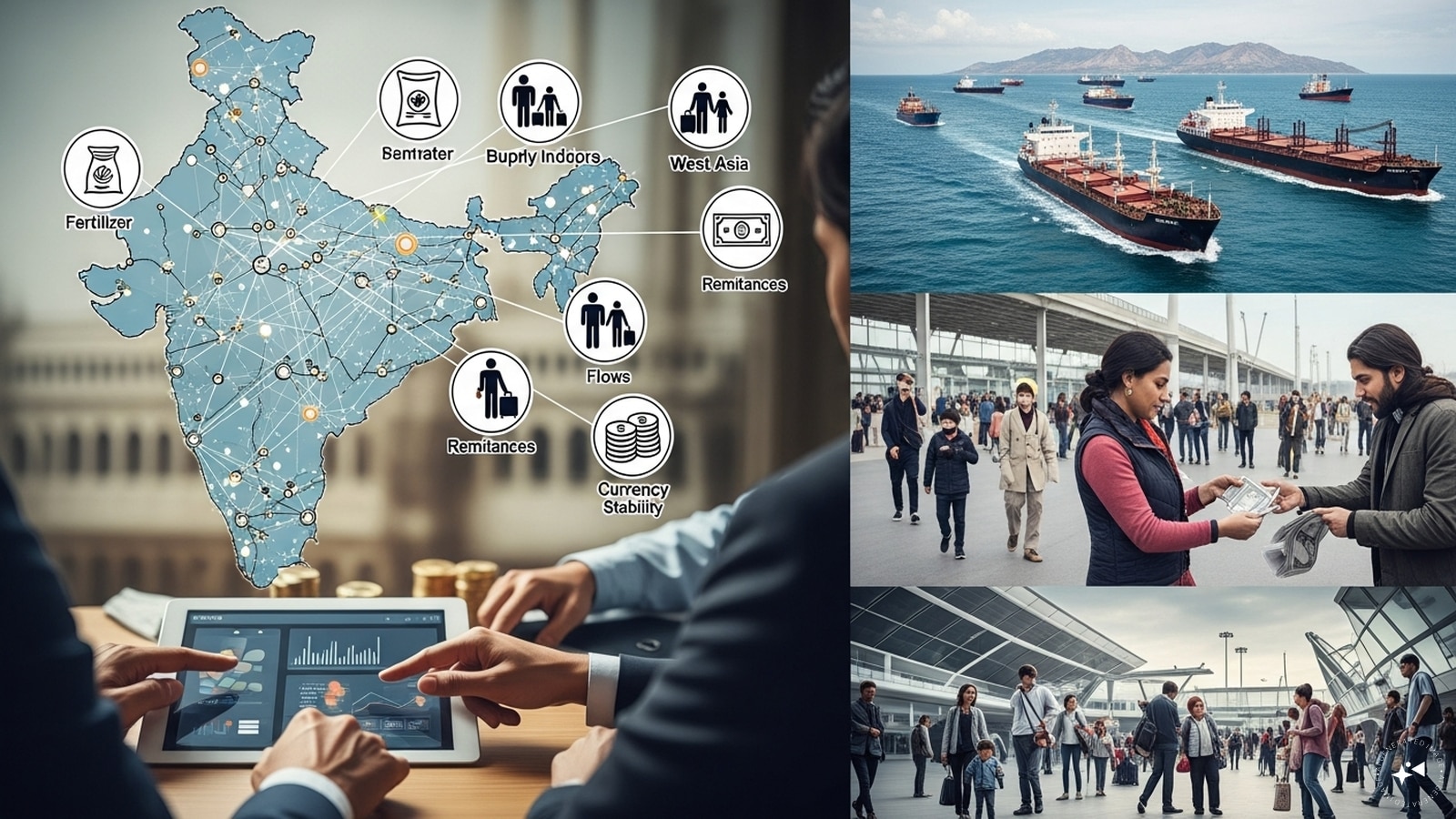
India’s urea imports are heavily dependent on the West Asian corridor. When tensions rise, the cost of shipping and insurance spikes. In a rational market, prices would adjust, and consumption would optimize. Instead, because the Indian government keeps prices artificially low through massive subsidies, the demand remains infinite while the supply becomes uncertain.
"Hoarding" isn't a malicious act by shadow cabals. It is the logical response of a farmer or distributor who knows the government cannot guarantee delivery when the Red Sea turns into a shooting gallery. By blaming hoarders, the state avoids admitting that the $20 billion fertilizer subsidy bill is a fragile house of cards.
If you want to solve the fertilizer crisis, you don't send inspectors to raid warehouses. You move to Direct Benefit Transfer (DBT) at the scale required to let market prices dictate usage. We are over-applying nitrogen to our soil because it’s cheap, not because we need it. The "crisis" is actually an opportunity to stop poisoning the land with subsidized chemicals, yet we treat it like a logistics hurdle.
The Migrant Exodus Fallacy
The headlines are downplaying the "migrant exodus" from West Asia as if a lack of fleeing workers is a sign of stability. This is the wrong metric. We shouldn't be looking at how many people are leaving; we should be looking at the terminal decline of the remittance-based economy.
For decades, India has treated its labor export to the Gulf as a permanent feature of the economy. It’s not. The "exodus" hasn't happened yet because the workers are trapped by debt or the hope of one last paycheck. But the West Asian economy is undergoing a massive, violent pivot away from oil. Saudi Arabia’s Vision 2030 and the UAE’s diversification aren't just buzzwords—they are an existential threat to the low-skilled Indian worker.
Even without a kinetic war, the job market for Indian migrants is evaporating. Automation and "nationalization" of workforces in the Gulf mean the massive influx of $80 billion in annual remittances is hit by a structural ceiling. Downplaying a migrant exodus today is like saying a house isn't on fire because the smoke hasn't reached the attic yet. The foundation is already charcoal.
Logistics are Not Diplomacy
There is a naive belief that the India-Middle East-Europe Economic Corridor (IMEC) is a shield against these disruptions. It’s a pipe dream in the current geopolitical climate. You cannot build a "bridge" through a region that is actively deconstructing its security architecture.
Relying on West Asia for energy and then acting surprised when fertilizer prices spike is a failure of strategic foresight. I’ve watched commodity desks ignore the "geopolitical risk" premium for years because the shipping lanes stayed open. That era of "free security" provided by the US Navy is over.
India’s real move isn't to "monitor" the situation or "flag" hoarding. It is to aggressively decouple its food security from natural gas imports. We talk about Green Hydrogen and nano-urea, but we fund them like hobbies while we fund traditional urea like a necessity.
The Energy-Food Trap
To understand the fertilizer problem, you have to understand the Haber-Bosch process. It turns natural gas into bread.
$$N_2 + 3H_2 \rightarrow 2NH_3$$
Most of that $H_2$ comes from methane ($CH_4$). When West Asia flares up, the price of methane swings. India is effectively importing its food security through a gas pipe. This is the "Energy-Food Trap."
As long as we are tethered to this chemical equation, we are vassals to the stability of the Persian Gulf. The contrarian take? A total blockade of the Strait of Hormuz would be the best thing to happen to Indian agricultural innovation in fifty years. It would force the immediate adoption of organic precision, microbial fertilizers, and local production that doesn't rely on the whims of regional hegemons.
Why the Consensus is Wrong
The "lazy consensus" says:
- We need to secure the shipping lanes.
- We need to prevent domestic hoarding.
- We need to protect our workers abroad.
The "brutal reality" is:
- The shipping lanes are unsecurable at a cost India can afford.
- Hoarding is a rational response to price controls.
- The "worker export" model is a 20th-century relic that is currently dying.
We are watching the end of the "Globalized Commodity Era." In this new world, you don't manage a crisis—you outgrow the dependency that created it. The government isn't "downplaying" the exodus because they have a plan; they are downplaying it because the alternative is admitting that the Kerala and UP economies are about to lose their primary life-support system.
Stop looking at the ships in the Red Sea. Look at the soil health in Punjab and the unemployment data in the Gulf. That’s where the real war is being lost.
Stop subsidizing the past. Start pricing the risk.