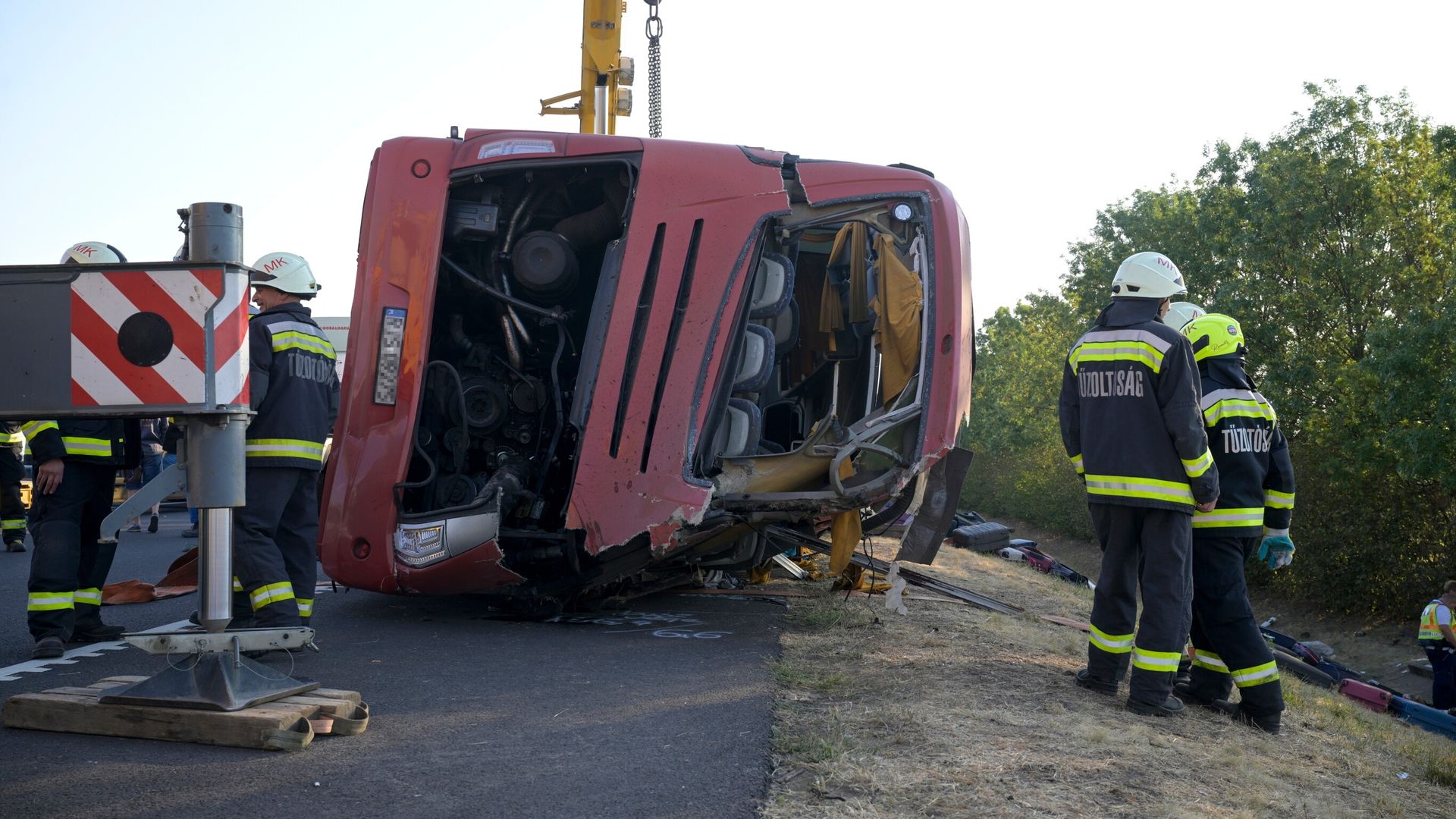
Morning in Central Europe arrives not with a shout, but with the grey, steady persistence of mist clinging to the asphalt. The trees along the highway stand like silent sentinels, half-drowned in the early fog. It was supposed to be a journey of anticipation. Tour groups live in the currency of tomorrows—the next cathedral, the next cobblestone square, the next photograph to prove they were there.
Buses rumble down these concrete ribbons by the thousands every day. They are steel cylinders of optimism. Passengers stow their heavy bags, trade pleasantries in broken phrases across foreign aisles, and settle into high-backed seats with the quiet trust that the machine beneath them will carry them safely to the next horizon.
Then came the turn.
And then came the silence.
When the Road Ends
Let us be precise about the coordinates of catastrophe, because precision is the only tribute we can offer to the shattered. The location was a stretch of highway in Hungary. Twelve lives, woven into the intricate fabric of families, jobs, memories, and quiet domestic routines, ended in a sudden, violent deceleration of twisted metal.
We talk about statistics as if they are weather reports. A number goes up. A percentage shifts. But numbers do not bleed. Numbers do not leave half-empty coffee cups on kitchen counters or unfinished text messages glowing in the dark.
Imagine, for a fleeting moment, the interior of that cabin seconds before the impact. The hum of the diesel engine. Someone checking a guidebook. The low murmur of a conversation about dinner plans in a city they would never reach. The illusion of safety is absolute until it shatters. We move through our days cushioned by the invisible architecture of engineering standards, speed limits, and rubber tires, forgetting how thin the margin truly is between routine transit and total tragedy.
The Anatomy of a Crash
Highways are designed for efficiency, not forgiveness. When a heavy passenger vehicle leaves its intended path, physics asserts its unforgiving laws with terrifying speed.
Consider the kinetic energy stored in a fully loaded tourist coach barreling down a European artery. It is a moving fortress of glass and steel, weighing upwards of fifteen tons. When that much mass meets an immovable object—a bridge abutment, a deep embankment, or another heavy vehicle—the shockwaves ripple far beyond the immediate wreckage.
Investigators arrived to find a scene rendered surreal by the morning light. Emergency responders moved through the debris with practiced, grim efficiency. Sirens cut through the mist. Flashing red and blue lights painted the wet pavement in urgent strokes.
Yet, beneath the mechanics of rescue lies a deeper, more unsettling human truth. Why do these tragedies continue to haunt our highways?
The answers rarely point to a single villain. Human fatigue, mechanical wear, the split-second distraction of a driver navigating unfamiliar foreign roads—these are the invisible fault lines running underneath modern transit. A driver pushes past the threshold of exhaustion because schedules demand it. A maintenance check misses a microscopic flaw in a brake line. Small oversights, compounding silently in the dark, until the road demands its payment.
The Ripple Effect
Grief is not a public event. It is intensely, agonizingly private.
In the days following the crash in Hungary, distant phone rings pierced the quiet of homes across borders. A daughter in one country, a spouse in another, answering a call that splits their timeline cleanly into two parts: before and after.
This is the hidden cost of our hyper-mobile world. We build high-speed trains, sprawling aviation networks, and continental highway systems to shrink the distance between human beings. We want the world to be smaller, closer, more accessible. But every mile conquered carries a risk. Every ticket purchased is a quiet wager against fate.
We read the headlines, shake our heads, and scroll down to the next news item. The digital ecosystem encourages a rapid consumption of sorrow. Swipe. Tap. Forget.
Stop scrolling.
Look closer at the faces behind the news briefs. They were travelers. They were tourists. They were people who packed light coats because the forecast called for rain. They woke up with itineraries and expectations, entirely unaware that their final chapter was being written on a damp stretch of Hungarian pavement.
The Weight of the Journey
There is no neat moral to draw from a pile of wreckage. Life does not always organize itself into tidy lessons or redemptive arcs. Sometimes, things simply break, and the pieces cannot be put back together the same way.
What remains is the responsibility of memory. To remember that every time we board a bus, catch a flight, or turn onto a highway, we are placing our lives into the hands of strangers—the driver, the mechanic, the anonymous road planner who poured the concrete fifty years ago.
The mist over the Hungarian highway has long since cleared. The wreckage has been towed away, the steel cleared, the asphalt patched. Traffic flows again. Cars pass at eighty miles an hour. Passengers look out the windows at the passing trees, lost in their own thoughts, listening to music through cheap earbuds, trusting the road to hold.
And the silent wind carries away the echoes of a journey cut short, whispering of how fragile we are beneath the open sky.