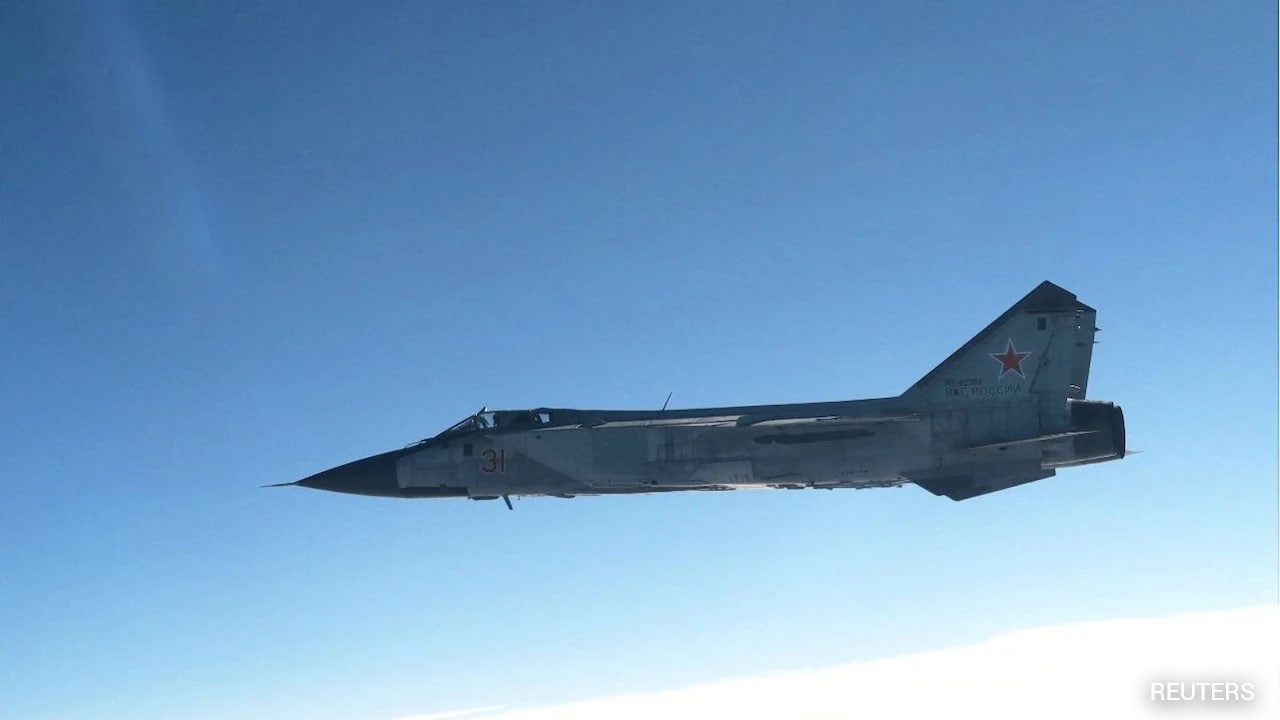
The map of European security changed forever when Finnish and Swedish fighter jets teamed up for their first joint operational patrol to intercept a Russian aircraft. For decades, Helsinki and Stockholm maintained a careful balancing act of military non-alignment. Moscow expected that diplomatic cushion to last indefinitely. Instead, NATO membership completely rewrote the rules of engagement in the Baltic and Arctic regions.
When you look at how modern air interception actually works, logistics and command structures matter infinitely more than raw speed. A Russian intelligence or fighter jet probing NATO airspace near the Gulf of Finland used to face fragmented responses from multiple national militaries operating on separate radio frequencies and distinct command chains. Today, those borders are effectively invisible. Swedish Gripens and Finnish Hornets share a unified air picture, talk on the same encrypted networks, and launch from dispersed highway strips designed to survive a first strike.
The Operational Reality of Joint Air Policing
Air policing isn't a Hollywood dogfight. It's a grueling game of cat and mouse played at thirty thousand feet, where split-second decisions dictate whether a routine interception escalates into a diplomatic crisis or worse. During this historic joint mission, fighter pilots from both nations scrambled to escort Russian military aircraft flying without transponders or flight plans over international waters near the Baltic states.
What makes this deployment significant isn't just the hardware. It's the psychological shift inside Moscow's war rooms. Russian planners built their defense posture around the idea of picking off individual, isolated Scandinavian states if tensions ever boiled over. By integrating their air forces completely, Finland and Sweden created a joint deterrent that stretches from the frozen forests of Lapland all the way down to the southern tip of Gotland.
You have to understand the geography to grasp why this frustrates Russian military strategists. Finland shares an 830-mile land border with Russia, loaded with dense terrain and harsh winter conditions that favor defenders who know the ground. Sweden acts as an unsinkable aircraft carrier sitting right in the middle of the Baltic Sea, controlling vital sea lanes and airspace access. Combined, their air fleets put Russian bases in the Kola Peninsula and the Leningrad Military District directly under the watchful eye of NATO's most capable northern operators.
Logistics and the Art of Dispersed Warfare
Most people think air power is about massive multi-million dollar airbases with long concrete runways. That thinking gets you bombed in the first forty-eight hours of a real conflict. Both Finland and Sweden spent decades perfecting the art of the Vatuk or national highway strip concept.
Fighter pilots regularly land their jets on straight stretches of ordinary public highways. Convoys of conscripts refuel and rearm the aircraft using mobile teams hidden in the woods. During this joint operation, pilots practiced swapping landing zones between countries. A Finnish Hornet low on fuel can touch down on a remote Swedish forest road, take on ordnance, and launch right back into the fight.
Moscow's pilots aren't used to facing that level of operational flexibility. They're accustomed to predictable flight paths originating from centralized installations. When Swedish and Finnish jets seamlessly trade airspace responsibility mid-mission, it breaks the rigid templates that Russian radar operators rely on to track NATO movements.
What Happens Next in the Baltic Skies
We aren't looking at a temporary exercise here. This joint deployment signals the new normal for northern European security. The Baltic Sea is effectively a NATO lake now, and Russian naval and air assets operating out of Kaliningrad and St. Petersburg find themselves boxed in by hostile radar coverage and layered air defense systems.
Expect more frequent joint patrols, deeper integration of early warning data, and joint training exercises that push the envelope even further. Moscow can test the boundary lines all they want, but the northern flank just slammed the door shut.