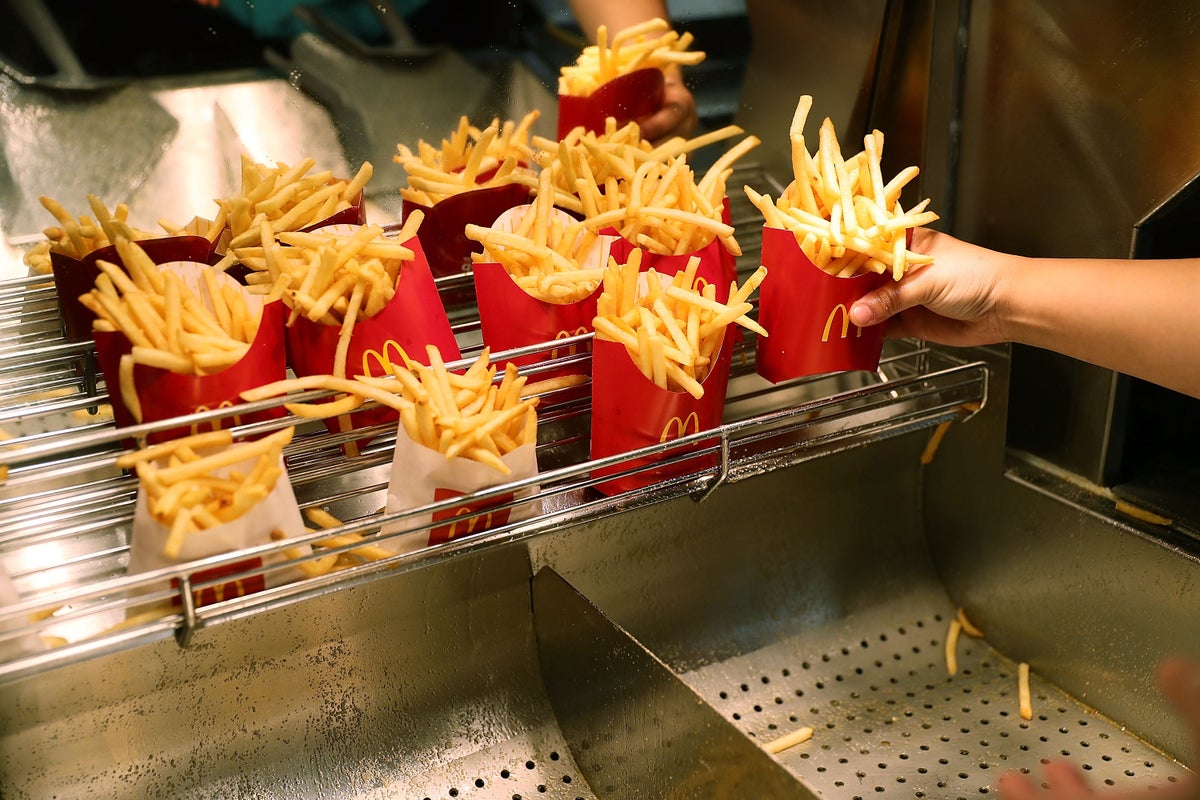
The paper bag rests on the passenger seat, radiating a heavy, greasy warmth against the cold upholstery. It is an utterly mundane ritual performed millions of times a day across the globe. You pull out of the drive-thru lane, idling at a red light, and your hand instinctively reaches down into the bag. You do not look. You search by feel, pulling out a single golden strip, crisp and glowing under the amber hue of the traffic signal.
Then comes the bite.
In less than a fraction of a second, routine comfort turns into searing, blinding agony.
Most people know the sensation of a minor blister from an over-eager bite of pizza. But what happens when the temperature inside that paper container crosses from uncomfortably hot into destructive territory? A recent lawsuit filed against fast-food titan McDonald’s brings that exact nightmare back into the public square. A customer alleges that an extraordinarily hot french fry did not merely burn her tongue, but severely disfigured and scorched the delicate tissue of her mouth, leading to lasting medical consequences and unbearable pain.
The internet headline machinery was quick to react. Comments flooded social media platforms with predictable snark: Who doesn't know that fries are hot? Why are people so eager to sue over a quick meal?
Yet behind the quick punchlines lies a far more complex reality—one where industrial engineering, corporate heat thresholds, human anatomy, and public relations collide.
The Physics of a Paper Bag
To understand how a french fry becomes a thermal hazard, one must look closely at how modern fast food operates.
A commercial deep fryer operates at temperatures hovering around 350 degrees Fahrenheit. When a potato strip hits that bubbling bath of oil, a precise thermodynamic process takes place. The water inside the potato turns to steam, driving outward and creating the light, fluffy interior texture that customers expect. Meanwhile, the outer starch gelatinizes and hardens, creating a crispy barrier.
That crisp outer shell acts like a miniature pressure vessel. It traps superheated moisture inside a pocket of cooked starch and oil.
When a fry is pulled fresh from the basket, salted, and dropped immediately into a thick paper bag, that heat has nowhere to go. Sealed inside a container designed to keep food hot during a twenty-minute drive home, the interior of the fry retains temperatures capable of inflicting severe burns long after it leaves the kitchen.
Consider what happens when human skin meets oil and steam at those temperatures. Human tissue begins to sustain structural cell damage at roughly 140 degrees Fahrenheit. Exposure to liquids or moist solids above 160 degrees can produce second-degree burns in less than two seconds. At 180 degrees, full-thickness tissue destruction occurs almost instantaneously.
The mouth is particularly vulnerable. Unlike the outer skin on your hand, which possesses a thicker stratum corneum layer to buffer heat, the mucous membranes inside the mouth are delicate, thin, and densely packed with nerve endings. When a molten pocket of steam and oil ruptures against the roof of the mouth or the tongue, the body cannot cool the area fast enough to prevent deep tissue injury.
The Echoes of 1994
This is not the first time the golden arches have faced fierce scrutiny over the temperature of their menu items. Any discussion of hot food liability carries the heavy shadow of Stella Liebeck.
In 1992, seventy-nine-year-old Liebeck ordered a cup of coffee from a McDonald’s drive-thru in Albuquerque, New Mexico. While sitting in the passenger seat of her nephew's parked car, she held the cup between her knees to pull the lid off. The coffee spilled into her lap.
For decades, Liebeck’s name became shorthand for absurd legal claims, immortalized in late-night comedy monologues and casual conversation as the ultimate example of a frivolous lawsuit.
The public narrative, carefully shaped by corporate public relations campaigns, framed Liebeck as an opportunistic consumer who sued a massive company simply because her coffee was hot.
The actual evidence presented in court painted a radically different picture.
McDonald’s required its franchises to serve coffee at temperatures between 180 and 190 degrees Fahrenheit. At that heat, the liquid was not merely warm; it was hazardous. Liebeck suffered full-thickness third-degree burns across her thighs, groin, and buttocks. She required skin grafts, spent eight days in the hospital, lost twenty percent of her body weight, and faced years of painful medical procedures. Before filing a lawsuit, she asked McDonald's for $20,000 to help cover her out-of-pocket medical expenses. The corporation offered her $800.
When the jury finally saw the graphic medical photographs of her injuries, they awarded her punitive damages designed to penalize the company for knowing their product was causing hundreds of similar burn injuries without warning customers or adjusting serving temperatures.
The ongoing conversation surrounding french fry burns echoes that same fundamental tension. Is a consumer expected to anticipate that a standard side order contains localized heat levels severe enough to require specialized medical intervention? Or does a corporation have a basic duty of care to ensure that the food handed through a window is actually safe for immediate human consumption?
The Friction Between Speed and Safety
Fast-food chains operate on razor-thin time margins. Drive-thru efficiency is measured down to the second. Employees are drilled on speed, order accuracy, and product throughput.
When peak rushes hit, kitchens prepare batches of food in rapid succession. Fries are dumped onto heating stations, bagged quickly, and handed off to keep the drive-thru line moving smoothly.
Therein lies the core operational dilemma:
- Customer Demand: Drivers want their food piping hot, refusing to accept lukewarm or soggy fries.
- Corporate Quality Standards: Chains enforce strict hold times and high serving temperatures to maintain taste profiles and crispy textures.
- Safety Thresholds: Temperatures required to preserve crispy textures can easily cross into thresholds that destroy biological tissue upon contact.
When speed dominates every metric of success, small safety buffers can easily evaporate. If fryers are improperly calibrated, if hold times are skipped to clear a long queue, or if food is served seconds out of 350-degree oil without a brief resting period, the consumer becomes the ultimate testing ground for temperature control.
Beyond the Punchline
It is easy to dismiss injuries involving fast food until you consider the reality of recovering from a deep thermal burn inside the oral cavity.
Imagine losing the ability to eat solid food for weeks. Imagine nerve damage that leaves parts of your tongue permanently numb or plagued by a persistent, burning tingling sensation. Imagine the simple act of drinking water causing sharp, radiant pain that keeps you awake at night.
Medical treatment for severe mouth burns often involves specialized topical anesthetics, systemic pain management, strict liquid diets, and monitoring for secondary infections in an environment naturally teeming with bacteria. The physical toll is matched by psychological stress, especially when the injury is publicly mocked by people who have never looked at the clinical photos or read the medical reports.
When a lawsuit enters the court system, it forces a company to produce internal documentation, temperature logs, training manuals, and incident reports. It exposes whether an event was an isolated, unpredictable mistake or part of a recognized pattern of equipment miscalibration and ignored safety warnings.
Lawsuits are often the only mechanism capable of shifting corporate behavior. When financial penalties exceed the cost of updating kitchen equipment or revising standard operating procedures, policies change. Warning labels appear. Serving procedures adjust. Equipment gets recalibrated.
The Quiet Risk in the Bag
The next time you pull up to a lit window at dusk and exchange a few dollars for a brown paper bag, the heat rising from the top will feel familiar, comforting, and entirely harmless.
You will smell the salt and the oil. You will hear the gentle hum of the idling engine and the traffic moving past.
You might reach into the bag without looking. But as your fingers touch the hot paper container, you might hesitate for just a moment, waiting for the steam to clear, suddenly aware of the delicate line between a quick comfort meal and an irreversible injury.


