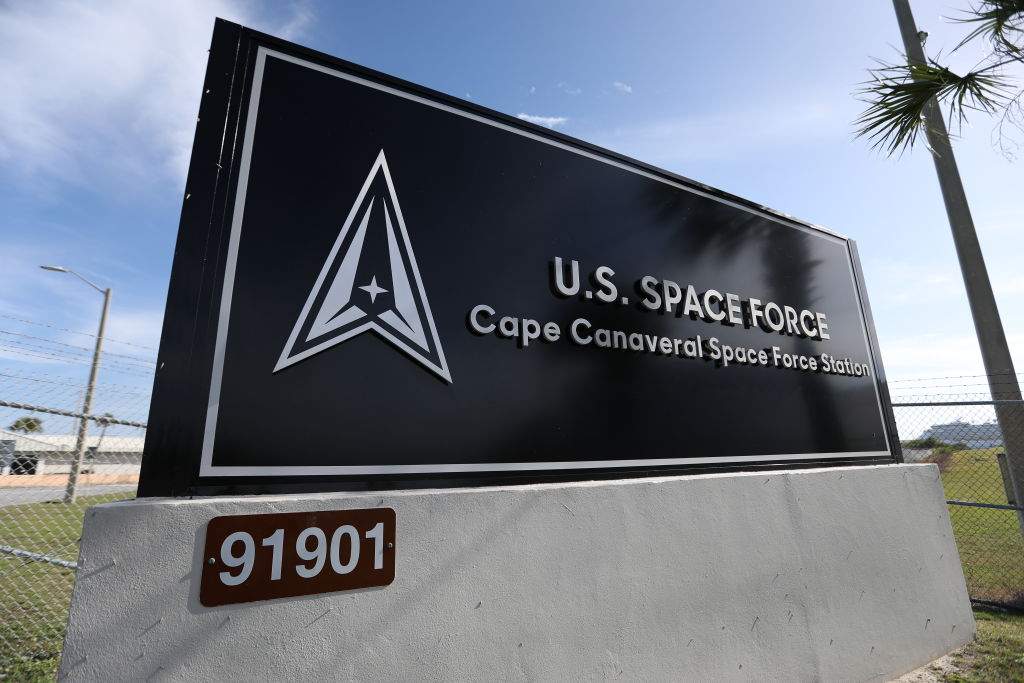
For decades, the official stance from Washington on orbital weaponry was a carefully guarded secret wrapped in diplomatic ambiguity. While everyone knew superpowers were developing anti-satellite systems, nobody in charge wanted to say it out loud. That changed at an Air & Space Forces Association conference when Air Force Secretary Troy Meink confirmed the quiet part out loud. The United States has officially deployed space control weapons into orbit.
The admission wasn't hidden in a buried Pentagon report or leaked by an anonymous official. It was a direct, on-the-record confirmation that the landscape of modern defense has fundamentally shifted. But what does this mean for everyday citizens down on Earth? Should you actually be worried about what is floating hundreds of miles above your head, or is this just standard posturing in an escalating geopolitical chess match? Let's break down what's really happening.
Why Washington Dropped the Strategic Ambiguity
For years, international agreements like the 1967 Outer Space Treaty kept nations from explicitly placing weapons of mass destruction in orbit, but gray areas persisted regarding conventional defensive systems. Both Russia and China spent years testing co-orbital inspectors, robotic grabbers, and ground-based lasers capable of blinding or disabling American assets.
By keeping U.S. capabilities under wraps, defense officials hoped to discourage a runaway arms race. That strategy hit a wall. When adversaries openly test counterspace tech, maintaining polite silence stops looking like restraint and starts looking like vulnerability. Admitting to these deployments is a deliberate signal of deterrence. The message to Beijing and Moscow is simple: you can no longer target American infrastructure in orbit without facing immediate, active pushback.
What Are Space Control Weapons Anyway?
When people hear "weapons in space," their minds instantly jump to Star Wars laser platforms or kinetic bombardment rods raining destruction down from the heavens. Reality is a bit more nuanced, though arguably just as critical to modern survival.
Military analysts generally categorize these systems into a few distinct buckets:
- Electronic Warfare Systems: Jamming and spoofing tech designed to block or mislead adversary communications and radar signals without necessarily destroying hardware.
- Directed Energy Tools: High-powered lasers or microwaves aimed at temporarily or permanently blinding satellite sensors.
- Kinetic and Co-Orbital Systems: Physical interceptors or close-proximity maneuvering satellites capable of disabling hostile spacecraft if a conflict breaks out.
Meink didn't give away the blueprint or specify the exact payload configurations currently orbiting the planet. However, defense experts widely point toward space control assets focused on protection and disruption rather than offensive orbital strike platforms. They're designed to safeguard the thousands of commercial and military satellites that keep our modern world running.
Should You Be Concerned About Your Daily Life?
If you are worried about kinetic dogfights erupting over your neighborhood, you can breathe easy. The immediate danger isn't falling debris or sci-fi orbital battles. The real vulnerability is economic and digital.
Modern society relies entirely on invisible infrastructure looping through space. GPS isn't just for getting you to a coffee shop; it dictates precise timing signals for global financial transactions, stock exchanges, power grids, and logistics networks. If a hostile power manages to knock out critical communication or navigation satellites, financial systems can freeze instantly.
That is why these weapons were deployed. They aren't meant to attack cities; they are designed to protect the orbital backbone of the global economy. Yet, militarizing this domain raises the baseline risk. Every new asset placed into orbit increases the chance of escalation, miscalculation, or cascading space debris if something goes wrong.
The Broader Arms Race Reality
We aren't entering a brand-new space race; we are waking up to one that has been quietly accelerating for years. China is rapidly fielding advanced tracking and counterspace measures, and Russia continues testing its own orbital capabilities.
The U.S. confirmation simply brings public policy into alignment with physical reality. Outer space is officially a contested warfighting domain. Pretending otherwise stopped being a viable strategy a long time ago.
Keep an eye on international policy updates and commercial aerospace security standards over the next few years. The real battleground won't be fought with explosions in the stars, but through electronic dominance, cyber hardening, and the relentless defense of our digital sky.


