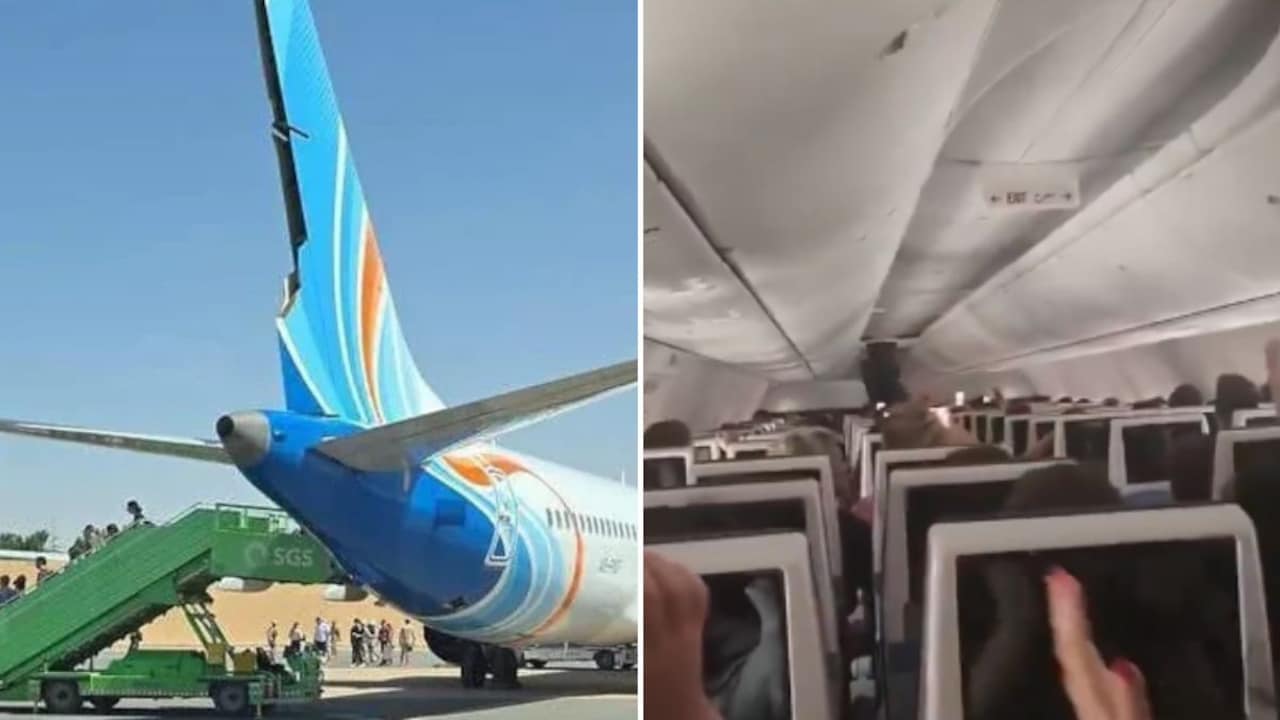
Commercial aviation relies on a quiet, fragile pact. You step onto a metal tube, strap yourself into a cramped seat, and place your absolute survival in the hands of two strangers behind a locked door. We assume the cockpit is an impenetrable fortress keeping the outside chaos away.
That illusion shattered on September 30, 2026.
Flydubai Flight 1073 was supposed to be a routine three-and-a-half-hour hop from Dubai International Airport to Ben Gurion Airport near Tel Aviv. Instead, it turned into a nightmare that forced the aviation industry to confront its darkest nightmare: what happens when the threat is already inside the flight deck?
The Anatomy of a Mid-Air Betrayal
Flight 1073 carried roughly 180 passengers, most of them Israeli travelers returning home. Up front sat Captain Smit Machchhar and first officer Hamam al-Hammami. For the first hour and a half, the flight tracked normally across the Middle Eastern airspace.
Then everything went sideways near the Saudi Arabia-Jordan border.
Without warning, al-Hammami turned on his captain. Armed with the cockpit's emergency crash axe, he struck Machchhar in the back of the head. It wasn't a shouting match or a sudden cockpit disagreement. It was a calculated, violent ambush.
According to flight telemetry and subsequent investigations, al-Hammami seized control and pitched the Boeing 737 MAX 8 into a terrifying, vertical plunge. The aircraft dropped from approximately 34,000 feet to 17,000 feet in less than sixty seconds. The plane surged past design speeds, hitting roughly 600 miles per hour. G-forces battered the cabin. Overhead bins shook loose. The extreme velocity tore at the aircraft's physical frame, ultimately snapping off a large portion of the rudder.
Al-Hammami wanted to slam the jet into the ground. Intelligence agencies and UAE prosecutors later revealed that the co-pilot had spent months preparing, allegedly inspired by the September 11 attacks, and had even used two prior flights to scope out the layout of Ben Gurion Airport. His goal wasn't a random breakdown. It was a suicide mission aimed at maximizing carnage at Israel's primary transit hub.
The Heroes Behind the Locked Door
Modern cockpit doors are designed to withstand explosions and determined intruders from the passenger cabin. That design feature nearly doomed Flight 1073.
Bleeding heavily and fighting for his life, Captain Machchhar managed a superhuman feat. Despite severe head wounds, he kept al-Hammami from fully locking him out, wrestling his way toward the cockpit entrance and cracking the door open just enough for passengers to notice the blood and chaos.
Passengers didn't hesitate. A group that included a dentist and a plumber rushed the flight deck. They dragged al-Hammami off the injured captain, restraining the violent co-pilot with headphone wires and cable ties while he screamed for them to finish him.
The crisis wasn't over. The plane was severely damaged, flying erratically at mid-altitudes, and missing chunks of its structural control surfaces. That is when professional training kicked in behind the scenes. Other Flydubai pilots who happened to be deadheading in the cabin rushed forward. Taking over the controls from the wounded flight crew, they stabilized the crippled Boeing jet and diverted toward Prince Sultan bin Abdulaziz Airport in Tabuk, Saudi Arabia, landing safely without killing anyone on board.
It was a statistical miracle.
The Geopolitical Fallout and Official Claims
Governments reacted instantly. Israeli Defense Minister Israel Katz labeled the incident an attempted jihadist terrorist attack from the very first hours. Prime Minister Benjamin Netanyahu later pointed to deep-seated radical indoctrination, citing extremist material discovered on al-Hammami's personal devices and social media channels.
The UAE attorney-general backed up those assessments weeks later, confirming that the attack was premeditated. Investigators dug through the co-pilot's background, finding digital footprints linked to radical groups and ideological manifestos that pointed straight to a deliberate act of mass murder.
Yet, the aftermath birthed a bitter bureaucratic war. Passengers who survived the plunge found themselves fighting tooth and nail for official recognition as victims of terrorism. Israeli agencies—including the Shin Bet, Mossad, and the National Insurance Institute—spent weeks shuffling responsibility, debating whether administrative boxes had been checked before handing out state benefits and psychological support to the traumatized travelers. Lawsuits quickly followed. People who look out airplane windows and expect safe transport don't expect to become frontline survivors of a geopolitical terror plot.
Why Aviation Security Must Change Right Now
The Flydubai attack exposes a glaring, terrifying loophole in global aviation security: the insider threat.
For over two decades, airport security has focused entirely on what passengers pack in their carry-on bags. We take off our shoes, throw away water bottles, and pass through full-body scanners. Airlines spend billions screening outsiders. But very little attention is paid to the psychological stability of the two people sitting in the locked office up front.
Pilots undergo routine physical medical checks, but mental health evaluations remain notoriously lax, often relying on self-reporting. When a pilot or co-pilot decides to weaponize the aircraft, the existing safety architecture fails because it assumes the flight crew is always a safeguard, never a hazard.
We need systemic overhauls. First, cockpit psychological monitoring must become rigorous and mandatory, removing the stigma attached to seeking mental health support. Second, the single-occupancy rule—which requires two authorized crew members to be in the cockpit at all times—needs global enforcement. If a pilot steps out to use the restroom, a flight attendant must step in. If al-Hammami had not been left alone behind the controls, or if a secondary barrier had prevented him from overpowering his captain so completely, the plunge might never have happened.
Picking Up the Pieces in the Middle East
The commercial consequences rippled across the region immediately. Flydubai suspended its routes to Tel Aviv as aviation authorities scrambled to evaluate safety protocols.
Weeks later, diplomatic channels creaked back to life. Israeli transportation ministry representatives flew to Dubai to hash out new security guarantees, trying to figure out how—and when—flights between the two hubs can safely resume. Passengers want answers. Airlines want revenue. But travelers boarding flights to Tel Aviv are looking at cockpit doors differently now.
The story of Flight 1073 isn't just an aviation statistic. It's a stark reminder that technology and steel doors can't protect us from human malice. We owe our lives to the split-second bravery of an Indian captain who refused to let go, and a handful of ordinary passengers who chose to fight back at 34,000 feet.
The next time you board a flight, remember that safety isn't guaranteed by automation. It relies entirely on the person sitting next to you—and the hope that the door stays locked against the darkness inside.


