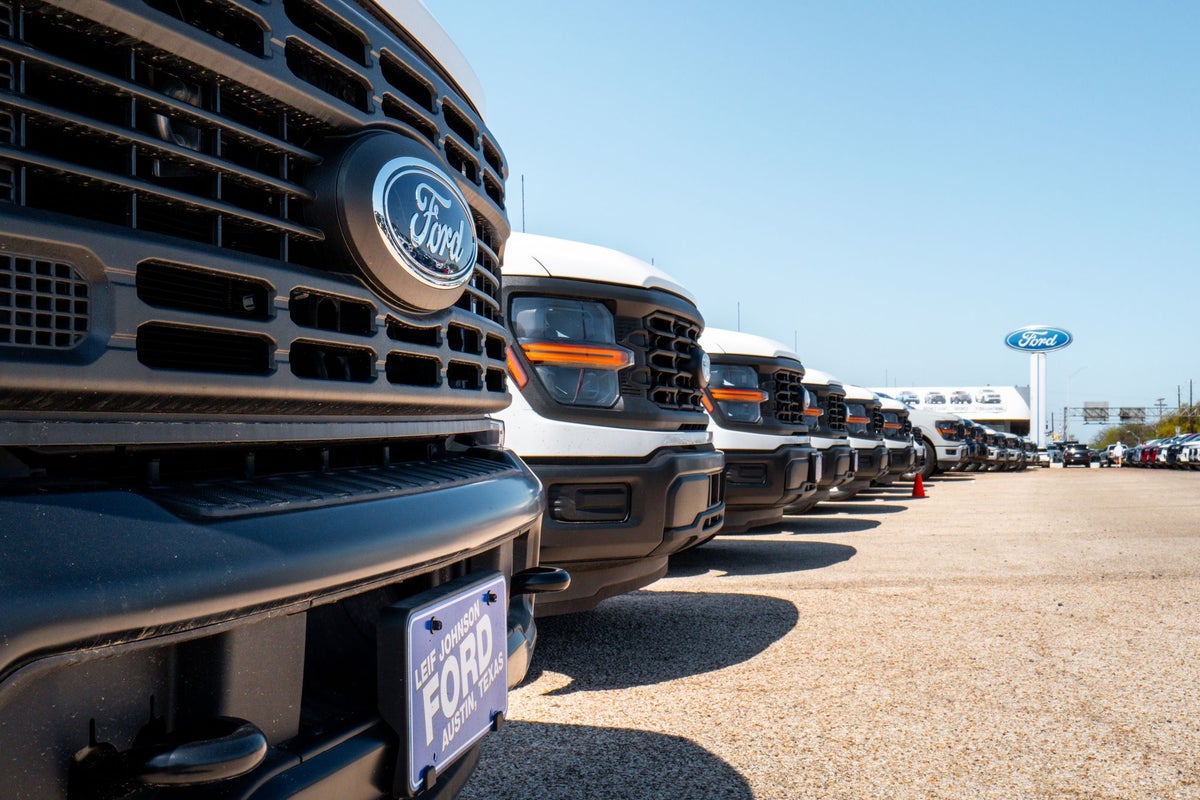
The headlines are predictable. They smell like stale coffee and lazy journalism. "Ford Recalls 1.4 Million F-150s Over Unexpected Tailgate Openings." The tone is always the same: a mixture of faux-outrage and consumer advocacy designed to make you think the sky is falling in Dearborn.
They want you to believe this is a sign of crumbling quality. They want to frame it as a failure of American engineering. They are dead wrong.
If you’ve spent any time on a factory floor or managed a supply chain with more moving parts than a Swiss watch, you know the truth. A massive recall isn't a sign of weakness; it is the ultimate expression of a maturing, transparent data ecosystem. The "lazy consensus" says recalls are a disaster. The reality? A lack of recalls is what should actually terrify you.
The Myth of the Perfect Machine
Every time a legacy automaker issues a TSB (Technical Service Bulletin) or a full-scale recall, the keyboard warriors emerge to praise "the good old days." They pine for the 1970s when trucks were "built like tanks."
Here is what they won't tell you: the trucks of the 1970s were death traps that rotted out in four years and failed in ways we didn't even have the sensors to track. We didn't have fewer recalls because the quality was better; we had fewer recalls because we were ignorant.
Modern vehicles like the F-150 are essentially rolling data centers. When a wiring harness shorts due to a specific vibration frequency or a tailgate latch triggers because of a microscopic software bug, the system flags it. In 1985, your tailgate would have just hit the pavement, and you would have cursed your luck. Today, Ford’s telemetry identifies the pattern before most owners even notice a glitch.
The Cost of Silence
I’ve seen companies bury defects to protect the quarterly earnings report. It is a death spiral. You save $200 million in warranty costs today only to lose $2 billion in brand equity and class-action settlements five years later.
By pulling the trigger on 1.4 million units, Ford is doing something the "disruptor" EV companies often dodge: taking the hit on the chin in public.
Look at the mechanics of this specific recall. It involves the power-operated tailgate. We have moved from simple mechanical latches to complex electromechanical systems. The "status quo" critique is that we’ve over-engineered the pickup truck. The contrarian truth is that consumer demand for "luxury-car features in a work-horse frame" has forced automakers into a complexity trap.
You can't demand a truck that massages your back, hauls four tons, and has a tailgate that opens via a smartphone app, and then act shocked when the software needs a patch.
The Logistics of Accountability
Let’s talk about the math. 1.4 million vehicles.
Imagine the logistical nightmare of coordinating parts, labor hours, and dealership scheduling for a fleet that size. Most critics look at the $270 million or $500 million hit to the bottom line. They miss the "Experience" factor.
Every recall is a massive stress test for the dealer network. It forces an optimization of the service pipeline. Dealerships that survive these waves of scheduled maintenance become more efficient at high-volume repairs. It’s a brutal way to sharpen a blade, but it works.
If you own an F-150, you aren't a victim of "bad quality." You are the beneficiary of a company that is willing to spend nearly a billion dollars to ensure a piece of plastic doesn't click at the wrong time. Compare that to the software industry, where "move fast and break things" is the mantra. In Detroit, if you break things, you have to go out and fix them with a wrench, one by one, 1.4 million times.
Why "Zero Recalls" is a Red Flag
If I’m looking at an automaker’s health and I see zero recalls over a three-year period, I’m selling my stock.
A lack of recalls in a high-complexity manufacturing environment doesn't mean the product is perfect. It means the company is:
- Blind: Their telemetry is garbage.
- Dishonest: They are hiding the data.
- Stagnant: They aren't pushing the envelope of what's possible.
Innovation requires risk. If you want a truck that gets 25 MPG while towing a boat, you’re using high-pressure fuel systems and lightweight materials that exist at the edge of known tolerances.
The Hidden Advantage of Legacy Manufacturing
The "tech-first" automakers love to talk about Over-The-Air (OTA) updates. They claim they don't need recalls because they can "fix it in the cloud."
That is the most dangerous lie in the industry.
You cannot "patch" a frayed wire. You cannot "update" a physical latch that has been sheared off by mechanical stress. The F-150 recall is largely physical. It requires hands-on-metal. This is where the legacy players still dominate. They have the physical infrastructure—the thousands of service bays—to actually execute a hardware fix at scale.
The "disruptors" have a few glass-walled showrooms and a mobile service van that’s booked until next Christmas. If they had a 1.4 million unit hardware failure, they would go bankrupt. Ford just calls it Tuesday.
The Practical Reality for the Owner
Stop asking "Why did my truck break?" and start asking "How fast are they making it right?"
The premise of the "People Also Ask" sections on search engines is flawed. People ask: "Is the Ford F-150 reliable?"
The honest, brutal answer: No machine is reliable. Everything is in a state of decay from the moment it leaves the assembly line. The only metric that matters is the Mean Time To Recovery (MTTR).
Ford’s massive recall is an aggressive reduction of MTTR across an entire national fleet. It is a proactive strike. They aren't waiting for your tailgate to drop on the highway; they are forcing you to come in and get it reinforced before it happens.
The New Standard
The industry is shifting. We are moving away from the era of "Hidden Defects" and into the era of "Radical Recall Transparency."
We should be demanding more recalls, not fewer. We should want every sensor anomaly, every sub-standard bolt, and every software glitch addressed on the manufacturer's dime.
The 1.4 million truck recall isn't a funeral for Ford's reputation. It’s a demonstration of the sheer muscle required to maintain a dominant market position. It’s a signal that the company is actually watching the data feeds instead of ignoring them to keep the stock price pretty.
Next time you see a headline about a million-unit recall, don't pity the brand. Pity the brands that aren't recalling anything. They’re the ones letting you drive a ticking time bomb because they're too small, too poor, or too scared to fix it.
Go get your tailgate fixed. Your truck is fine. The system is working exactly as it should.