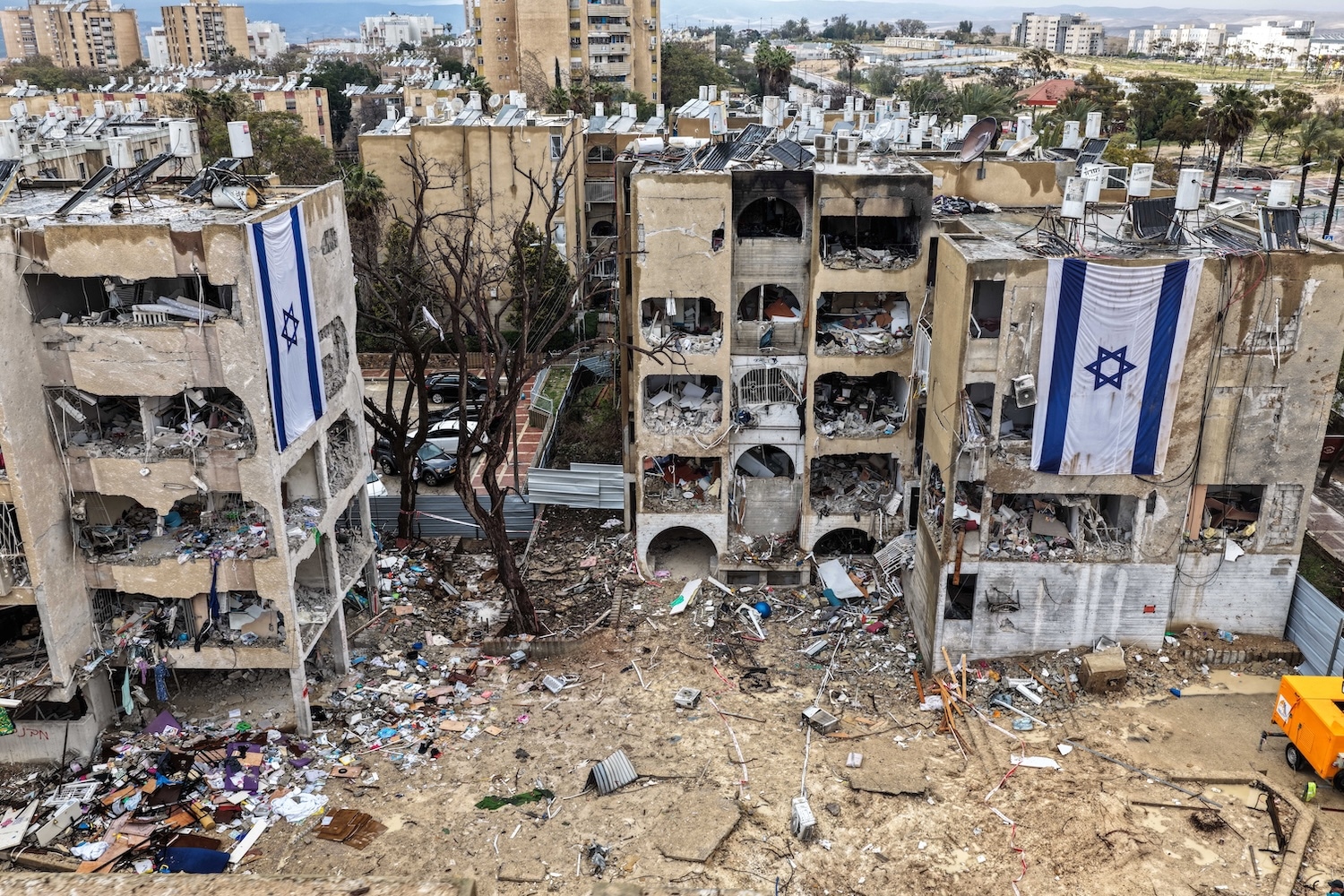
The machinery of international diplomacy is currently grinding toward a 45-day pause in the Gaza conflict, a window of time that officials in Washington and Doha hope will prevent a regional wildfire. This is not a peace treaty. It is a desperate clinical intervention designed to stop the bleeding before the patient—the entire Middle East—goes into irreversible shock. According to high-level reports, the United States and Qatari mediators are pressuring Israel and Hamas to accept a multi-stage framework that begins with a six-week cessation of hostilities.
The primary objective is the exchange of the most vulnerable Israeli hostages for a significant number of Palestinian prisoners, coupled with a massive surge in humanitarian aid. However, the 45-day figure is not arbitrary. It represents the maximum amount of "quiet" the Biden administration believes it can extract from the current Israeli government without triggering a total collapse of the ruling coalition. It is a fragile bridge built on scorched earth.
The Architecture of a Managed Pause
To understand why 45 days is the magic number, you have to look at the logistical nightmare of hostage recovery. Intelligence suggests that the remaining captives are scattered across a honeycomb of deep-earth tunnels and private apartments. A three-day or even a seven-day window, like we saw in November, is insufficient for the high-stakes vetting and transportation required for the "humanitarian" tier of hostages—the elderly, the wounded, and the women.
The proposed deal functions in three distinct phases. The first phase, the 45-day stretch, is the most critical. It buys time for the U.S. to stabilize the "Northern Front" where Hezbollah and Israel are currently trading missile fire that threatens to ignite a full-scale war in Lebanon. If the guns go silent in Gaza, the pressure on Hezbollah to maintain its "solidarity fire" drops significantly.
Washington is betting that 45 days of relative calm will change the psychological climate in both Tel Aviv and Gaza City. They are operating on the theory that once the shooting stops and the trucks start rolling in, the appetite for returning to high-intensity urban combat will diminish. It is a gamble on human exhaustion.
The Iranian Shadow and the Houthi Variable
While the headlines focus on the Mediterranean coast, the real negotiations are happening in the back channels of Muscat and Baghdad. Iran is the silent partner in this 45-day proposal. Tehran finds itself in a precarious position; it wants to maintain its "Axis of Resistance" without inviting a direct American strike on its sovereign soil.
The recent escalation in the Red Sea by Houthi rebels has changed the math for the White House. The global economy is feeling the pinch of diverted shipping, and the U.S. Navy is burning through billions in munitions to swat down cheap drones. A 45-day ceasefire in Gaza provides Tehran with a "climb-down" path. It allows them to signal their proxies to stand down under the guise of humanitarian victory, rather than military defeat.
However, the skepticism in the Israeli war cabinet is palpable. Hardliners like Itamar Ben-Gvir and Bezalel Smotrich view a 45-day pause as a death sentence for the military objective of "total victory." They argue that a month and a half is exactly what Hamas needs to regroup, re-arm, and redistribute its forces through the remaining tunnel networks. From a purely kinetic military perspective, they aren't wrong. 45 days is an eternity in an active war zone.
The Hostage Dilemma as a Political Weapon
For Benjamin Netanyahu, the 45-day proposal is a political minefield. He is being squeezed by two irreconcilable forces: the families of the hostages who demand a deal at any cost, and his right-wing base which views any pause as a surrender.
The "price" of the Palestinian prisoners to be released is the current sticking point. We are no longer talking about shoplifters or stone-throwers. Hamas is demanding the release of high-profile "heavyweights"—men serving multiple life sentences for major attacks. For the Israeli public, seeing these individuals walk free in exchange for a temporary pause is a bitter pill that many refuse to swallow.
The mediators are trying to solve this by "tiering" the releases. By front-loading the 45-day period with the most sympathetic hostages, they hope to build enough domestic Israeli momentum to carry the deal into a second, more permanent phase. It is a psychological operation disguised as a diplomatic framework.
Why This Deal Might Still Collapse
Despite the frantic shuttle diplomacy, the fundamental gap remains wide. Hamas wants a permanent end to the war and a full Israeli withdrawal. Israel wants a temporary pause to get their people back before resuming the hunt for Yahya Sinwar. These two positions are mathematically incompatible.
The 45-day window is an attempt to defer the "permanent" question. By focusing on a specific duration, mediators are trying to trick both sides into a state of peace. If the aid flows and the rockets stop, the theory goes, the political cost of restarting the war becomes too high for either side to pay.
But look at the reality on the ground. The Israeli Defense Forces have already transitioned to a lower-intensity "Phase 3" in parts of Gaza, but the fighting in Khan Younis remains savage. Hamas's command structure is battered but functional. If the deal is signed, 45 days will be used by both sides to prepare for what comes on day 46.
The Humanitarian Clock is Ticking
Beyond the geopolitical chess, there is the sheer physical reality of Gaza. The strip is currently a landscape of rubble and disease. International aid organizations have warned that without a sustained pause, the death toll from hunger and infection will soon outpace the casualties from bombs.
A 45-day window allows for the entry of heavy machinery to clear roads, the setup of field hospitals, and the restoration of basic water infrastructure. This isn't just about food; it's about preventing a total societal collapse that would leave a power vacuum even the most optimistic "day after" plan couldn't fill. The U.S. is pushing this deal because they know that an ungovernable, starving Gaza is a breeding ground for an insurgency that will last for decades.
The Regional Stakes for the Biden Administration
In an election year, the Biden administration needs a win. The images of the war are damaging the President's standing with younger voters and Arab-American communities. A 45-day ceasefire would essentially "freeze" the conflict through a critical part of the primary season, allowing the White House to pivot back to domestic issues.
But the risks are immense. If the deal is struck and Hamas uses the 45 days to execute a fresh attack, or if the aid is diverted to rebuild tunnels, the backlash against Washington will be severe. The administration is effectively underwriting a period of uncertainty, hoping that the sheer momentum of "not fighting" becomes self-sustaining.
The Ghost of 2014 and the Lessons of History
Veteran analysts look at this 45-day proposal and see echoes of the 2014 Gaza conflict, which saw a series of broken truces and "humanitarian windows." The difference now is the scale. The level of destruction and the number of hostages make the stakes exponentially higher.
In 2014, the pauses were often measured in hours. Now, the international community is demanding weeks. This shift reflects a realization that the "mow the grass" strategy—periodically degrading Hamas's capabilities—has failed. The current conflict is an existential struggle for both parties, and a 45-day pause is a radical attempt to break the cycle of total war.
The Technical Breakdown of the Exchange
The specific numbers being floated involve a ratio. For every Israeli hostage released, a specific number of Palestinian prisoners would be freed. The "high-value" prisoners—those with "blood on their hands" in the parlance of the Israeli security establishment—would likely be traded for Israeli soldiers.
This is the most dangerous part of the negotiation. If the ratio is too high, Netanyahu loses his cabinet. If it's too low, Sinwar has no reason to give up his only leverage. The 45-day period provides a buffer where these ratios can be adjusted in real-time, essentially a "floating exchange rate" for human lives.
The Strategic Importance of the Rafah Crossing
As part of the 45-day push, the role of Egypt cannot be overstated. Cairo is terrified of a mass displacement of Palestinians into the Sinai Peninsula. They are demanding that any ceasefire deal includes strict guarantees that Israel will not push its ground offensive into Rafah, where over a million displaced people are currently huddled.
The 45-day pause would theoretically provide the breathing room to negotiate a new security arrangement for the Philadelphi Corridor—the border zone between Gaza and Egypt. This is a critical piece of the puzzle; without a way to stop the smuggling of weapons, Israel will never agree to a long-term cessation of hostilities.
The Silence of the Guns
What happens on the morning of day 46? That is the question haunting every diplomat in the room. If the 45 days pass and the fundamental issues of Palestinian statehood and Israeli security are not addressed, we are simply resetting the timer on a bomb.
The U.S. strategy is to use the 45 days to initiate a broader "grand bargain" involving Saudi normalization and a revamped Palestinian Authority. It is an incredibly ambitious plan being built in the middle of a hurricane. They are trying to solve a 75-year-old problem in a six-week window.
The 45-day ceasefire is a recognition of exhaustion. It is the international community's admission that they cannot force a peace, so they are trying to force a rest. Whether that rest leads to a recovery or simply a more efficient return to the slaughter depends on whether the political will in Jerusalem and Gaza has finally been broken by the sheer weight of the dead.
The window is open, but the air coming through it is cold.
For those watching the maps and the flight trackers, the next 72 hours will determine if the 45-day gamble is a masterstroke of diplomacy or the final failed attempt to contain a regional explosion. The mediators have done their work; now the decision rests with men who have spent their lives preparing for war, not managing a pause.