The monsoon does not knock. It arrives as a wall of grey water that swallows the horizon, erasing the jagged teeth of the Himalayas until the mountains are nothing more than a rumor told by the wind.
Up here, near the rugged edge where Nepal bleeds into China, the air is thin, cold, and heavy with the scent of wet slate and pine. For four agonizing days, that scent has been mixed with something else. Smoke. The metallic tang of fear. And the silence of waiting.
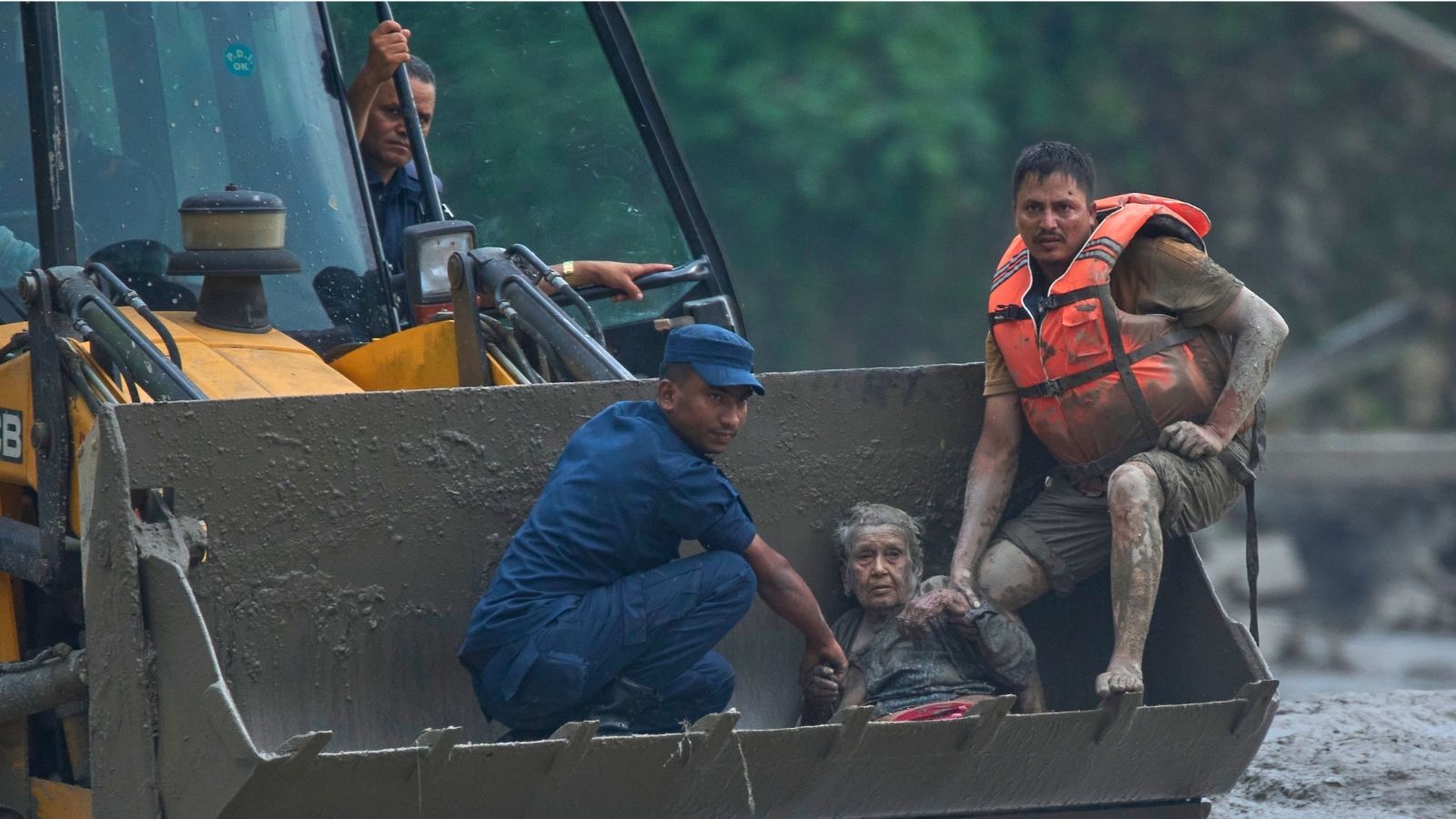
Imagine standing on a mud-slicked ridge, watching a swollen river tear chunks of earth away from the footpaths you walked just last week. This is not a hypothetical scenario; it is the brutal daily reality for rescue crews on day four of the ongoing flood disaster along the northern border.
Rain. More rain.
Helicopters sit grounded on tarmac miles to the south, their rotor blades heavy and still, pinned to the earth by thick blankets of fog and relentless downpours. Above the cloud ceiling, the sky is clear. Below it, zero visibility. That cruel meteorological gap is the difference between survival and a funeral for dozens of villagers trapped in the gorge.
Rescue operations are a game of inches, played on a vertical chessboard where the rules change every time a landslide gives way.
The Long Hours on the Ridge
Time stretches differently when you are listening for a chopper that cannot fly.
Local authorities and disaster response teams have pushed into the border zone on foot, navigating blocked arteries where highways used to be. Bridges have snapped like dry twigs. The Araniko Highway, a lifeline carved into the stone flanks of the mountains, is choked with boulders the size of houses.
(Note: Official disaster management reports from the region confirm that continuous rainfall and subsequent mudslides have entirely severed ground access, leaving aerial deployment as the sole viable path for evacuating the critically injured.)
Yet, the sky remains shut.
On the ground, teams are working blind. They carry medical kits strapped tight against waterproof canvas, moving step by deliberate step past the wreckage of collapsed storefronts and homes swallowed by silt. Every step carries a risk. The ground beneath their boots is liquefied, unstable, eager to slide down into the roaring torrent of the Bhote Koshi river below.
Consider the plight of the families huddled higher up the slope. They have no electricity. Their phones are dead. Food supplies, stored for the monsoon season, are rotting in flooded ground floors. They watch the grey mist roll in waves, listening to the dull, terrifying thud of boulders crashing down the upper peaks.
The Geography of Isolation
To understand why a rescue takes four days—and counting—you have to understand the geography of the roof of the world.
This border region is a maze of sheer vertical drops and narrow river valleys. It is stunning when the sun hits the glaciers, but in a crisis, it becomes a cage. When a cloudburst triggers flash floods, the valleys act as natural funnels. Water accelerates, gathering debris, turning into a moving wall of mud that strips the valley floors down to bare rock.
Air operations are the only key that can unlock this cage quickly. When the skies cooperate, a helicopter can drop into a postage-stamp-sized clearing, snatch four or five survivors, and ferry them to safety in minutes.
When the skies turn hostile, that same helicopter is a blind bird.
Pilots flying out of Kathmandu and regional bases stare at wall-to-wall instrument panels, making heartbreaking calculations. To push through the cloud cover into these narrow gorges without visual reference is a gamble with fatal odds. So, they wait. The crews sit in cockpit seats, drinking lukewarm tea, watching weather radar apps refresh with agonizing slowness, waiting for a single break in the grey.
The Human Core
Behind every statistic of displaced families and delayed sorties is a person making impossible choices.
A mother wrapping her infant in three layers of damp wool, whispering stories to distract from the roar outside. A local guide turned improvised first responder, using a climbing rope to pull a neighbor across a rushing stream that appeared overnight. An elderly shopkeeper refusing to leave his doorway because his entire life's work is buried beneath three feet of grey sludge.
They are not waiting for a government directive. They are waiting for daylight. They are waiting for a change in the wind.
The fourth day brings a slight shift in the barometric pressure. A thin, pale smear of light tries to pierce the cloud deck over the northern ridge. Down on the tarmac, engines cough, sputter, and catch. The heavy blades begin to turn, slow at first, then blurring into a fierce, rhythmic roar that beats back the silence of the gorge.
The sky has not forgiven them. But it has given them a window. And in the high Himalayas, a window is all it takes to cheat the dark.