Curfews do not stop riots. They advertise panic.
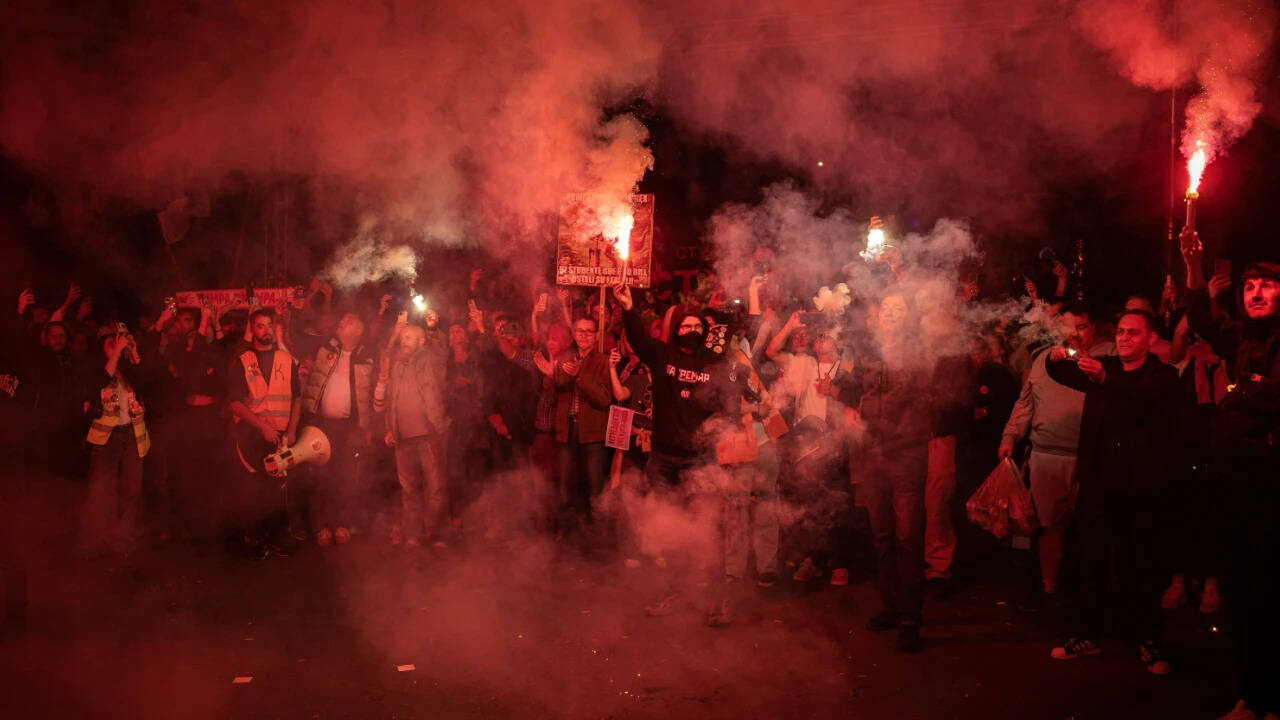
Every time unrest spikes in France, the same script plays out on cable news and breaking live blogs. A prime minister floats night curfews for troubled cities. Pundits debate whether the measure goes far enough or violates civil liberties. Wire services stack minute-by-minute updates of burned trash cans, shattered shopfronts, and deployed riot squads. Learn more on a related subject: this related article.
It is lazy consensus dressed up as decisive leadership.
A curfew is not a surgical tool of public order. It is a confession that routine policing, municipal governance, and local intelligence failed before dusk even settled. If the state already held operational dominance over a neighborhood at 9 p.m., it would not need a blanket decree telling teenagers and delivery drivers to stay indoors. Asking for curfews after unrest erupts is like ordering a firebreak after the roof caves in. It gives politicians a headline that looks tough while leaving the actual mechanics of street disorder untouched. More reporting by The Washington Post explores comparable views on the subject.
Having spent years advising crisis teams, municipal operators, and risk analysts across Europe, I have watched governments reach for this exact lever over and over again. I have seen mayors and ministries burn millions in overtime, emergency logistics, and political capital on nighttime bans that look crisp on a press release and hollow on a side street. Worse, I have watched leaders mistake quiet streets at 2 a.m. for resolved grievances, only to watch the exact same flashpoints ignite three weeks later when a spark hits dry tinder.
The Lazy Consensus Behind Nighttime Bans
Read a standard breaking-news live blog on French protests and you will see two competing clichés fighting for space. On one side sits the law-and-order reflex: firm boundaries, curfew zones, and heavy police deployment restore calm. On the other sits the civil-liberties critique: curfews criminalize innocent residents, inflame tensions with police, and treat deep social fractures as a policing glitch.
Both sides miss the structural reality of how urban disorder actually works in France.
Law-and-order commentators treat a curfew as if it were a light switch. Flip it on, and disorder turns off. That assumes rioters operate like commuters obeying a transit schedule. They do not. Disorder is driven by networks, grievances, momentum, and local geography, not a clock on a town hall wall. When authorities announce a curfew, they draw a crisp line on a map—and hand agitators a clear target right along the boundary.
Civil-liberties critics, meanwhile, often treat any restriction on movement as an automatic escalation engine. Sometimes it is. When officers stop workers heading home from late shifts or youths sitting outside apartment blocks, resentment spikes. Yet pretending that unrestrained nighttime mobility carries zero risk in a volatile district ignores what happens when small clusters of arsonists and looters use crowd cover to evade arrest.
A curfew is neither a magic shield nor a pure villain. It is a blunt instrument with sharp side effects, and its main function in modern French politics is theater. It signals to anxious voters in calm neighborhoods that the government is "doing something" without forcing ministers to confront harder, slower failures in housing policy, labor markets, youth integration, and policing tactics.
What a Curfew Actually Measures
When a French prime minister pushes for local curfews after unrest, treat that push as a diagnostic signal rather than a solution.
- Intelligence lag: Authorities are reacting to visible street action instead of interrupting coordination early.
- Force dilution: Riot units stretched across dozens of municipalities cannot hold every block at once, so officials try to shrink the map they have to police.
- Political pressure: Ministers facing angry headlines reach for visible authority to project control upward toward Paris.
- Municipal friction: Mayors and central officials often clash over who owns the fallout, turning a public-safety problem into an institutional tug-of-war.
Defining Terms Before Throwing Stones
Half the confusion around French unrest starts with sloppy vocabulary. People outside France—and plenty of commentators inside it—lump distinct phenomena into one blurry bucket called "protests."
A union march over pension rules or wages is not the same thing as nighttime rioting in an outer ring suburb. Political demonstrations usually involve organized marches, permitted routes, banners, and clear demands aimed at lawmakers. Urban riots often erupt suddenly after a triggering incident—frequently a controversial police encounter or fatal shooting—and involve property destruction, clashes with security forces, and localized grievances that have simmered for years.
In France, urban sociologists and policy researchers have long studied the geography of these flashpoints, especially across certain outer suburbs known as banlieues and specific high-poverty urban zones designated for extra state focus, often referred to as sensitive urban zones. When people talk about unrest in these areas, they frequently mix up physical isolation with cultural destiny.
Consider what classic urban sociology tells us. Scholars like Loïc Wacquant have written extensively on how concentrated poverty, stigmatized housing estates, and retreating public services reshape daily life in marginalized urban districts. Criminologists and policing researchers—including figures such as Sebastian Roché—have examined the fraught relationship between police and young residents in disadvantaged neighborhoods, where identity checks, mutual distrust, and rapid escalation can turn routine street friction into a wider crisis.
I am not citing those scholars to excuse arson or violence. Breaking windows, burning cars, and attacking emergency responders are crimes with real victims, especially working-class residents who live in the very neighborhoods that burn. I cite them because you cannot fix a structural problem while misdiagnosing its anatomy. Calling every flare-up a simple "lawlessness problem" blinds policymakers to the triggers; calling every rioter a "noble protester" blinds them to criminal opportunism and harm inflicted on neighbors.
Are Curfews the Real Question?
Search engines fill up with predictable questions whenever French cities flare up: Do curfews stop riots in France? Can the prime minister force cities to impose curfews? Why do protests turn violent so quickly?
Those questions start from a flawed premise. They treat the curfew as the central mechanism of order.
The real question is much more uncomfortable: Why does the state keep losing de facto control of specific streets after dark in the first place, and why does its response swing between heavy-handed containment and administrative drift?
Think about what happens on the ground when unrest spreads across multiple towns at once. Police forces face exhaustion, overtime bottlenecks, and dispersed targets. If a riot starts in one district and police flood it, trouble can pop up three miles away. A curfew tries to solve that dispersion problem by telling everyone else to disappear so officers can spot outliers more easily.
On paper, that logic sounds neat. In practice, it runs straight into human behavior and local realities.
Imagine a scenario where a municipality imposes an 8 p.m. curfew after two nights of clashes. A teenager who has nothing to do with property damage is sitting on a low wall outside his building at 8:15 p.m. because his apartment is cramped and hot. An officer tells him to move inside. An argument starts. A phone comes out to film. Within twenty minutes, a crowd gathers around the patrol car. The curfew did not prevent unrest; it manufactured a confrontation.
Conversely, imagine a scenario where dedicated troublemakers treat the curfew like a game. They know police resources are finite. They slip through side alleys, light a bin on a quiet street, film the smoke for social media, and vanish before a van arrives. For them, the curfew adds status and thrill, not deterrence.
Answering the Obvious Questions Brutally Honestly
- Do curfews stop riots? Occasionally they reduce casual foot traffic late at night, which can lower incidental collisions. They rarely cure the underlying driver of unrest, and they often expire amid relief rather than genuine resolution.
- Does imposing curfews prove strength? No. Strong institutions prevent collapse through steady presence, rapid targeted arrests, and community credibility. Emergency decrees after things spiral usually signal strain.
- Why do flare-ups escalate so fast? High-density housing, tight peer networks, instant social-media amplification, and long-standing friction with authorities create a hair-trigger environment where a single viral clip or rumor can mobilize hundreds before officials finish drafting a press statement.
The Blind Spots of My Own Contrarian Take
Being contrarian is easy when you sit on the sidelines. Being right under real operational pressure is harder, and my argument has real trade-offs I will not pretend away.
First, I am arguing against curfews as a cure-all, not against public order. When shops are being looted, buses are pelted with stones, and firefighters cannot reach burning buildings without being ambushed, local leaders face brutal choices. A mayor watching their town hall or local library get trashed does not want a seminar on urban sociology at midnight; they want calm on the streets by morning.
Second, dismissing curfews as "mere theater" can understate short-term tactical relief in narrow cases. If a specific town center or commercial strip is seeing coordinated nighttime looting by outsiders arriving on trains or cars, temporary perimeter controls or movement limits—paired with targeted enforcement—can sometimes buy breathing room for emergency crews and business owners.
Third, the alternative I favor—sharper intelligence, better-trained de-escalation alongside firm targeted policing, and long-term investment in schools, jobs, and housing—is slow and politically thankless. You cannot announce a five-year improvement in youth employment or neighborhood trust at a midnight emergency press conference and expect applause the next morning. Politicians reach for curfews because voters demand immediate action, even when the action is mostly symbolic.
| Approach | What It Promises | Where It Breaks Down | Real-World Cost |
|---|---|---|---|
| Blanket Night Curfews | Quick visual control and fewer people outdoors late at night | Hard to enforce evenly; can spark friction with uninvolved residents | High political and social friction; stretches police patrols |
| Purely Reactive Riot Policing | High visible force during active clashes | Arrives after damage starts; rarely addresses root triggers | Officer burnout, injury risk, and cycles of retaliation |
| Targeted Policing + Long-Term Prevention | Arrests actual offenders while lowering chronic neighborhood strain | Takes years to show broad results; low instant media drama | Requires sustained funding, discipline, and patience |
What Actually Works When Streets Heat Up
If you want less smoke and fewer emergency decrees, stop treating every crisis like a brand-new surprise and start fixing the operational and structural habits that feed it.
- Separate peaceful demonstrators, local residents, and violent actors in both policy and messaging. Lumping everyone together inflames bystanders and lets violent actors hide behind broader grievances. Target enforcement precisely at those committing arson, assault, and looting.
- Audit nighttime policing for escalation triggers. Aggressive crowd tactics or indiscriminate stops in tense neighborhoods often turn a contained incident into a multi-night standoff. Pair firm accountability for lawbreakers with disciplined, non-provocative street conduct.
- Protect essential workers and families during disruptions. When transit stops, deliveries stall, or curfews hit, working families pay the highest price. Clear, practical exemptions and safe corridors matter far more than sweeping proclamations.
- Invest in the boring infrastructure between crises. Youth employment, quality schools, decent public spaces, and reliable local policing do not trend on social media on a Tuesday night. They are the only reason a spark does not turn into a bonfire five years later.
The next time a prime minister calls for curfews after another night of unrest, do not ask whether the curfew will hold until dawn. Ask what went wrong at noon.