The breath of a Kyiv morning carries a specific weight when the grid is failing. It smells of damp concrete, cheap diesel from basement generators, and the sharp, metallic tang of the Dnieper River. On this specific Thursday, the air is also thick with the collective voice of thousands of people gathered outside the presidential office. They are mostly young, the generation that came of age in the trenches or under the flicker of LED screens in air-raid shelters. They are holding cardboard signs and chanting a single name into the grey sky: Fedorov.
A few hundred yards away, inside the Verkhovna Rada, a very different kind of drama is concluding. Members of parliament have just cast 289 votes to confirm Serhii Koretskyi as Ukraine’s new prime minister. He is a 48-year-old engineer who built his reputation far from the ballot box, managing massive fuel and food corporations before turning around failing state-owned energy entities. He does not look like a politician. He looks like a man who knows exactly how many megawatts are left in a dying transformer.
This is the central paradox of a nation entering its fifth year of total war. One man is brought in to keep the lights on, while the man who taught Ukraine’s drones how to hunt is shown the door. It is a collision between the cold arithmetic of survival and the bleeding edge of innovation.
To understand why a country at war would replace its prime minister and dismantle its defense ministry simultaneously, you have to look past the official press releases. You have to look at the friction between the digital future and the industrial past.
The Architect of the Invisible
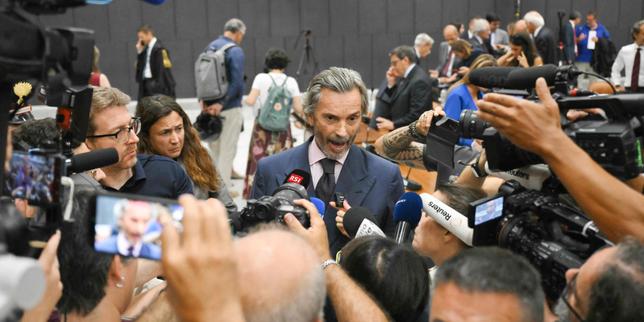
Mykhailo Fedorov is 35 years old. He spent Thursday morning standing before journalists in a dark t-shirt and jeans, looking more like a Silicon Valley dropout than a wartime defense chief. For six months, he held the defense portfolio, but his real legacy is the transformation of how Ukraine fights. Before the ministry, he ran the nation’s digital transformation, turning the bureaucratic nightmare of state paperwork into an elegant smartphone app.
When the missiles began to fall, Fedorov applied that same logic to the battlefield. He didn’t just buy drones; he created an ecosystem where garage tinkerers and teenage coders could build weapons that outmaneuvered Russia’s multi-million-dollar electronic warfare systems. He redirected funds meant for standard military salaries into mid-range strike capabilities and fiber-optic reconnaissance. He bypassed the traditional, agonizingly slow military procurement chains.
But the problem with moving fast and breaking things is that eventually, you run into the people who built the things you are breaking.
Fedorov’s approach created a profound rift with General Oleksandr Syrskyi, the 60-year-old commander-in-chief of Ukraine's armed forces. Syrskyi is a product of the old school—the man who masterminded the defense of Kyiv and the brilliant Kharkiv counteroffensive. He understands artillery, mass, and territory. Fedorov understands algorithms, decentralization, and speed.
"Instead of working out how to defeat Russia, he has figured out how to split the country," Fedorov remarked bitterly after his dismissal, accusing the general of outright obstruction. Syrskyi’s public response was a chilly reminder of who holds the physical high ground: "And now in this city, briefings can be held, visions can be developed, and decisions can be made." It was a clear reference to the fact that without the army's raw iron, there would be no capital left to write code in.
President Volodymyr Zelenskyy found himself trapped between the two. "If the sides can't resolve an issue, I will have to resolve it," the president stated bluntly at a press conference. He chose the general.
The Heat and the Dark
The cost of that choice was immediate. The streets erupted. For a population that has endured years of blackouts, sirens, and grief, Fedorov represented a rare commodity: hope. He was the proof that intellect could defeat brute force. When Col. Pavlo Yelizarov, a senior leader in the country’s drone program, resigned from the air force in protest, he called the dismissal "a great evil."
Yet, Zelenskyy’s eyes are fixed on a different, terrifying reality.
Imagine a winter night in Kyiv where the temperature drops to fifteen below zero. The power lines have been severed by long-range missiles. The water pipes inside the concrete high-rises begin to freeze. If they freeze, they crack. If they crack, entire neighborhoods become uninhabitable, forcing millions of people into Western Europe as refugees not because of advancing troops, but because of physics.
That is the winter looming over Ukraine. It is a war of concrete, coal, and copper.
This is why Serhii Koretskyi was handed the prime minister’s gavel. He is not an ideologue. He is the former head of Naftogaz, the state energy giant. He understands the vulnerabilities of the high-voltage grid. He knows how to hide massive generators under piles of rubble and how to secure diesel supplies through back-channel logistics. Zelenskyy called him the "most appropriate candidate" because survival this winter requires a logistics manager, not a visionary.
The political capital expended to make this shift is immense. The last time the streets of Kyiv filled with protesters like this was exactly a year ago, when Zelenskyy tried to curb the power of anti-corruption watchdogs. Then, the public forced a humiliating U-turn. This time, the anger is deeper because it touches the conduct of the war itself.
The young people shouting outside the presidential office are not protesting for a man; they are protesting for a philosophy. They fear that by sidelining the innovators to appease the traditionalists, the government is choosing to fight a 20th-century war against an enemy that has already learned from its mistakes.
The evening brings another air-raid siren. The crowds in the square disperse into the subway stations and basement shelters, their phone screens illuminating their faces in the dark. In the halls of power, Koretskyi is sitting down with the blueprints of the nation’s power plants. Outside, the wind is beginning to turn cold.