The Israeli Air Force strikes on Hezbollah infrastructure in southern Lebanon this morning are not a standard escalation. While headlines often frame these exchanges as a repetitive cycle of "tit-for-tat" violence, the operational reality on the ground suggests a fundamental shift in the rules of engagement. For decades, the Blue Line served as a managed pressure valve. That valve has snapped. Israel is no longer merely reacting to anti-tank fire; it is systematically dismantling a sophisticated buffer zone that Hezbollah spent eighteen years building since the 2006 war.
The primary objective of these strikes is the neutralization of the Radwan Force. This elite unit represents Hezbollah’s offensive capability, trained specifically for cross-border incursions into the Galilee. By targeting observation posts, weapons caches, and underground launch facilities within a five-mile radius of the border, the Israeli military is attempting to push Hezbollah’s infrastructure back behind the Litani River. This is a logistical necessity for the return of roughly 80,000 displaced Israeli civilians who refuse to live within range of a localized invasion.
The Myth of Surgical Precision
Military spokespeople frequently use the term "precision strikes" to reassure domestic and international audiences. However, the geography of southern Lebanon makes surgical warfare an impossibility. Hezbollah does not operate from isolated desert bases. Its infrastructure is woven into the social and architectural fabric of villages like Taybeh, Markaba, and Meiss el-Jabal.
A "missile silo" in this context is often a reinforced basement in a residential villa. A "command center" might be the back room of a grocery store. When Israel strikes these targets, they aren't just hitting hardware; they are shredding the economic and physical security of the Lebanese border population. This creates a dual-track strategy. On one hand, the IDF destroys the physical assets of the militia. On the other, it creates a "gray zone" of uninhabitable territory, intended to pressure the Lebanese government—and by extension, Hezbollah—into a diplomatic retreat.
The Failure of Resolution 1701
The international community continues to point toward UN Security Council Resolution 1701 as the solution. This is a delusion.
Passed in 2006, the resolution mandated that no armed personnel, assets, or weapons other than those of the Lebanese government and UNIFIL should be deployed between the Blue Line and the Litani River. In reality, UNIFIL has become a spectator. The peacekeeping force lacks the mandate to enter private property or actively disarm Hezbollah militants. Over the last two decades, Hezbollah has filled this vacuum with thousands of short-range rockets and a network of tunnels that bypass the very peacekeepers meant to prevent their presence.
The current strikes represent the total collapse of this diplomatic framework. Israel has signaled that it will no longer rely on international observers to police its northern border. If the UN cannot enforce 1701, the IAF will do so through kinetic force.
Deterrence is a Two Way Street
Hezbollah’s response to these strikes has been calculated, but it is reaching a ceiling. Hassan Nasrallah, the group’s leader, faces a strategic dilemma. If he allows Israel to dismantle his border infrastructure without a major escalation, he loses face and weakens his "resistance" credentials. If he launches a full-scale rocket barrage on Tel Aviv, he risks a total war that could lead to the destruction of Beirut—a price his Iranian backers may not want to pay yet.
Hezbollah’s current strategy is one of attrition. They are using low-cost drones and anti-tank guided missiles to force Israel into a high-cost defensive posture. Every interceptor fired by the Iron Dome costs approximately $50,000, while the drones they target often cost less than $2,000. It is a war of math as much as a war of explosives.
The Iranian Oversight
We cannot analyze the strikes in southern Lebanon without looking at Tehran. Hezbollah is the crown jewel of Iran’s "Axis of Resistance." It serves as a forward-deployed insurance policy against an Israeli strike on Iranian nuclear facilities.
If Israel successfully degrades Hezbollah’s capabilities in the south, Iran loses its most effective deterrent. This explains the frantic diplomatic activity in the region. The United States is attempting to broker a maritime or land border agreement to prevent a full-scale invasion, but these efforts are hindered by the fact that Hezbollah is not a state actor. They are a state within a state, with interests that do not always align with the sovereign health of Lebanon.
The Logistics of the Ground Invasion
The question hanging over every air strike is whether it is a prelude to a ground maneuver. Historically, air power alone has never secured a border. If the goal is truly to push the Radwan Force north of the Litani, the IDF may eventually conclude that boots on the ground are the only way to clear the tunnels and bunkers that bombs cannot reach.
However, a ground invasion of Lebanon is a nightmare scenario for any military. The terrain is mountainous, riddled with caves, and favors the defender. Hezbollah has spent nearly twenty years preparing for this exact fight. They have mapped every valley and pre-positioned supplies for a long-term insurgency. Unlike the flat terrain of Gaza, southern Lebanon offers infinite opportunities for ambush.
The Human and Economic Cost
Lebanon is already a failing state. Its currency has lost over 95% of its value, and its political system is in a state of permanent paralysis. These strikes aggravate an already desperate situation. While the focus is often on the military hardware, the long-term impact is the total depopulation of the border regions on both sides.
We are seeing the creation of a "no-man's land" that stretches for miles. This isn't just a military tactic; it’s a demographic restructuring of the Levant. If civilians cannot return to their homes, the border is essentially being redrawn by fire.
Tactical Evolution of the IAF
Recent strikes have shown an increased use of "bunker buster" munitions and electronic warfare to jam Hezbollah's communication networks. The Israeli Air Force is testing new algorithms to identify launch sites within seconds of a firing event. This rapid-response loop is designed to make the cost of firing a rocket prohibitively high.
But technology has its limits. Hezbollah has moved much of its command structure to fiber-optic networks that are buried deep underground, immune to electronic jamming. This is a cat-and-mouse game where both sides have had decades to study the other’s playbook.
The Inevitability of a Larger Conflict
The current strikes are not the end of the story; they are the middle of a very long and bloody chapter. The fundamental disagreement—Israel’s need for security and Hezbollah’s commitment to "resistance"—is not something that can be solved with a few well-placed munitions.
Diplomacy is currently a theater of the absurd. One side demands a retreat that would signal political suicide, while the other demands a level of security that the current geopolitical map cannot provide. The air strikes in the south are a signal that the time for talking is rapidly expiring.
The next phase will not be determined by diplomats in New York or Geneva, but by the commanders on the ground who decide when the cost of restraint finally exceeds the cost of total war. You can see the shift in the target selection. They are no longer hitting empty fields or symbolic outposts. They are hitting the heart of the infrastructure.
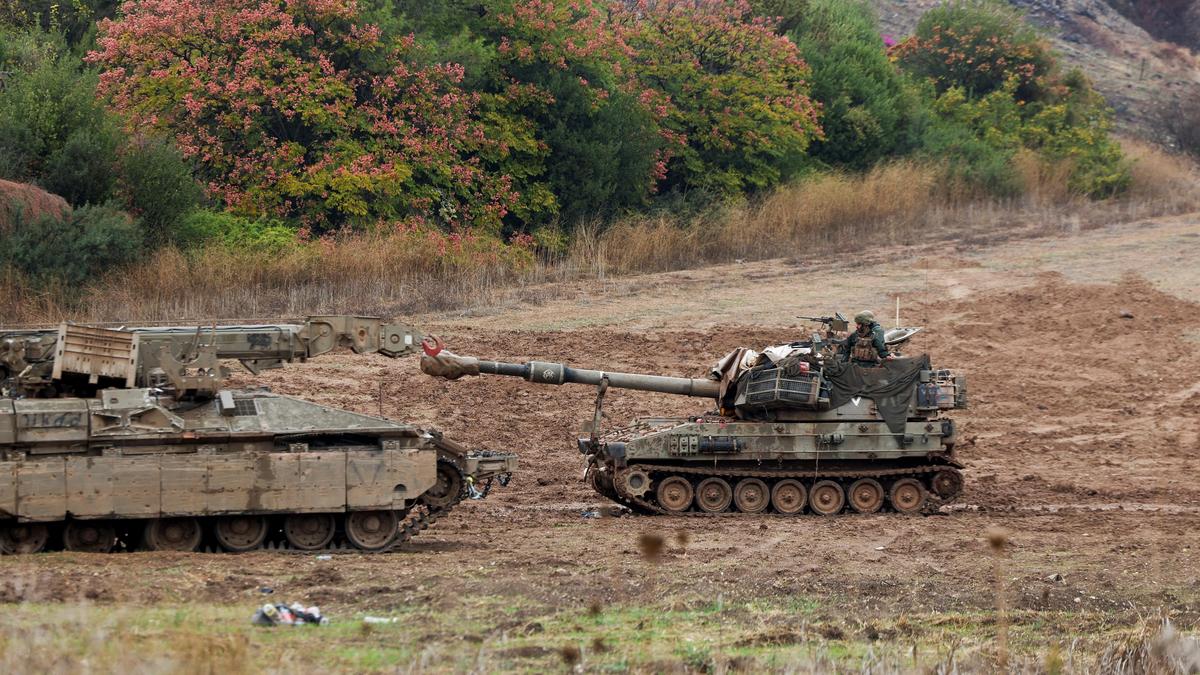
Monitor the movement of heavy armor toward the northern Galilee. That is the only metric that matters now.