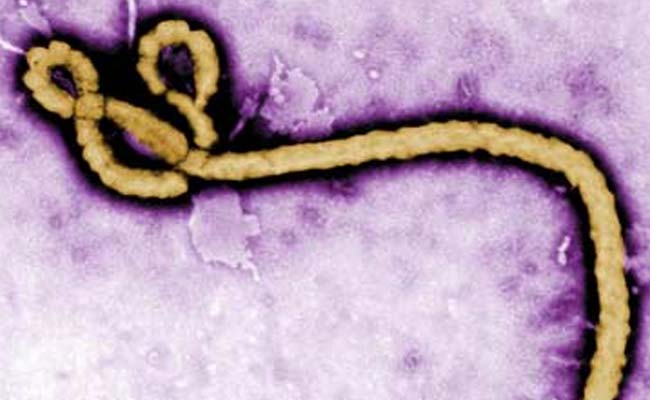
Bureaucrats love a predictable panic. When the World Health Organization’s Africa leadership warns that underestimating Ebola spread risk is a "big mistake," they are technically right, but fundamentally wrong. They are playing a 1990s public health game in a 2026 reality.
The lazy consensus in global health journalism is to echo these warnings without looking at the mechanics of allocation. We are told that Ebola is the ultimate boogeyman, a viral shadow lurking ready to swallow the continent if we lower our guard for even a second.
This hyper-fixation on localized, dramatic hemorrhagic fevers is actually costing more African lives than it saves.
By treating every spark of Ebola as an existential threat to global stability, international health agencies pull oxygen, funding, and talent away from the quiet, boring killers that do a hundred times more damage every single day. The risk isn't that we are underestimating Ebola. The risk is that our obsession with it is blinding us to structural medical collapses.
The Asymmetry of Fear vs. Mortality
Let’s look at the raw mechanics of epidemiology. Ebola is terrifying because it is graphic. It dominates headlines because the pathology is cinematic. But from a pure numbers perspective, high-fatality, fast-killing pathogens are evolutionary failures at scale. They burn through hosts too quickly to maintain massive, sustained global momentum without massive systemic failures.
Compare this to the real, unglamorous killers across sub-Saharan Africa.
- Malaria: Disproportionately kills children under five, accounting for hundreds of thousands of deaths annually.
- Tuberculosis: A slow, grinding respiratory crisis that thrives in poverty and treatment non-compliance.
- Neonatal Mortality: Infantile sepsis and birth asphyxia due to basic lack of clean running water and sterile gloves in rural clinics.
When a single case of Ebola pops up, millions of dollars in emergency international aid flood the zone. Specialized isolation tents fly in. High-paying consultant gigs materialize overnight. Meanwhile, the clinic down the road runs out of basic amoxicillin and rapid diagnostic tests for malaria.
I have watched local health systems get completely destabilized by the sudden influx of hyper-specific, siloed Western funding. Nurses leave their general wards—where they treat hundreds of infants with severe dehydration or pneumonia—to sit in empty, well-funded Ebola preparedness units waiting for a ghost. The net result? Overall mortality in the district goes up, not down.
Dismantling the PAA Premise: "Can Ebola Become an Uncontrollable Global Pandemic?"
If you look at public forums, the question everyone asks is some variation of: "Can Ebola mutate and spread like Covid-19?"
The brutal, honest answer is no. The premise itself shows a profound misunderstanding of viral transmission.
Ebola requires direct contact with bodily fluids of a symptomatic individual. It is not airborne. It does not spread efficiently through casual contact in a well-ventilated space. To suggest that a massive, uncontrollable global wildfire is just around the corner every time a bushmeat hunter falls ill is scientifically disingenuous. It is theater designed to keep Western donor pockets open.
When public health officials stoke this specific flame, they create a counter-productive cycle:
- Panic-Driven Funding: Wealthy nations release capital not based on burden of disease, but on their own proximity to fear.
- Community Distrust: High-handed, militarized quarantine responses alienate local populations, making them hide patients rather than bring them to clinics.
- Resource Desertion: Regular healthcare services collapse during the scare, meaning more people die from preventable childbirth complications during an outbreak than from the virus itself.
During the 2014-2016 West African outbreak, studies later revealed that the breakdown of routine health services for malaria, HIV, and tuberculosis led to a secondary mortality toll that rivaled or exceeded the direct deaths from Ebola. The fear of the spread did more damage than the spread itself.
The Vaccine Reality Check
We now have highly effective vaccines, like Ervebo. We have proven monoclonal antibody treatments like Inmazeb and Ebanga. The game has changed, even if the institutional rhetoric hasn't.
An outbreak today is an operational logistics problem, not a terrifying medical mystery. Wrapping the discussion in the language of imminent catastrophe ignores the massive strides made in ring-vaccination strategies.
"When you treat an operational problem as a existential crisis, you waste resources on optics rather than infrastructure."
💡 You might also like: War Medicine is Not a Tragedy It is a R&D Lab for Your Local ER
The downside to calling out this grift is obvious: critics will say that relaxing vigilance leads to complacency. If a country drops its surveillance network, a cluster can grow undetected in a conflict zone. That is a valid operational risk. But the solution to that risk isn't shouting louder into microphones about "big mistakes." The solution is building decentralized, generalist primary healthcare facilities that can catch any anomaly early—whether it’s Ebola, cholera, or a novel strain of influenza.
Stop Funding the Ghost, Fix the Floor
If we want to protect both African populations and the wider world from infectious disease, we have to stop funding specific pathogens and start funding the floor of the healthcare system.
Imagine a scenario where the millions spent on specialized, single-use containment infrastructure were instead diverted into baseline municipal plumbing and reliable electricity for rural hospitals. If a hospital has continuous power, it can run refrigerators for all vaccines. If it has clean running water, nosocomial transmission of all infections plummets.
Instead, the international community prefers to keep Africa in a perpetual state of emergency readiness for a boutique killer, while leaving the population exposed to the mundane tragedies of everyday systemic neglect.
Stop asking if we are underestimating the risk of Ebola. Start asking why we are overestimating the value of panic-driven rhetoric over basic, boring medical infrastructure. The real mistake isn't misjudging the virus; it's misallocating the money.