The West is subsidizing an illusion
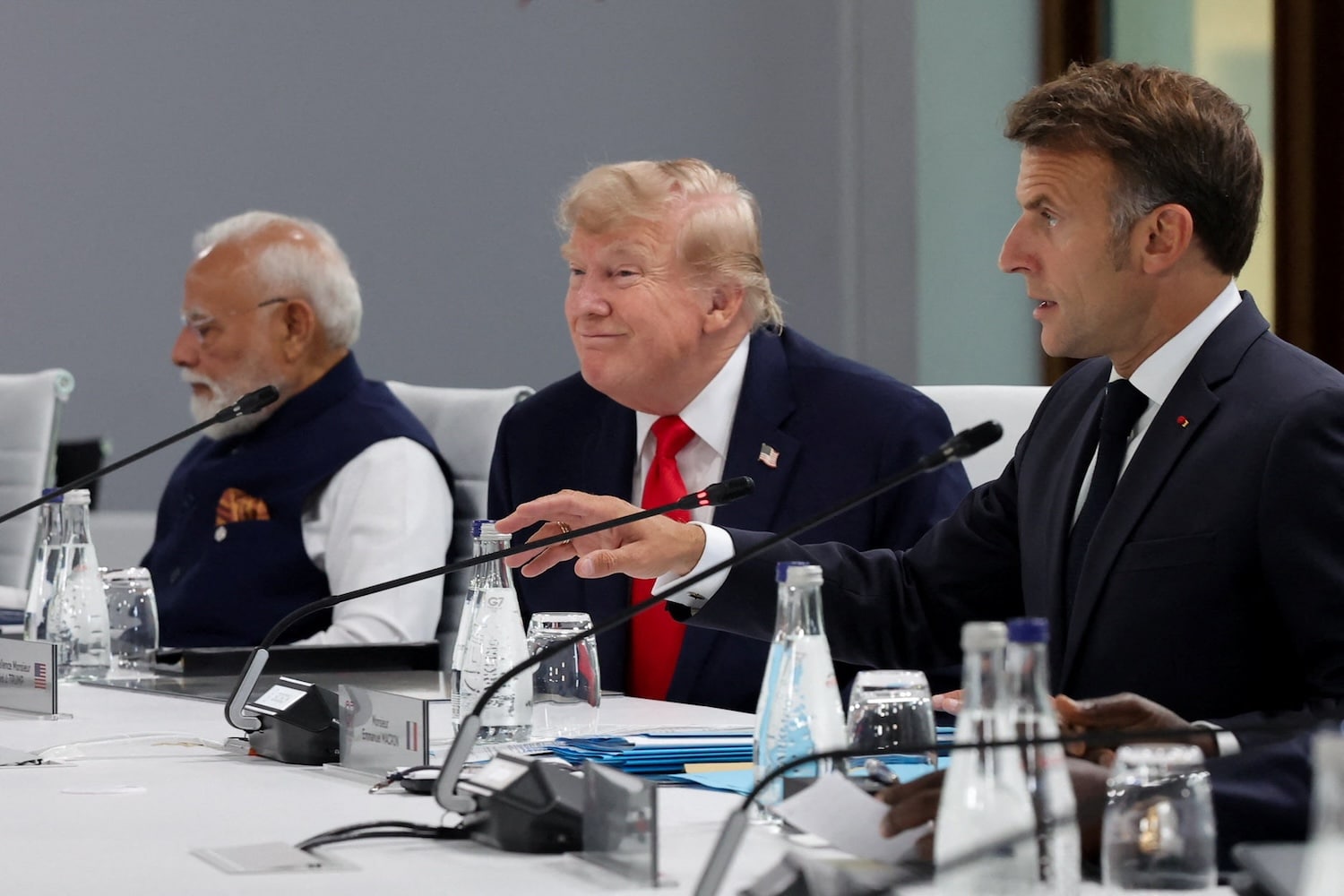
Western bureaucrats love a good photo-op. They love signing agreements, launching platforms, and announcing "alliances" that promise to decouple supply chains from China. The latest G7 critical minerals initiative is the apex of this theater.
The mainstream press bought the narrative wholesale. They parroted the official press releases, claiming this new platform will secure supply chains, build redundant processing capacity, and insulate the West from geopolitical blackmail.
It is a fantasy.
The Western strategy to build an independent critical mineral supply chain is fundamentally broken because it treats a geological, industrial, and chemical monopoly as a diplomatic scheduling conflict. You cannot fix a thirty-year manufacturing deficit with a communique and a treasury handout. While the G7 builds committees, China builds kilns.
The processing trap nobody wants to fund
The lazy consensus among Western policymakers is that mining is the problem. They believe that if we dig up enough lithium in Australia, nickel in Indonesia, or rare earths in North America, the dependence on Beijing vanishes.
This view misunderstands basic industrial chemistry.
Mining is the easy part. The real bottleneck is refining and processing. China does not dominate the critical minerals market because they have all the rocks in the ground; they dominate it because they own the dirty, energy-intensive, low-margin facilities that turn those raw rocks into battery-grade chemicals and high-purity metals.
Let's look at the actual mechanics of the supply chain:
| Mineral | Global Mining Share (China) | Global Refining/Processing Share (China) |
|---|---|---|
| Lithium | ~15% | ~60% - 70% |
| Cobalt | <5% | ~70% - 75% |
| Graphite | ~60% | ~90% + |
| Rare Earths | ~60% | ~90% |
I have spent years looking at the cap-ex spreadsheets of Western mining juniors trying to build processing facilities in Europe and North America. They face a brutal reality that no G7 subsidy package can solve: the economics do not work under Western regulatory frameworks.
To build a rare earth separation plant or a lithium hydroxide refinery in the US or EU, a company must navigate five to ten years of environmental permitting, local opposition, and strict labor laws. By the time they break ground, their capital expenditure has doubled. Meanwhile, Chinese state-backed competitors can build the same capacity in a fraction of the time at half the cost, backed by cheap coal or hydro power and subsidized capital.
If the G7 wants to cut reliance on China, they have to accept a hard truth: they must either tolerate heavily polluting chemical processing plants in their own backyards or pay twice as much for every electric vehicle and defense component they manufacture. The current policy tries to pretend we can have clean, cheap, and domestic supply chains all at once. Choose two. You cannot have all three.
Dismantling the flawed premises of the mineral panic
When the public looks for answers on resource security, the questions themselves are usually fundamentally flawed. Let's dismantle the standard assumptions.
"Can't we just reopen old Western mines to solve the shortage?"
This assumes that a mine is a faucet you can turn on and off. I have watched companies pour tens of millions into legacy assets only to realize the infrastructure is decayed, the remaining ore grade is uneconomic, and the local water table makes processing a legal liability. A closed mine is usually closed for a good reason. You cannot legislate geology into compliance.
"Will recycling save us from relying on foreign adversaries?"
Recycling is an elegant solution for a mature market. It is useless for an exponentially growing one. There are simply not enough spent electric vehicle batteries or retired wind turbines in existence today to meet even 10% of the projected demand for nickel, cobalt, and lithium over the next decade. We are decades away from a closed-loop system. Until then, the primary supply must come from the earth, and that earth is processed in Asia.
"Why don't we just find alternative materials?"
Substitution is the holy grail of Western defense and automotive sectors. "Let's use iron-phosphate batteries instead of nickel-cobalt, or synchronous reluctance motors without rare earth magnets."
It sounds great on paper. In reality, every substitution comes with a severe performance penalty. If you cut out rare earth permanent magnets, your electric vehicle loses efficiency and range, and your military hardware becomes heavier and less agile. Western engineers are trying to redesign physics to avoid a geopolitical reality. It is a losing strategy.
The private equity delusion
The G7 framework relies heavily on "leveraging private capital." The thesis is that government de-risking will convince institutional investors, pension funds, and private equity to flood the critical minerals sector with cash.
This ignores the fundamental nature of Western capital markets.
Wall Street operates on quarterly cycles. Private equity looks for a five-to-seven-year exit with software-like margins. A critical mineral processing plant is a capital-obliterating monster that takes a decade to build, operates on razor-thin cyclical margins, and is subject to predatory pricing by foreign monopolies.
Imagine a scenario where a Western consortium spends $1.5 billion to build a domestic gallium and germanium processing facility. The day the facility opens, Beijing floods the market, dropping the global price of those materials by 60% for eighteen months. The Western facility goes bankrupt, its assets are sold for pennies on the dollar, and the monopoly is restored.
This isn't a hypothetical thought experiment. It is the exact playbook China used to decimate the Western solar panel industry and the Australian rare earth sector over the past two decades. Private capital knows this. They are not stupid. They will not back these projects without permanent, open-ended price floors guaranteed by Western taxpayers—something no G7 government has the political stomach to implement.
The actual cost of compliance
If you want to understand the sheer scale of the failure, look at the compliance costs forced upon the few Western companies actually trying to build this stuff.
A mining company operating in a Western jurisdiction spends up to 30% of its early-stage capital purely on legal defense, environmental impact statements, and community consultations. This is before a single ounce of dirt is moved.
Furthermore, Western capital markets now demand strict adherence to ESG metrics. While these frameworks are well-intentioned, they act as a unilateral regulatory tax on Western firms. A Chinese-backed enterprise operating in the Democratic Republic of the Congo or Indonesia does not face the same compliance burden, allowing them to bring supply to market faster and cheaper.
By forcing Western developers to meet impossible environmental and social standards while simultaneously demanding they compete on price with unencumbered foreign state-owned enterprises, the G7 is setting its own industry up for structural insolvency.
Stop building alliances; start building infrastructure
The G7 critical minerals alliance is an admission of weakness disguised as a display of unity. It is a paper construct designed to reassure voters and shareholders that someone is thinking about the problem.
But supply chains are not made of thoughts. They are made of concrete, steel, sulfuric acid, and high-temperature rotary kilns.
If Western leaders actually want to challenge China’s dominance, they must stop writing white papers and start doing things that make their constituents uncomfortable. They need to fast-track environmental permits, override local zoning laws, directly fund high-polluting chemical refineries with taxpayer money, and place permanent, aggressive tariffs on processed Chinese minerals regardless of how much it drives up the cost of a Tesla or an iPhone.
Anything less is just expensive geopolitical theater.
Stop asking how to build a clean, compliant, consensus-driven alliance. The real question is whether the West has the stomach to build a dirty, expensive, and heavily subsidized industrial machine. Right now, the answer is no.