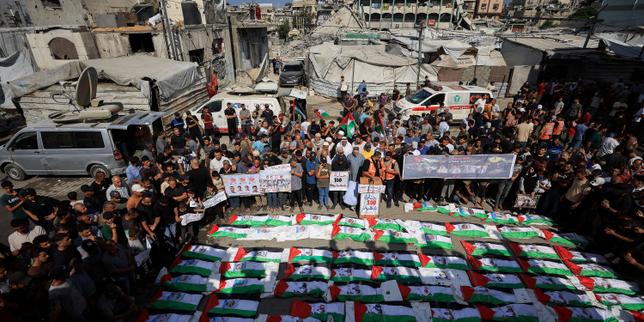
The United Nations has issued repeated demands for unfettered access for independent investigators to document suspected war crimes in the Gaza Strip amid escalating hostilities. International humanitarian law relies on immediate, transparent fact-finding missions to preserve evidence before it degrades or disappears in active conflict zones. Denying entry to human rights monitors and legal specialists creates a vacuum where accountability stalls, leaving victims without recourse and perpetrators shielded by operational opacity.
Bureaucracy moves slowly while artillery operates on milliseconds. That fundamental mismatch defines the conflict over evidence gathering in modern war zones. When international tribunals request site access, domestic authorities and military commands frequently invoke security restrictions, logistical hurdles, or sovereignty concerns. These procedural barriers serve a functional purpose for belligerents, effectively running down the clock on perishable forensic data. Shell craters erode under weather and reconstruction. Mass graves are disturbed. Digital metadata on communications or munitions fragments degrades. The longer independent inspectors stay out, the harder forensic reconstruction becomes.
Legal frameworks exist to prevent this evidentiary decay. The Rome Statute and the Geneva Conventions establish clear obligations for parties to armed conflict to respect humanitarian missions and allow independent oversight. Yet, enforcement mechanisms remain anchored to political will. The Security Council faces persistent gridlock due to veto powers held by permanent members. International Criminal Court prosecutors rely on state cooperation or referrals that rarely materialize when the state in question is directly implicated in the hostilities. Consequently, the insistence on investigator access often transforms into a diplomatic ritual rather than an operational reality.
Access denials carry systemic consequences for international jurisprudence. Without primary-source documentation collected by accredited investigators, accountability processes must rely on secondary reporting, satellite imagery, and remote interviews. These methods provide vital patterns of conduct but struggle to meet the strict evidentiary standards required for individual criminal responsibility in a court of law. Establishing command responsibility, distinguishing between tactical error and systematic policy, and proving direct intent require physical custody of records, forensic ballistics analysis, and unhindered interviews with witnesses and detained individuals.
Resistance to independent inquiries often stems from institutional self-preservation. Military organizations maintain internal investigation units designed to review operational compliance with the laws of war. National legal systems claim primary jurisdiction, arguing that external bodies infringe upon sovereign integrity and lack the necessary context to judge split-second combat decisions. However, internal investigations face inherent conflicts of interest when institutions police their own conduct during high-intensity campaigns. The demand for external investigators is not merely a sign of distrust; it is a structural necessity recognized by international jurisprudence to ensure that the appearance of objectivity matches the reality of the findings.
Information warfare further complicates the investigative landscape. In contemporary conflicts, digital content floods social media channels within seconds of an incident. Open-source intelligence analysts process terabytes of user-generated footage, geolocation data, and intercepted communications to reconstruct events. While this decentralized approach democratizes documentation, it introduces severe vulnerabilities. Deepfakes, manipulated metadata, and coordinated disinformation campaigns target digital archives, threatening to poison the well of public record. Independent investigators serve as a vital counterweight to this chaos, applying chain-of-custody protocols, forensic verification, and professional cross-examination to raw data before it enters legal proceedings.
The diplomatic cost of exclusion extends beyond immediate legal outcomes. When states or armed factions bar international monitors, they signal a disregard for the multilateral architecture established in the wake of twentieth-century atrocities. This erosion of norms accelerates a broader global trend toward legal nihilism, where powerful actors ignore international law with impunity while weaker states absorb the human and diplomatic costs. Each denied visa, blocked convoy, and restricted border crossing chips away at the foundational premise that war is subject to legal limits.
Restoring integrity to the documentation process requires moving past symbolic resolutions. International bodies must elevate the cost of denial through coordinated diplomatic pressure, targeted sanctions against obstructionists, and enhanced support for local civil society organizations already risking their lives on the ground. Local human rights defenders often capture the earliest perishables of evidence before external access becomes impossible, yet they receive minimal protection and scarce institutional backing. Investing in local capacity provides a crucial insurance policy against the deliberate locking out of international experts.
The insistence on investigator access in Gaza is about more than a single conflict. It tests whether the international community retains the institutional machinery to record history accurately when powerful forces prefer obscurity. If investigators remain locked out, the ultimate casualty will not just be the evidence of specific violations, but the credibility of the entire framework designed to restrain violence in human conflict.