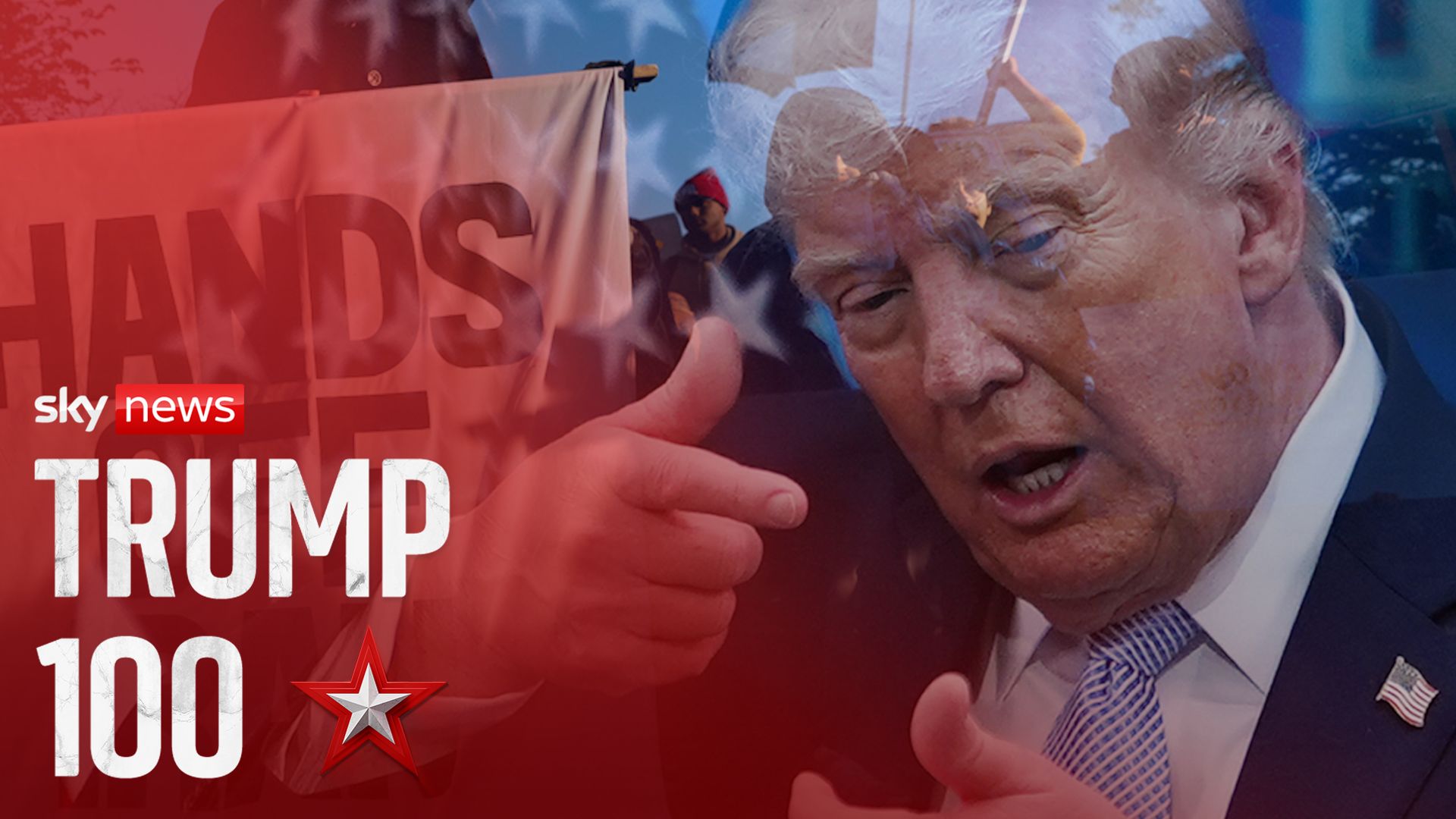
Donald Trump’s recent communications regarding global conflicts—specifically his assertions to Sky News concerning the resolution of the war in Ukraine—function less as conventional policy statements and more as high-stakes signaling intended to reset the baseline of international negotiation. The claim that a settlement could be reached within a 24-hour window is not a literal chronological projection but a strategic deployment of "perceived inevitability." By projecting an extreme compression of time, the Trump apparatus seeks to disrupt the current momentum of attrition-based warfare and force a shift toward a transactional framework.
The Mechanism of Compressed Diplomacy
The core of this strategy relies on the psychological destabilization of the status quo. In traditional international relations, diplomatic cycles move through phases of de-escalation, mediation, and formal treaty-making. Trump’s approach introduces a "shock to the system" variable. This variable operates on three distinct levels of pressure:
- The Credibility of Disruption: Unlike career diplomats constrained by institutional precedent, Trump’s willingness to bypass traditional bureaucratic channels creates a genuine sense of unpredictability. This unpredictability acts as a lever, forcing both Kyiv and Moscow to recalculate their long-term risk assessments.
- Economic Utility vs. Ideological Commitment: The rhetoric prioritizes the cessation of capital outflow over the preservation of post-WWII border integrity. By framing the conflict as a balance sheet problem rather than a moral imperative, the strategy appeals to isolationist segments of the American electorate while signaling to the Kremlin that the cost of Western support is no longer an infinite variable.
- The Leverage of Withdrawal: The implicit threat within these claims is the cessation of military aid. In a zero-sum logistical environment, the mere suggestion that the primary supplier of munitions might exit the theater creates an immediate "buyer’s market" for peace terms, regardless of how unfavorable those terms might be for the defended party.
Deconstructing the Ukraine-Russia Stalemate
The current conflict has evolved into a war of industrial capacity. Analyzing the feasibility of a rapid diplomatic resolution requires examining the structural bottlenecks that currently prevent a ceasefire.
- The Sunk Cost Fallacy in Moscow: The Russian leadership has invested significant domestic political capital and human lives into the annexation of four Ukrainian regions. A 24-hour resolution would require a face-saving mechanism that provides territorial or security guarantees that do not currently align with Ukrainian sovereignty.
- The Security Guarantee Gap: Kyiv’s primary objective is the prevention of a future Russian invasion. Without NATO membership or a massive, permanent Western military presence, any "fast" peace is viewed by Ukrainian leadership as a tactical pause for Russian re-armament.
- The Resource Asymmetry: Ukraine’s dependency on foreign intelligence, satellite data, and precision-guided munitions gives the United States a hard veto over Kyiv’s operational independence.
Trump’s claim assumes that these three bottlenecks can be bypassed through personal rapport and the application of maximum economic pressure. This is a departure from the "rules-based order" and an entry into a "transactional realism" where the strength of the deal is measured by the speed of the exit, not the durability of the peace.
The NATO Stress Test
Trump's statements serve a dual purpose as a stress test for the North Atlantic Treaty Organization. By signaling a willingness to settle the conflict unilaterally, he highlights the fragmentation of European defense capabilities. The European Union’s inability to replace American military aid in the short term creates a power vacuum that Trump intends to fill with American terms.
The structural dependency of Europe on the U.S. security umbrella means that a "surprise claim" from a leading presidential candidate functions as an immediate policy directive for European ministries of defense. This forces an increase in domestic defense spending—a long-standing Trump objective—while simultaneously undermining the collective bargaining power of the alliance.
Financial and Logistical Realities of Immediate Ceasefires
To understand the impossibility of a 24-hour resolution in literal terms, one must account for the logistical friction of modern warfare. A ceasefire requires:
- Verification Protocols: Establishing a monitored demilitarized zone (DMZ) involves thousands of neutral observers and satellite verification systems that cannot be deployed overnight.
- Decoupling of Front Lines: The proximity of forces in the Donbas region means that "stopping the clock" requires complex tactical retreats to avoid accidental skirmishes that could reignite the conflict.
- Asset Freezes and Sanctions: The global financial system has integrated thousands of sanctions against Russian entities. Unwinding these is a multi-year legal and regulatory process, not a singular executive decision.
Therefore, the claim is a rhetorical tool meant to anchor the negotiation. In negotiation theory, "anchoring" is the practice of establishing a high-impact starting point that skews all subsequent discussions in your favor. By claiming 24 hours, any deal that takes three months is still perceived as a "win" compared to the current multi-year trajectory.
The Risk of Premature De-escalation
The danger inherent in this strategy is the "Incentivized Aggression" loop. If a peace deal is reached through the forced cessation of aid to the victim of an invasion, it establishes a global precedent that territorial conquest is viable if the aggressor can outlast the political attention span of the West. This creates a systemic risk in other theaters, most notably the Taiwan Strait and the South China Sea.
The cost function of a rapid peace includes:
- The Erosion of Deterrence: If the U.S. demonstrates it will prioritize short-term fiscal relief over long-term alliance commitments, the value of U.S. security guarantees drops globally.
- The Rise of Regional Hegemons: Nature abhors a vacuum. An American withdrawal from the role of the "Arsenal of Democracy" forces smaller nations to seek protection from regional powers, leading to a multipolar world that is inherently more volatile.
- Black Market Proliferation: A sudden end to hostilities would leave Ukraine—and by extension, Europe—with a massive surplus of unaccounted-for small arms and tactical hardware, creating a long-term security headache for Europol.
Strategic Optimization for the Next Administration
Regardless of the political outcome, the "surprise claim" has already altered the geopolitical landscape. The Biden administration is forced to "Trump-proof" its aid packages by front-loading deliveries and seeking long-term legislative commitments. Simultaneously, European leaders are accelerating their own military industrialization to mitigate the risk of a sudden U.S. pivot.
The most effective strategy for managing this shift is not to dismiss the claim as hyperbole, but to prepare for the "negotiated settlement" phase of the war. This involves:
- Defining Red Lines Early: The West must determine which territorial concessions are non-negotiable before a change in U.S. leadership occurs.
- Institutionalizing Military Aid: Moving the coordination of aid from a U.S.-led "Ramstein Group" to a NATO-led structure provides a layer of protection against unilateral executive shifts in Washington.
- Economic Reconstruction Frameworks: Using frozen Russian assets as a down payment for Ukrainian reconstruction creates a financial incentive for a durable peace that goes beyond mere ceasefire lines.
The claim made to Sky News is a signal that the era of open-ended support is nearing its terminus. The strategic priority for all involved actors—Kyiv, Moscow, and Brussels—must be the preparation for a transactional peace. This requires a shift from battlefield tactics to the cold mathematics of territorial and economic trade-offs. The party that enters these inevitable negotiations with the most robust domestic defense industry and the clearest definition of its minimum viable security needs will dictate the terms of the post-war order.